Category: Uncategorized

1861: Lincoln’s “Better Angels”

ESSENTIAL QUESTION

How did Abraham Lincoln use language to discourage Southern secession in his first inaugural address?

CONTEXT

Abraham Lincoln (1809-1865) was the 16th President of the United States. Born in a log cabin on the Kentucky frontier, he was self-educated, studied to be a lawyer, and rose in politics, representing Illinois in Congress and eventually becoming a leader in the new Republican Party. National politics in the 1850s and early 1860s were contentious, belligerent, and antagonistic. A moderate Republican, Lincoln was elected president in 1860, even though he did not actively seek the nomination in the South and seven states had seceded from the Union by the time he delivered this inaugural at the US Capitol. Lincoln was assassinated in Washington, D.C., in April, 1865.

TEXT

…I have no purpose, directly or indirectly, to interfere with the institution of slavery in the States where it exists. I believe I have no lawful right to do so, and I have no inclination to do so…

…It follows from these views that no State upon its own mere motion can lawfully get out of the Union; that resolves and ordinances to that effect are legally void, and that acts of violence within any State or States against the authority of the United States are insurrectionary or revolutionary, according to circumstances….

…The Chief Magistrate derives all his authority from the people, and they have referred none upon him to fix terms for the separation of the States. The people themselves can do this if also they choose, but the Executive as such has nothing to do with it. His duty is to administer the present Government as it came to his hands and to transmit it unimpaired by him to his successor…

…In your hands, my dissatisfied fellow-countrymen, and not in mine, is the momentous issue of civil war. The Government will not assail you. You can have no conflict without being yourselves the aggressors. You have no oath registered in heaven to destroy the Government, while I shall have the most solemn one to “preserve, protect, and defend it.”

I am loath to close. We are not enemies, but friends. We must not be enemies. Though passion may have strained it must not break our bonds of affection. The mystic chords of memory, stretching from every battlefield and patriot grave to every living heart and hearthstone all over this broad land, will yet swell the chorus of the Union, when again touched, as surely they will be, by the better angels of our nature.

INQUIRY

  1. Why did Lincoln state he would not interfere with the institution of slavery?
  2. Explain Lincoln’s views on secession.
  3. How did Lincoln address Southern citizens?
  4. What was the tone of these excerpts from them 1st Inaugural? How do you know? How did the tone change?
  5. To whom did Lincoln give the responsibility for beginning the Civil War?
  6. What were the “mystic chords of memory”? Why did Lincoln use that metaphor?
  7. What did Lincoln mean in his closing by referring to the “better angels of our nature”?
  8. Lincoln won reelection in 1864, and much had happened in the four years since the 1st Inaugural. Secession had become a fact and after the Emancipation Proclamation the purpose of the Civil War focused on the eradication of slavery. In Lincoln’s 2nd inaugural address (March, 1865) he closed with the words, “With malice toward none with charity for all with firmness in the right as God gives us to see the right let us strive on to finish the work we are in to bind up the nation’s wounds, to care for him who shall have borne the battle and for his widow and his orphan ~ to do all which may achieve and cherish a just and lasting peace among ourselves and with all nations.” What was the tone of those words? How did that tone differ from the tone of the 1st Inaugural text?

ADDITIONAL RESOURCES

https://avalon.law.yale.edu/19th_century/lincoln1.asp

https://www.whitehouse.gov/about-the-white-house/presidents/abraham-lincoln/

https://www.nps.gov/articles/000/-with-malice-toward-none-lincoln-s-second-inaugural.htm

1775: Henry-Liberty or Death!

ESSENTIAL QUESTION

How did Patrick Henry use rhetoric to challenge the Virginia House of Burgesses to embrace the American Revolution?

CONTEXT

Patrick Henry (1736-1799) was born in Hanover County, in the British Colony of Virginia. After an unsuccessful attempt as a merchant, he became a lawyer through self-instruction (at that time lawyers were not required to attend law school). A successful attorney, he was elected to the Virginia House of Burgesses (the colonial legislature) where he spoke vehemently against the Stamp Act of 1765. He was elected to the First Continental Congress (1774), strongly urged independence, and helped draft the Virginia Declaration of Rights and the original Virginia Constitution. He served multiple terms as Virginia’s governor and later opposed the US Constitution as written because it implied a strong central government and did not include a Bill of Rights. He was a slaveholder his entire adult life, and although he hoped to see slavery end he had no thoughts about how to bring that about.

As a child Henry heard many preachers as part of The Great Awakening Movement, and he incorporated their rhetorical styles into his addresses, including emotion as well as reason. By 1775 Henry believed that war and American independence were inevitable and he was in contact with many of the Founding Fathers. The House of Burgesses could not officially meet (the governor of Virginia had dissolved it) so the members decided to reconvene on their own. Henry was elected as Hanover County’s delegate to the Second Virginia Convention held in Richmond in March, 1775, where he made this speech. Henry died of stomach cancer at home in 1799.

Henry was known as a speaker but not as a writer; he spoke without notes. This text is taken from Henry’s speech, even though there was no verbatim transcript. It appeared in the first biography of Henry, published in 1817 by William Wirt. Wirt wrote to those who were there and heard Henry’s speech as well as others who knew people who where there, asking for words, tone, and mood. Wirt then compiled his research and published the speech in his biography.

TEXT

No man thinks more highly than I do of the patriotism, as well as abilities, of the very worthy gentlemen who have just addressed the House. But different men often see the same subject in different lights; and, therefore, I hope it will not be thought disrespectful to those gentlemen if, entertaining as I do opinions of a character very opposite to theirs, I shall speak forth my sentiments freely and without reserve. This is no time for ceremony. The question before the House is one of awful moment to this country. For my own part, I consider it as nothing less than a question of freedom or slavery; and in proportion to the magnitude of the subject ought to be the freedom of the debate...

Mr. President, it is natural to man to indulge in the illusions of hope. We are apt to shut our eyes against a painful truth, and listen to the song of that siren till she transforms us into beasts. Is this the part of wise men, engaged in a great and arduous struggle for liberty? Are we disposed to be of the number of those who, having eyes, see not, and, having ears, hear not, the things which so nearly concern their temporal salvation? For my part, whatever anguish of spirit it may cost, I am willing to know the whole truth; to know the worst, and to provide for it.

I have but one lamp by which my feet are guided, and that is the lamp of experience. I know of no way of judging of the future but by the past. And judging by the past, I wish to know what there has been in the conduct of the British ministry for the last ten years to justify those hopes with which gentlemen have been pleased to solace themselves and the House. Is it that insidious smile with which our petition has been lately received? Trust it not, sir; it will prove a snare to your feet. Suffer not yourselves to be betrayed with a kiss. Ask yourselves how this gracious reception of our petition comports with those warlike preparations which cover our waters and darken our land. Are fleets and armies necessary to a work of love and reconciliation? Have we shown ourselves so unwilling to be reconciled that force must be called in to win back our love? Let us not deceive ourselves, sir. These are the implements of war and subjugation; the last arguments to which kings resort. I ask gentlemen, sir, what means this martial array, if its purpose be not to force us to submission? Can gentlemen assign any other possible motive for it? Has Great Britain any enemy, in this quarter of the world, to call for all this accumulation of navies and armies? No, sir, she has none. They are meant for us: they can be meant for no other. They are sent over to bind and rivet upon us those chains which the British ministry have been so long forging. And what have we to oppose to them? Shall we try argument? Sir, we have been trying that for the last ten years. Have we anything new to offer upon the subject? Nothing. We have held the subject up in every light of which it is capable; but it has been all in vain. Shall we resort to entreaty and humble supplication? What terms shall we find which have not been already exhausted? Let us not, I beseech you, sir, deceive ourselves. Sir, we have done everything that could be done to avert the storm which is now coming on. We have petitioned; we have remonstrated; we have supplicated; we have prostrated ourselves before the throne, and have implored its interposition to arrest the tyrannical hands of the ministry and Parliament. Our petitions have been slighted; our remonstrances have produced additional violence and insult; our supplications have been disregarded; and we have been spurned, with contempt, from the foot of the throne! In vain, after these things, may we indulge the fond hope of peace and reconciliation. There is no longer any room for hope. If we wish to be free– if we mean to preserve inviolate those inestimable privileges for which we have been so long contending–if we mean not basely to abandon the noble struggle in which we have been so long engaged, and which we have pledged ourselves never to abandon until the glorious object of our contest shall be obtained–we must fight! I repeat it, sir, we must fight! An appeal to arms and to the God of hosts is all that is left us!

They tell us, sir, that we are weak; unable to cope with so formidable an adversary. But when shall we be stronger? Will it be the next week, or the next year? Will it be when we are totally disarmed, and when a British guard shall be stationed in every house? Shall we gather strength by irresolution and inaction? Shall we acquire the means of effectual resistance by lying supinely on our backs and hugging the delusive phantom of hope, until our enemies shall have bound us hand and foot? Sir, we are not weak if we make a proper use of those means which the God of nature hath placed in our power. The millions of people, armed in the holy cause of liberty, and in such a country as that which we possess, are invincible by any force which our enemy can send against us. Besides, sir, we shall not fight our battles alone. There is a just God who presides over the destinies of nations, and who will raise up friends to fight our battles for us. The battle, sir, is not to the strong alone; it is to the vigilant, the active, the brave. Besides, sir, we have no election. If we were base enough to desire it, it is now too late to retire from the contest. There is no retreat but in submission and slavery! Our chains are forged! Their clanking may be heard on the plains of Boston! The war is inevitable–and let it come! I repeat it, sir, let it come.

It is in vain, sir, to extenuate the matter. Gentlemen may cry, Peace, Peace– but there is no peace. The war is actually begun! The next gale that sweeps from the north will bring to our ears the clash of resounding arms! Our brethren are already in the field! Why stand we here idle? What is it that gentlemen wish? What would they have? Is life so dear, or peace so sweet, as to be purchased at the price of chains and slavery? Forbid it, Almighty God! I know not what course others may take; but as for me, give me liberty or give me death!

INQUIRY

  1. Henry began his speech by acknowledging his colleagues that did not agree with him. What was the effect of this acknowledgement?
  2. Why did Henry draw the juxtaposition of “freedom or slavery”? How might that have resonated with his audience (most of whom we wealthy landowners and politicians, including slave holders)?
  3. How did Henry characterize the “illusion of hope”? What is a “siren song”?
  4. What guided Henry’s feet? How did he justify his thoughts about the British? Give examples from the text.
  5. What was the effect of Henry’s parallel structure when he said “We have petitioned; we have remonstrated; we have supplicated; we have prostrated“?
  6. Why did Henry argue that the Americans must fight?
  7. Describe Henry’s appeals to authority and ethos, including his multiple biblical allusions.
  8. How did Henry argue against those who said that America was not ready to fight the British? What arguments and appeals did he use?
  9. How and why did Henry use the metaphor of chains?
  10. Henry ended the speech with a series of questions. What was the effect?
  11. Henry used antithesis in a famous quote from this speech, “I know not what course others may take; but as for me, give me liberty or give me death“. What was the effect of putting these two opposites next to each other?
  12. Identify examples of Henry’s uses of both emotion and logic. How did he tie them together in one argument?

ADDITIONAL RESOURCES

https://avalon.law.yale.edu/18th_century/patrick.asp

https://www.colonialwilliamsburg.org/learn/deep-dives/give-me-liberty-or-give-me-death

1630: Winthrop on “The Hill”

ESSENTIAL QUESTION

How did John Winthrop prepare colonists to emigrate to the Massachusetts Bay Colony?

CONTEXT

John Winthrop (1588-1649) was born into a wealthy merchant family in England and studied to become a lawyer. A deeply religious Puritan, he believed that the English Reformation was in danger from governmental policies, and with other Puritans he emigrated to the New World to escape persecution. In 1630 he arrived as the governor of the Massachusetts Bay Colony (the second English colony in the New World, as Plymouth Colony, settled in 1620, was the first). He served as governor of the Colony for most of the period 1630-1649 and upheld a rigid form of Puritan orthodoxy. He kept a journal most of his life, wrote many letters and documents, and is well-known for the lecture, “A Model of Christian Charity,” delivered before his group of emigrants left to face an unknown future in the New World. This text is taken from that lecture.

For 200 years the lecture was forgotten, but in 1839 the Massachusetts Historical Society published it. The work was again forgotten until the 1950s when Cold War historians reinterpreted it as a founding document of American exceptionalism (the idea that America holds a unique place in the world due to its values and systems). Most historians do not believe the original work indicated American exceptionalism, although the lecture has been used for that purpose several times in recent history. Presidents Kennedy, Reagan, and Obama used the “city on a hill” reference in speeches to indicate American exceptionalism and position in the world.

TEXT (original spellings have been modernized for clarity)

…Now the only way to avoid this shipwreck, and to provide for our posterity, is to follow the counsel of Micah, to do justly, to love mercy, to walk humbly with our God. For this end, we must be knit together, in this work, as one man. We most entertain each other in brotherly affection. We must be willing to abridge ourselves of our superfluities, for the supply of other’s necessities. We must uphold a familiar commerce together in all meekness, gentleness, patience, and liberality. We must delight in each other, make other’s conditions our own; rejoice together, mourn together, labor and suffer together, always having before our eyes our commission and community in the work, as members of the same body. So shall we keep the unity of the spirit in the bond of peace…For we must consider that we shall be as a city upon a hill. The eyes of all people are upon us...

INQUIRY

  1. Why would Winthrop tell the settlers to be “knit together…as one man”? What circumstances might the new settlers face that would require this type of working together?
  2. What would be the result of being “knit together”?
  3. In this speech Winthrop described a covenant between God and the Puritans. How did he describe the covenant?
  4. Winthrop described both group discipline and individual responsibilities. How did he believe these two concepts supported each other?
  5. The city on a hill image is from Jesus’s Sermon on the Mount, found in Matthew 5:14; “Ye are the light of the world. A city that is set on a hill cannot be hid.” By using the words of Jesus, Winthrop is using what type(s) of appeal– logos, ethos, pathos, and/or appeal to authority? Justify your response.
  6. How did Winthrop’s use of the image of a city on a hill reflect the Puritan flight from religious persecution?
  7. The Massachusetts Bay Colony centered around what would become the city of Boston. Did the Puritans live up to the image of a city on a hill? Justify your response.
  8. Some modern scholars dispute Winthrop’s authorship of this lecture, even if Winthrop delivered it orally, as two other ministers were also on his voyage. Would this change the message of the text? Why or why not? What is the role of modern speechwriters who compose a speech but do not deliver it?
  9. As governor Winthrop imposed his beliefs that there was no separation between church and state. In later years, two members of the Colony, Roger Williams and Anne Hutchinson, were forced to leave the Colony for their religious beliefs. Explain the irony.

ADDITIONAL RESOURCES

John Winthrop

1851: Sojourner Truth, “A Woman”

ESSENTIAL QUESTION

How did Sojourner Truth weave support for the abolition movement and the women’s rights movement into a single presentation?

CONTEXT

Sojourner Truth (1797-1883) was born Isabella Baumfree, enslaved on a New York estate owned by a Dutch American. After her master ignored the New York anti-slavery law of 1827, she ran away, experienced a religious conversion, and by 1843 was an itinerant minister, changing her name to Sojourner Truth. Involved in the abolition and women’s rights movements of the 1850s, she was invited to speak at the 1851 Women’s Rights Convention in Akron, Ohio. She spoke without notes.

The text below is from the more well-known version of Truth’s speech that she delivered at the Convention, but there were at least two versions published. Marius Robinson (1806-1878), a white abolitionist, minister, and newspaper editor, was in the audience in 1851; he transcribed her speech and printed it in the newspaper Anti Slavery Bugle on June 21, 1851. But the more well-known version was published in 1863 by Frances Gage (1808-1884), a white activist in the abolition, women’s rights, and temperance movements, who had introduced Sojourner Truth at the 1851 Convention. While Gage, who worked with the Union during the Civil War to help freed slaves, maintained Truth’s main ideas, she altered the wording, including a Southern dialect. Gage’s version of the speech appeared in the New York Independent on April 23, 1863.

TEXT (1863 version)

Well, children, where there is so much racket there must be something out of kilter. I think that ‘twixt the negroes of the South and the women at the North, all talking about rights, the white men will be in a fix pretty soon. But what’s all this here talking about?

That man over there says that women need to be helped into carriages, and lifted over ditches, and to have the best place everywhere. Nobody ever helps me into carriages, or over mud-puddles, or gives me any best place! And ain’t I a woman? Look at me! Look at my arm! I have ploughed and planted, and gathered into barns, and no man could head me! And ain’t I a woman? I could work as much and eat as much as a man – when I could get it – and bear the lash as well! And ain’t I a woman? I have borne thirteen children, and seen most all sold off to slavery, and when I cried out with my mother’s grief, none but Jesus heard me! And ain’t I a woman?

Then they talk about this thing in the head; what’s this they call it? [member of audience whispers, “intellect”] That’s it, honey. What’s that got to do with women’s rights or negroes’ rights? If my cup won’t hold but a pint, and yours holds a quart, wouldn’t you be mean not to let me have my little half measure full?

Then that little man in black there, he says women can’t have as much rights as men, ’cause Christ wasn’t a woman! Where did your Christ come from? Where did your Christ come from? From God and a woman! Man had nothing to do with Him.

If the first woman God ever made was strong enough to turn the world upside down all alone, these women together ought to be able to turn it back , and get it right side up again! And now they is asking to do it, the men better let them.

Obliged to you for hearing me, and now old Sojourner ain’t got nothing more to say.

INQUIRY

  1. What is the effect of beginning the speech by asking a question? How might that catch the attention of the audience?
  2. In what ways did Truth compare herself to “other women”? Why did she use these comparisons?
  3. What is the effect of the parallel structure of the speech with the repetition of the phrase, “ain’t I a woman”?
  4. Truth was a member of the abolition movement and the women’s rights movement. Identify her arguments supporting each. How did she weave the arguments together?
  5. We don’t know what Sojourner Truth sounded like, but we do know that her days of slavery were spent in New York. Why might Gage have added Southern dialect to the speech (Gage’s publication was in 1863, during the Civil War)? How might this have influenced the intended audience of the speech in 1863?
  6. Can altering the wording of a speech change its meaning? To compare the two versions of Sojourner Truth’s speech, go to https://www.thesojournertruthproject.com/compare-the-speeches/ Do you believe the meaning of the speech was altered in the 1863 version? If so, how and in what way(s)?
  7. How might the transcripts of the two versions have been influenced by the thoughts and ideas of the people who made the transcriptions? Compare how Robinson and Gage might have viewed the speech differently and why.
  8. Can the meaning of a speech evolve over time? If so, how? Give examples.

ADDITIONAL RESOURCES

https://www.nps.gov/articles/sojourner-truth.htm

https://www.pbs.org/thisfarbyfaith/people/sojourner_truth.html

1986: Reagan & the Challenger

ESSENTIAL QUESTION

How did President Reagan use language to encourage a mourning American public to focus on the future?

CONTEXT

The US Space Shuttle program (1981-2011) employed a partially reusable spacecraft for flights to conduct research while in orbit as well as to deploy scientific, military, and sometimes commercial payloads. The program was run by NASA, the National Aeronautics and Space Administration, and each shuttle included a crew as well as equipment. Five shuttles were built, and the Challenger was the second one constructed. The January 1986 mission was the 10th of the Challenger orbiter and the 25th of the Space Shuttle fleet. This mission was scheduled to deploy a communication satellite, to study Haley’s Comet, and to initiate the new “Teacher in Space” program. The shuttle launch was widely televised and seen in classrooms across the US. This photograph from the NASA Photograph Collection shows the shuttle prior to launch.

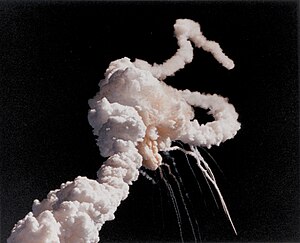
But the Challenger exploded and broke apart 73 seconds into its flight and fell 46,000 feet into the Atlantic Ocean. Seven astronauts, including a civilian classroom teacher, died. The Shuttle Program was grounded for 30 months while an official investigation progressed, resulting in significant changes. The Shuttle Program was retired in 2011.

Although President Ronald Reagan had been scheduled to deliver his State of the Union Address on January 28, 1986, he postponed it and instead addressed the nation about the Challenger disaster. This text is taken from his speech.

The Challenger exploded 73 seconds into flight.

TEXT

Ladies and gentlemen,… Today is a day for mourning and remembering… This is truly a national loss.

Nineteen years ago, almost to the day, we lost three astronauts in a terrible accident on the ground. But we’ve never lost an astronaut in flight; we’ve never had a tragedy like this. And perhaps we’ve forgotten the courage it took for the crew of the shuttle. But they, the Challenger Seven, were aware of the dangers, but overcame them and did their jobs brilliantly. We mourn seven heroes: Michael Smith, Dick Scobee, Judith Resnik, Ronald McNair, Ellison Onizuka, Gregory Jarvis, and Christa McAuliffe. We mourn their loss as a nation together.

For the families of the seven, we cannot bear, as you do, the full impact of this tragedy. But we feel the loss, and we’re thinking about you so very much. Your loved ones were daring and brave, and they had that special grace, that special spirit that says, “Give me a challenge, and I’ll meet it with joy.” They had a hunger to explore the universe and discover its truths. They wished to serve, and they did. They served all of us. We’ve grown used to wonders in this century. It’s hard to dazzle us. But for 25 years the United States space program has been doing just that. We’ve grown used to the idea of space, and perhaps we forget that we’ve only just begun. We’re still pioneers. They, the members of the Challenger crew, were pioneers.

And I want to say something to the schoolchildren of America who were watching the live coverage of the shuttle’s takeoff. I know it is hard to understand, but sometimes painful things like this happen. It’s all part of the process of exploration and discovery. It’s all part of taking a chance and expanding man’s horizons. The future doesn’t belong to the fainthearted; it belongs to the brave. The Challenger crew was pulling us into the future, and we’ll continue to follow them.

I’ve always had great faith in and respect for our space program, and what happened today does nothing to diminish it. We don’t hide our space program. We don’t keep secrets and cover things up. We do it all up front and in public. That’s the way freedom is, and we wouldn’t change it for a minute. We’ll continue our quest in space. There will be more shuttle flights and more shuttle crews and, yes, more volunteers, more civilians, more teachers in space. Nothing ends here; our hopes and our journeys continue…

The crew of the space shuttle Challenger honored us by the manner in which they lived their lives. We will never forget them, nor the last time we saw them, this morning, as they prepared for their journey and waved goodbye and “slipped the surly bonds of earth” to “touch the face of God.”

INQUIRY

  1. What was Reagan’s tone in the beginning of the speech? How did Reagan set the tone of his speech in the first paragraph? Why was it important to set the tone early?
  2. Reagan alluded to a previous space disaster on the ground (the Apollo I fire). Why? What is the effect of the mention of this January 1967 disaster?
  3. In what way did Reagan distinguish the Challenger tragedy as different from previous disasters in the space program?
  4. How did Reagan personalize the tragedy, enabling the American public to identify with the people they may not have known personally?
  5. What is the effect of Reagan’s use of the word “courage”? of “challenge”?
  6. Why did Reagan use the image of pioneers?
  7. Reagan spoke directly to school children. What message was he trying to convey?
  8. How did Reagan characterize the future of the space program?
  9. By the end of the speech Reagan’s tone has shifted. How? How did he accomplish this shift?
  10. In his last sentence Reagan quoted from the poem “High Flight” by John Gillespie Magee, Jr. Magee was a 19-year-old American who volunteered with the Royal Canadian Air Force in 1940, before the US had entered WWII. He was sent to the United Kingdom where he flew a Spitfire over hostile territory in Europe but was killed in a training exercise December 11, 1941. How do these quotes convey the imagery of flight? Why are they appropriate here, even though Magee never experienced space flight?

ADDITIONAL RESOURCES

https://www.reaganlibrary.gov/archives/speech/address-nation-explosion-space-shuttle-challenger

https://www.nasa.gov/challenger-sts-51l-accident

1961: JFK Inaugural

ESSENTIAL QUESTION

How did John Kennedy use language to defend freedom and encourage Americans to serve their country?

CONTEXT

John Fitzgerald Kennedy (1917-1963) was the 35th President of the United States. Born to an Irish family in Massachusetts, he served in the US Navy during World War II and later served in the US House and Senate. In 1960 he was the youngest man elected to the US presidency and was the first Roman Catholic President of the US. America was in the throes of the Cold War and questions were raised as to whether, considering his youth and background, he would be able to lead the US. This text is from his Inaugural Address on January 20, 1961.

TEXT

We observe today not a victory of party but a celebration of freedom–symbolizing an end as well as a beginning–signifying renewal as well as change. For I have sworn before you and Almighty God the same solemn oath our forbears prescribed nearly a century and three-quarters ago.

The world is very different now. For man holds in his mortal hands the power to abolish all forms of human poverty and all forms of human life. And yet the same revolutionary beliefs for which our forebears fought are still at issue around the globe–the belief that the rights of man come not from the generosity of the state but from the hand of God.

We dare not forget today that we are the heirs of that first revolution. Let the word go forth from this time and place, to friend and foe alike, that the torch has been passed to a new generation of Americans–born in this century, tempered by war, disciplined by a hard and bitter peace, proud of our ancient heritage–and unwilling to witness or permit the slow undoing of those human rights to which this nation has always been committed, and to which we are committed today at home and around the world.

Let every nation know, whether it wishes us well or ill, that we shall pay any price, bear any burden, meet any hardship, support any friend, oppose any foe to assure the survival and the success of liberty…

Finally, to those nations who would make themselves our adversary, we offer not a pledge but a request: that both sides begin anew the quest for peace, before the dark powers of destruction unleashed by science engulf all humanity in planned or accidental self-destruction.

We dare not tempt them with weakness. For only when our arms are sufficient beyond doubt can we be certain beyond doubt that they will never be employed.

But neither can two great and powerful groups of nations take comfort from our present course–both sides overburdened by the cost of modern weapons, both rightly alarmed by the steady spread of the deadly atom, yet both racing to alter that uncertain balance of terror that stays the hand of mankind’s final war.

So let us begin anew–remembering on both sides that civility is not a sign of weakness, and sincerity is always subject to proof. Let us never negotiate out of fear. But let us never fear to negotiate.

Let both sides explore what problems unite us instead of belaboring those problems which divide us…

In the long history of the world, only a few generations have been granted the role of defending freedom in its hour of maximum danger. I do not shrink from this responsibility–I welcome it. I do not believe that any of us would exchange places with any other people or any other generation. The energy, the faith, the devotion which we bring to this endeavor will light our country and all who serve it–and the glow from that fire can truly light the world.

And so, my fellow Americans: ask not what your country can do for you–ask what you can do for your country.

My fellow citizens of the world: ask not what America will do for you, but what together we can do for the freedom of man…

INQUIRY

  1. Kennedy’s election in 1960 was controversial for several reasons: he was much younger than previous presidents and he was the first Roman Catholic to be elected president. How did JFK connect himself to previous presidents?
  2. How did JFK attempt to reduce conflict between political parties? Describe the juxtapositions he uses. ( A juxtaposition places two things close together to contrast them).
  3. How did JFK allude (indirectly suggest) to the atomic bomb?
  4. How did JFK explain that even though America is influenced by the Founding Fathers, times are now different? What imagery did he use?
  5. What is the “torch” that has been passed to “a new generation”?
  6. Describe JFK’s “new generation of Americans.”
  7. What is “the deadly atom”?
  8. How did Kennedy describe America’s responsibility to protect liberty?
  9. Kennedy used juxtaposition (two things placed close together with contrasting effect) several times. Give at least three examples and explain their purposes.
  10. What did Kennedy ask his audience to do?
  11. What is the tone of this speech? Give examples.

ADDITIONAL RESOURCES

jfklibrary.org

https://www.whitehouse.gov/about-the-white-house/presidents/john-f-kennedy/

https://www.archives.gov/milestone-documents/president-john-f-kennedys-inaugural-address

1849: Thoreau’s “Disobedience”

ESSENTIAL QUESTION

How did Henry David Thoreau define the role of the government?

CONTEXT

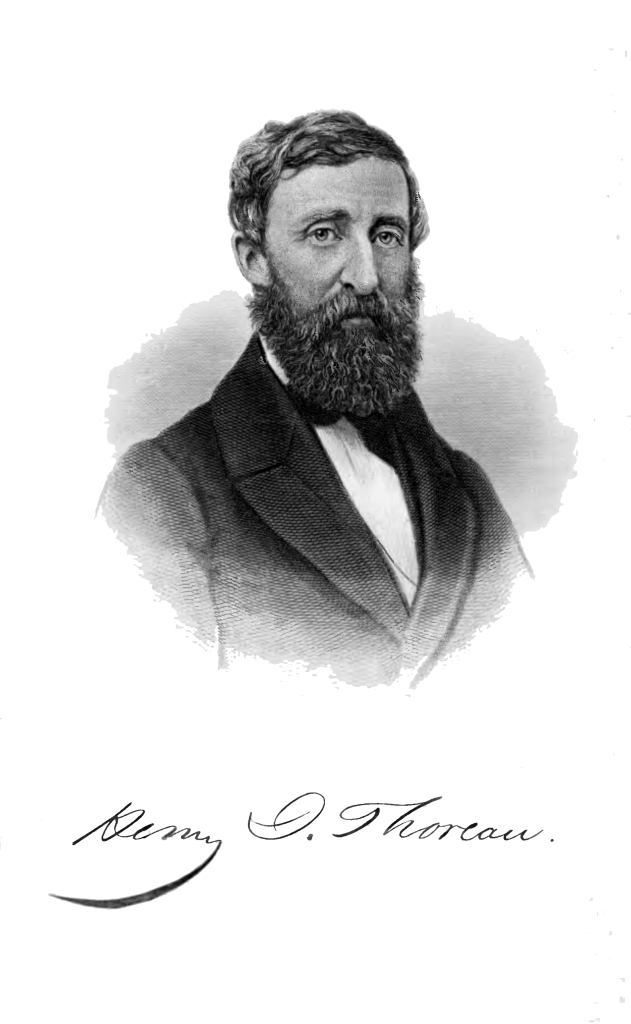
Henry David Thoreau (1817-1862) was born in Concord, Massachusetts, and graduated from Harvard in 1837. He had several jobs over the years, including teacher, pencil maker, poet, naturalist, speaker, and writer, and he kept a journal most of his life. He was friends with Ralph Waldo Emerson (1803-1882), and both were well-known Transcendentalists.

Thoreau built a cabin on the shores of Walden Pond in Massachusetts and lived there for two years (1845-1847). During that time he spent a night in jail for not paying his poll taxes, protesting the US government’s position on slavery and the Mexican-American War. One of his most well-known essays, “Civil Disobedience,” was written in 1849, and in 1854 his book Walden was published, based on his time on Walden Pond. Thoreau died at home in 1862 from tuberculosis.

This except is from “Civil Disobedience.”

TEXT

I heartily accept the motto-“That government is best which governs least;” and I should like to see it acted up to more rapidly and systematically. Carried out, it finally amounts to this, which also I believe,–“That government is best which governs not at all;” and when men are prepared for it, that will be the kind of government which they will have. Government is at best but an expedient; but most governments are usually, and all governments are sometimes, inexpedient…The government itself, which is only the mode which the people have chosen to execute their will, is equally liable to be abused and perverted before the people can act through it

Governments show thus how successfully men can be imposed on, even impose on themselves, for their own advantage. It is excellent, we must all allow; yet this government never of itself furthered any enterprise, but by the alacrity with which it got out of its way. It does not keep the country free. It does not settle the West. It does not educate. The character inherent in the American people has done all that has been accomplished; and it would have done somewhat more, if the government had not sometimes got in its way …

But, to speak practically and as a citizen, unlike those who call themselves, no-government men, I ask for, not at once no government, but at once a better government. Let every man make known what kind of government would command his respect, and that will be one step toward obtaining it.

INQUIRY

  1. What is transcendentalism?
  2. Did Thoreau believe in a strong government? How do you know? Cite from the text.
  3. What did he mean by “government is at best but an expedient”? What is an expedient? Give an example either from Thoreau’s time or today.
  4. What did Thoreau mean by “when men are prepared for it”?
  5. How did Thoreau define government in the first paragraph? What is the job of government?
  6. According to Thoreau, how can government further “any enterprise”?
  7. In the second paragraph, according to Thoreau what does the government not do? What or who has accomplished these things?
  8. In the third paragraph, what type of government did Thoreau call for?
  9. What did Thoreau say is the first step toward obtaining a good government?
  10. In 1850 the US had only 31 states and several territories. Slavery, industrialization, and territorial expansion were major national issues. How might those conditions have influenced Thoreau’s thoughts about government?

ADDITIONAL RESOURCES

https://www.poetryfoundation.org/poets/henry-david-thoreau

https://www.nps.gov/places/walden-pond-in-the-walden-pond-state-reservation.htm

1976: Barbara Jordan & Community

ESSENTIAL QUESTION

How did Barbara Jordan call for a national community?

CONTEXT

In 1966 Barbara Charline Jordan (1936-1996) became the first African American elected to the Texas Senate since 1883, and six years later she was the first African American woman elected to the US House of Representatives. A lawyer, educator, politician, and gifted orator, she gave remarks during the impeachment hearings of President Richard Nixon (1974). She was the first woman and the first African American to give a keynote address to the Democratic National Convention, and it is from that address that this text is drawn. She retired from politics in 1979 and taught at the University of Texas at Austin. She received many awards, including election into the National Women’s Hall of Fame (1990) and the Presidential Medal of Freedom (1994). She died in 1996 from complications from pneumonia and became the first African American to be interred in the Texas State Cemetery.

In 1976 Jordan was chosen to give the Keynote Address to the National Democratic Convention in Madison Square Garden, New York. Only two years after the Watergate Scandal involving President Nixon and others, 1976 was a time of deep national divisions and distrust of government. The Convention nominated Jimmy Carter, who defeated incumbent Republican Gerald Ford in the 1976 election.

TEXT

…We are a people in a quandry about the present. We are a people in search of our future. We are a people in search of a national community…

We must restore our belief in ourselves. We are a generous people so why can’t we be generous with each other? We need to take to heart the words spoken by Thomas Jefferson: Let us restore to social intercourse that harmony and that affection without which liberty and even life are but dreary things.

A nation is formed by the willingness of each of us to share in the responsibility for upholding the common good.

A government is invigorated when each of us is willing to participate in shaping the future of this nation…

If we promise as public officials, we must deliver. If we as public officials propose, we must produce. If we say to the American people it is time for you to be sacrificial; sacrifice. If the public official says that, we (public officials) must be the first to give. We must be. And again, if we make mistakes, we must be willing to admit them. We have to do that. What we have to do is strike a balance between the idea that government should do everything and the idea, the belief, that government ought to do nothing. Strike a balance.

…But a spirit of harmony will survive in America only if each of us remembers that we share a common destiny. If each of us remembers when self-interest and bitterness seem to prevail, that we share a common destiny…

INQUIRY

  1. What is a quandry?
  2. According to the text, how is a nation formed?
  3. Why does Jordan quote Thomas Jefferson? According to Jefferson, what are the consequences of not seeking “that harmony and that affection”?
  4. What are the responsibilities of public officials?
  5. How is a government invigorated?
  6. Jordan speaks of a balance. Describe the balance and how that balance might be achieved.
  7. What is the “common destiny” that Jordan references? Why is it important to remember that “common destiny”?
  8. In what ways can we encourage harmony in our lives?

ADDITIONAL RESOURCES

https://history.house.gov/People/Detail/16031

1968: RFK on King’s Assassination

ESSENTIAL QUESTION

What rhetorical devices did Robert Kennedy use to convey his grief and contextualize the assassination of Martin Luther King, Jr.?

CONTEXT

On April 4, 1968, Robert F. Kennedy was campaigning in Indiana for the Democratic Presidential Nomination. After making two speeches and before he boarded a plane for Indianapolis, he learned that Martin Luther King, Jr., had been shot in Memphis, Tennessee. When he landed in Indianapolis he learned that King had died of his wounds. He proceeded to a campaign rally site where a crowd was waiting to hear him speak. While local police stated that they could not protect Kennedy should the crowd decide to riot, he decided to speak anyway. Standing on the back of a flat-bed truck, he spoke for less that five minutes.

As you consider his remarks remember that Robert Kennedy’s brother, President John Kennedy, had been assassinated five years earlier, on November 22, 1963. As soon as RFK announced King’s death the crowd shouted and wailed. Note how Kennedy focused his remarks. Robert Kennedy was himself assassinated two months later, on June 6, 1968, while on a campaign trip in California.

TEXT

Ladies and Gentlemen,

I’m only going to talk to you just for a minute or so this evening, because I have some–some very sad new for all of you–Could you lower those signs, please?- I have some very sad news for all of you, and I think, sad news for all of our fellow citizens, and people who love peace all over the world; and that is that Martin Luther King was shot and was killed tonight in Memphis, Tennessee.

Martin Luther King dedicated his life to love and to justice between fellow human beings. He died in the cause of that effort. In this difficult day, in this difficult time for the United States, it’s perhaps well to ask what kind of a nation we are and what direction we want to move in. For those of you who are black–considering the evidence evidently is that there were white people who were responsible–you can be filled with bitterness, and with hatred, and a desire for revenge.

We can move in that direction as a country. In greater polarization-black people amongst blacks, and white amongst whites, filled with hatred toward one another. Or we can make an effort, as Martin Luther King did, to understand, and to comprehend, and replace that violence, that stain of bloodshed that has spread across our land, with an effort to understand, compassion, and love.

For those of you who are black and are tempted to fill with–be filled with hatred and mistrust of the injustice of such an act, against all white people, I would only say that I can also feel in my own heart the same kind of feeling. I had a member of my family killed, but he was killed by a white man. But we have to make an effort in the United States. We have to make an effort to understand, to get beyond, or go beyond those rather difficult times.

My favorite poem, my-my favorite poet was Aeschylus. And he once wrote, “Even in our sleep, pain which cannot forget falls drop by drop upon the heart, until, in our own despair, against our will, comes wisdom through the awful grace of God. “

What we need in the United States is not division; what we need in the United States is not hatred; what we need in the United States is not violence and lawlessness, but is love, and wisdom, and compassion toward one another, and a feeling of justice toward those who still suffer within our country, whether they be white or whether they be black…

But the vast majority of white people and the vast majority of black people in this country want to live together, want to improve the quality of our life, and want justice for all human beings that abide in our land. And let’s dedicate ourselves to what the Greeks wrote so many years ago: to tame the savageness of man and make gentle the life of this world. Let us dedicate ourselves to that, and say a prayer for our country and for our people…

INQUIRY

  1. How did Kennedy get his audience’s attention immediately and let them know this would not be a regular campaign speech? What was the effect of him asking the audience to lower the campaign signs? What words did he use?
  2. How did Kennedy describe Martin Luther King? How did Kennedy describe how black members of his audience might react to King’s assassination? Contrast these two descriptions. What is the effect of this contrast?
  3. How and why did Kennedy attempt to make a personal connection with his audience?
  4. What lesson did Kennedy ask his audience to take from the assassination?
  5. Interpret the Aeschylus quote.
  6. Why did Kennedy quote Aeschylus? What type of appeal is this, and what is the effect?
  7. As Kennedy listed what we do not need in the United States he uses anaphora, repetition of beginning clauses. What is the effect?
  8. Identify examples of appeals to logic, emotion, ethics, and authority in Kennedy’s speech. What are the effects of each?
  9. What lessons from Kennedy’s speech can apply to the United States today?

ADDITIONAL RESOURCES

https://en.wikisource.org/wiki/Speech_on_the_Assassination_of_Martin_Luther_King,_Jr.

https://www.jfklibrary.org/learn/about-jfk/the-kennedy-family/robert-f-kennedy/robert-f-kennedy-speeches/statement-on-assassination-of-martin-luther-king-jr-indianapolis-indiana-april-4-1968

1863: Lincoln’s Gettysburg Address

ESSENTIAL QUESTION

How and why does President Abraham Lincoln tie the Battle of Gettysburg to the American Revolution?

CONTEXT

It was a short speech. Only 10 sentences. It was over so fast, photographers did not get a chance to capture an image of the President speaking at the site of the carnage–fifty thousand dead, wounded, or missing–that was the battle of Gettysburg (July 1-3, 1863). The battle was seen as a Union victory, and yet both the Confederate and Union generals-in-chief offered their resignations after the battle (neither of which was accepted). After a Commission was established to organize proper burials, it was felt that a dramatic oration, common at the time, was necessary, and the Commission’s choice was Edward Everett, a well-loved orator who had spoken at other battlefields, including Bunker Hill. Everett agreed to be the speaker at the dedication of this new national cemetery, and later federal officials, including President Lincoln, were invited to join the Commission’s program. But Everett would be the headliner–Lincoln’s short address would follow. After Everett’s two hour speech on November 19, 1863, in front of approximately 20,000 spectators, Lincoln rose and spoke for three minutes.

TEXT

Four score and seven years ago our fathers brought forth on this continent a new nation, conceived in liberty and dedicated to the proposition that all men are created equal.

Now we are engaged in a great civil war, testing whether that nation or any nation so conceived and so dedicated can long endure. We are met on a great battlefield of that war. We have come to dedicate a portion of that field as a final resting place for those who here gave their lives that that nation might live. It is altogether fitting and proper that we should do this.

But, in a larger sense, we cannot dedicate–we cannot consecrate–we cannot hallow–this ground. The brave men, living and dead, who struggled here have consecrated it far above our poor power to add or detract. The world will little note nor long remember what we say here, but it can never forget what they did here. It is for us, the living, rather, to be dedicated here to the unfinished work which they who fought here have thus far so noble advanced.

It is rather for us to be here dedicated to the great task remaining before us–that from these honored dead we take increased devotion to that cause for which they gave the last full measure of devotion; that we here highly resolve that these dead shall not have died in vain; that this nation, under God, shall have a new birth of freedom; and that government of the people, but the people, fore the people shall not perish from the earth.

INQUIRY

  1. Lincoln does not specifically mention specific military units, slavery, Gettysburg, or Pennsylvania. Why do you believe he focused more on generalities? What was the effect?
  2. What is the difference between describing an event and interpreting an event?
  3. What does Lincoln mean by “a new birth of freedom”?
  4. An allusion is an expression designed to call something to mind without specifically saying it. In what ways does Lincoln allude to the American Revolution? What is the effect?
  5. What is the tone (Lincoln’s attitude toward the subject) of this speech? How does Lincoln create that tone? What does he ask his audience to do?
  6. What is the mood (the attitude Lincoln wishes to create in his audience) of this speech? How does Lincoln create that mood? In what ways are the tone and mood of this speech related?
  7. To whom is Lincoln addressing the speech–the Union, the Confederacy, or both? Defend your answer.
  8. How and why does Lincoln connect Gettysburg to the American Revolution?
  9. Although Lincoln says that “the world will little note nor long remember what we say here…” and yet we do remember the words. Why do you believe these words have endured?
  10. In what ways can the past influence our lives today?

ADDITIONAL RESOURCES

Wills, Gary. Lincoln at Gettysburg The Words that Remade America. 1992. Copyright Literary Research, Inc.