Tag: American history

1630: Winthrop on “The Hill”

ESSENTIAL QUESTION

How did John Winthrop prepare colonists to emigrate to the Massachusetts Bay Colony?

CONTEXT

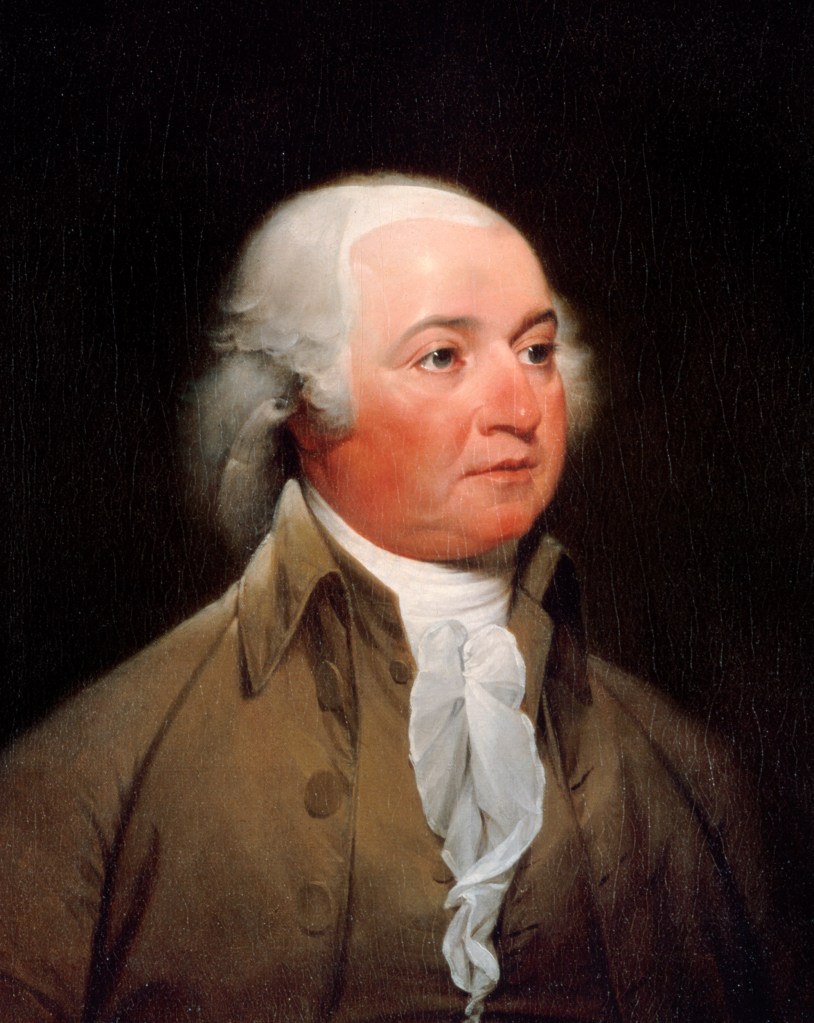
John Winthrop (1588-1649) was born into a wealthy merchant family in England and studied to become a lawyer. A deeply religious Puritan, he believed that the English Reformation was in danger from governmental policies, and with other Puritans he emigrated to the New World to escape persecution. In 1630 he arrived as the governor of the Massachusetts Bay Colony (the second English colony in the New World, as Plymouth Colony, settled in 1620, was the first). He served as governor of the Colony for most of the period 1630-1649 and upheld a rigid form of Puritan orthodoxy. He kept a journal most of his life, wrote many letters and documents, and is well-known for the lecture, “A Model of Christian Charity,” delivered before his group of emigrants left to face an unknown future in the New World. This text is taken from that lecture.

For 200 years the lecture was forgotten, but in 1839 the Massachusetts Historical Society published it. The work was again forgotten until the 1950s when Cold War historians reinterpreted it as a founding document of American exceptionalism (the idea that America holds a unique place in the world due to its values and systems). Most historians do not believe the original work indicated American exceptionalism, although the lecture has been used for that purpose several times in recent history. Presidents Kennedy, Reagan, and Obama used the “city on a hill” reference in speeches to indicate American exceptionalism and position in the world.

TEXT (original spellings have been modernized for clarity)

…Now the only way to avoid this shipwreck, and to provide for our posterity, is to follow the counsel of Micah, to do justly, to love mercy, to walk humbly with our God. For this end, we must be knit together, in this work, as one man. We most entertain each other in brotherly affection. We must be willing to abridge ourselves of our superfluities, for the supply of other’s necessities. We must uphold a familiar commerce together in all meekness, gentleness, patience, and liberality. We must delight in each other, make other’s conditions our own; rejoice together, mourn together, labor and suffer together, always having before our eyes our commission and community in the work, as members of the same body. So shall we keep the unity of the spirit in the bond of peace…For we must consider that we shall be as a city upon a hill. The eyes of all people are upon us...

INQUIRY

  1. Why would Winthrop tell the settlers to be “knit together…as one man”? What circumstances might the new settlers face that would require this type of working together?
  2. What would be the result of being “knit together”?
  3. In this speech Winthrop described a covenant between God and the Puritans. How did he describe the covenant?
  4. Winthrop described both group discipline and individual responsibilities. How did he believe these two concepts supported each other?
  5. The city on a hill image is from Jesus’s Sermon on the Mount, found in Matthew 5:14; “Ye are the light of the world. A city that is set on a hill cannot be hid.” By using the words of Jesus, Winthrop is using what type(s) of appeal– logos, ethos, pathos, and/or appeal to authority? Justify your response.
  6. How did Winthrop’s use of the image of a city on a hill reflect the Puritan flight from religious persecution?
  7. The Massachusetts Bay Colony centered around what would become the city of Boston. Did the Puritans live up to the image of a city on a hill? Justify your response.
  8. Some modern scholars dispute Winthrop’s authorship of this lecture, even if Winthrop delivered it orally, as two other ministers were also on his voyage. Would this change the message of the text? Why or why not? What is the role of modern speechwriters who compose a speech but do not deliver it?
  9. As governor Winthrop imposed his beliefs that there was no separation between church and state. In later years, two members of the Colony, Roger Williams and Anne Hutchinson, were forced to leave the Colony for their religious beliefs. Explain the irony.

ADDITIONAL RESOURCES

John Winthrop

1851: Sojourner Truth, “A Woman”

ESSENTIAL QUESTION

How did Sojourner Truth weave support for the abolition movement and the women’s rights movement into a single presentation?

CONTEXT

Sojourner Truth (1797-1883) was born Isabella Baumfree, enslaved on a New York estate owned by a Dutch American. After her master ignored the New York anti-slavery law of 1827, she ran away, experienced a religious conversion, and by 1843 was an itinerant minister, changing her name to Sojourner Truth. Involved in the abolition and women’s rights movements of the 1850s, she was invited to speak at the 1851 Women’s Rights Convention in Akron, Ohio. She spoke without notes.

The text below is from the more well-known version of Truth’s speech that she delivered at the Convention, but there were at least two versions published. Marius Robinson (1806-1878), a white abolitionist, minister, and newspaper editor, was in the audience in 1851; he transcribed her speech and printed it in the newspaper Anti Slavery Bugle on June 21, 1851. But the more well-known version was published in 1863 by Frances Gage (1808-1884), a white activist in the abolition, women’s rights, and temperance movements, who had introduced Sojourner Truth at the 1851 Convention. While Gage, who worked with the Union during the Civil War to help freed slaves, maintained Truth’s main ideas, she altered the wording, including a Southern dialect. Gage’s version of the speech appeared in the New York Independent on April 23, 1863.

TEXT (1863 version)

Well, children, where there is so much racket there must be something out of kilter. I think that ‘twixt the negroes of the South and the women at the North, all talking about rights, the white men will be in a fix pretty soon. But what’s all this here talking about?

That man over there says that women need to be helped into carriages, and lifted over ditches, and to have the best place everywhere. Nobody ever helps me into carriages, or over mud-puddles, or gives me any best place! And ain’t I a woman? Look at me! Look at my arm! I have ploughed and planted, and gathered into barns, and no man could head me! And ain’t I a woman? I could work as much and eat as much as a man – when I could get it – and bear the lash as well! And ain’t I a woman? I have borne thirteen children, and seen most all sold off to slavery, and when I cried out with my mother’s grief, none but Jesus heard me! And ain’t I a woman?

Then they talk about this thing in the head; what’s this they call it? [member of audience whispers, “intellect”] That’s it, honey. What’s that got to do with women’s rights or negroes’ rights? If my cup won’t hold but a pint, and yours holds a quart, wouldn’t you be mean not to let me have my little half measure full?

Then that little man in black there, he says women can’t have as much rights as men, ’cause Christ wasn’t a woman! Where did your Christ come from? Where did your Christ come from? From God and a woman! Man had nothing to do with Him.

If the first woman God ever made was strong enough to turn the world upside down all alone, these women together ought to be able to turn it back , and get it right side up again! And now they is asking to do it, the men better let them.

Obliged to you for hearing me, and now old Sojourner ain’t got nothing more to say.

INQUIRY

  1. What is the effect of beginning the speech by asking a question? How might that catch the attention of the audience?
  2. In what ways did Truth compare herself to “other women”? Why did she use these comparisons?
  3. What is the effect of the parallel structure of the speech with the repetition of the phrase, “ain’t I a woman”?
  4. Truth was a member of the abolition movement and the women’s rights movement. Identify her arguments supporting each. How did she weave the arguments together?
  5. We don’t know what Sojourner Truth sounded like, but we do know that her days of slavery were spent in New York. Why might Gage have added Southern dialect to the speech (Gage’s publication was in 1863, during the Civil War)? How might this have influenced the intended audience of the speech in 1863?
  6. Can altering the wording of a speech change its meaning? To compare the two versions of Sojourner Truth’s speech, go to https://www.thesojournertruthproject.com/compare-the-speeches/ Do you believe the meaning of the speech was altered in the 1863 version? If so, how and in what way(s)?
  7. How might the transcripts of the two versions have been influenced by the thoughts and ideas of the people who made the transcriptions? Compare how Robinson and Gage might have viewed the speech differently and why.
  8. Can the meaning of a speech evolve over time? If so, how? Give examples.

ADDITIONAL RESOURCES

https://www.nps.gov/articles/sojourner-truth.htm

https://www.pbs.org/thisfarbyfaith/people/sojourner_truth.html

1986: Reagan & the Challenger

ESSENTIAL QUESTION

How did President Reagan use language to encourage a mourning American public to focus on the future?

CONTEXT

The US Space Shuttle program (1981-2011) employed a partially reusable spacecraft for flights to conduct research while in orbit as well as to deploy scientific, military, and sometimes commercial payloads. The program was run by NASA, the National Aeronautics and Space Administration, and each shuttle included a crew as well as equipment. Five shuttles were built, and the Challenger was the second one constructed. The January 1986 mission was the 10th of the Challenger orbiter and the 25th of the Space Shuttle fleet. This mission was scheduled to deploy a communication satellite, to study Haley’s Comet, and to initiate the new “Teacher in Space” program. The shuttle launch was widely televised and seen in classrooms across the US. This photograph from the NASA Photograph Collection shows the shuttle prior to launch.

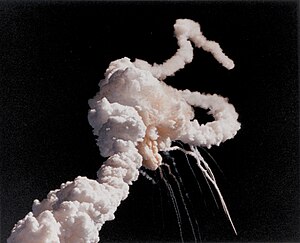
But the Challenger exploded and broke apart 73 seconds into its flight and fell 46,000 feet into the Atlantic Ocean. Seven astronauts, including a civilian classroom teacher, died. The Shuttle Program was grounded for 30 months while an official investigation progressed, resulting in significant changes. The Shuttle Program was retired in 2011.

Although President Ronald Reagan had been scheduled to deliver his State of the Union Address on January 28, 1986, he postponed it and instead addressed the nation about the Challenger disaster. This text is taken from his speech.

The Challenger exploded 73 seconds into flight.

TEXT

Ladies and gentlemen,… Today is a day for mourning and remembering… This is truly a national loss.

Nineteen years ago, almost to the day, we lost three astronauts in a terrible accident on the ground. But we’ve never lost an astronaut in flight; we’ve never had a tragedy like this. And perhaps we’ve forgotten the courage it took for the crew of the shuttle. But they, the Challenger Seven, were aware of the dangers, but overcame them and did their jobs brilliantly. We mourn seven heroes: Michael Smith, Dick Scobee, Judith Resnik, Ronald McNair, Ellison Onizuka, Gregory Jarvis, and Christa McAuliffe. We mourn their loss as a nation together.

For the families of the seven, we cannot bear, as you do, the full impact of this tragedy. But we feel the loss, and we’re thinking about you so very much. Your loved ones were daring and brave, and they had that special grace, that special spirit that says, “Give me a challenge, and I’ll meet it with joy.” They had a hunger to explore the universe and discover its truths. They wished to serve, and they did. They served all of us. We’ve grown used to wonders in this century. It’s hard to dazzle us. But for 25 years the United States space program has been doing just that. We’ve grown used to the idea of space, and perhaps we forget that we’ve only just begun. We’re still pioneers. They, the members of the Challenger crew, were pioneers.

And I want to say something to the schoolchildren of America who were watching the live coverage of the shuttle’s takeoff. I know it is hard to understand, but sometimes painful things like this happen. It’s all part of the process of exploration and discovery. It’s all part of taking a chance and expanding man’s horizons. The future doesn’t belong to the fainthearted; it belongs to the brave. The Challenger crew was pulling us into the future, and we’ll continue to follow them.

I’ve always had great faith in and respect for our space program, and what happened today does nothing to diminish it. We don’t hide our space program. We don’t keep secrets and cover things up. We do it all up front and in public. That’s the way freedom is, and we wouldn’t change it for a minute. We’ll continue our quest in space. There will be more shuttle flights and more shuttle crews and, yes, more volunteers, more civilians, more teachers in space. Nothing ends here; our hopes and our journeys continue…

The crew of the space shuttle Challenger honored us by the manner in which they lived their lives. We will never forget them, nor the last time we saw them, this morning, as they prepared for their journey and waved goodbye and “slipped the surly bonds of earth” to “touch the face of God.”

INQUIRY

  1. What was Reagan’s tone in the beginning of the speech? How did Reagan set the tone of his speech in the first paragraph? Why was it important to set the tone early?
  2. Reagan alluded to a previous space disaster on the ground (the Apollo I fire). Why? What is the effect of the mention of this January 1967 disaster?
  3. In what way did Reagan distinguish the Challenger tragedy as different from previous disasters in the space program?
  4. How did Reagan personalize the tragedy, enabling the American public to identify with the people they may not have known personally?
  5. What is the effect of Reagan’s use of the word “courage”? of “challenge”?
  6. Why did Reagan use the image of pioneers?
  7. Reagan spoke directly to school children. What message was he trying to convey?
  8. How did Reagan characterize the future of the space program?
  9. By the end of the speech Reagan’s tone has shifted. How? How did he accomplish this shift?
  10. In his last sentence Reagan quoted from the poem “High Flight” by John Gillespie Magee, Jr. Magee was a 19-year-old American who volunteered with the Royal Canadian Air Force in 1940, before the US had entered WWII. He was sent to the United Kingdom where he flew a Spitfire over hostile territory in Europe but was killed in a training exercise December 11, 1941. How do these quotes convey the imagery of flight? Why are they appropriate here, even though Magee never experienced space flight?

ADDITIONAL RESOURCES

https://www.reaganlibrary.gov/archives/speech/address-nation-explosion-space-shuttle-challenger

https://www.nasa.gov/challenger-sts-51l-accident