ESSENTIAL QUESTION
How did John Adams convey the complex emotions he felt at the adoption of American Independence in 1776?
CONTEXT
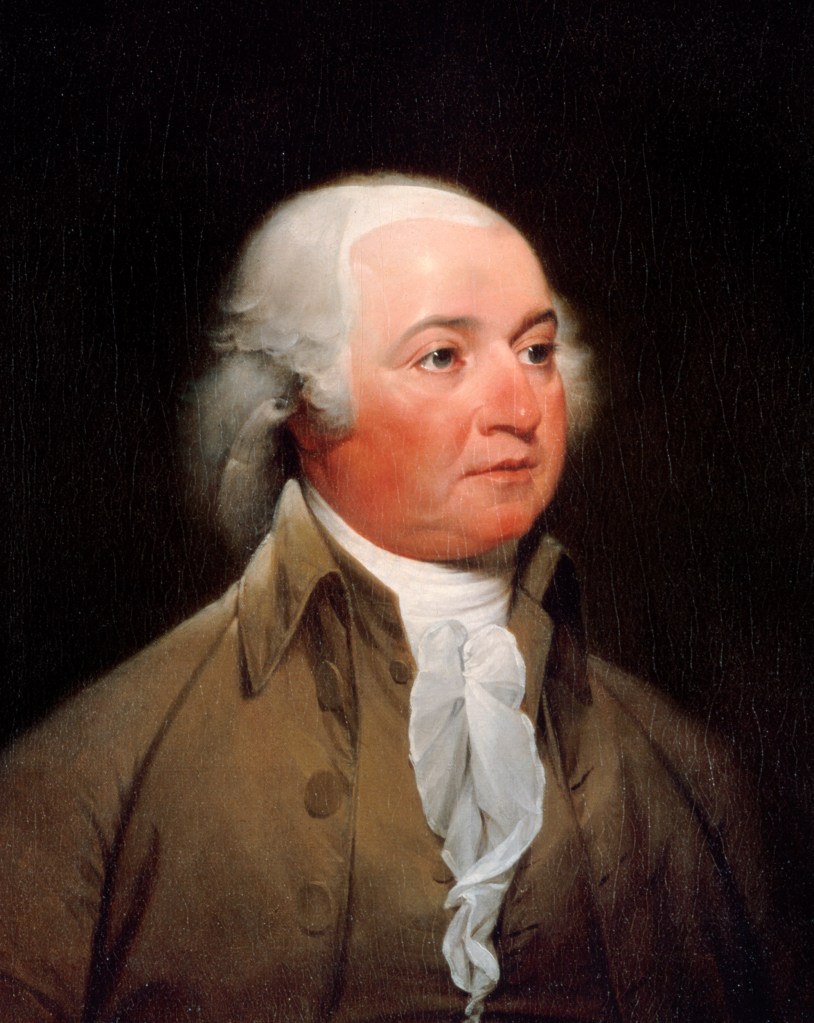
John Adams (1735-1826) was an American statesman, diplomat, writer, and second president of the United States. A founding father, he helped guide the idea of American Independence through the Second Continental Congress. Later, during the American Revolution, he was a senior diplomat in Europe and served as George Washington’s Vice President. He died of a heart attack on July 4, 1826, the 50th Anniversary of the Declaration of Independence (which was also the death date of Thomas Jefferson).
John and his wife Abigail spent many years apart due to his political responsibilities, and they wrote each other letters often. This text is from a letter John wrote to Abigail in July of 1776 while he attended the Second Continental Congress in Philadelphia. Congress signed the Lee Resolution (Richard Henry Lee was a delegate from Virginia) on July 2; the Resolution contained three elements–separation from the British Crown, a plan for a confederation of the colonies, and a call to pursue foreign alliances. After much discussion, on July 4 Congress voted on and approved with amendments the report from a Committee of Five delegates (Adams was a member of the Committee) tasked with writing a declaration to explain the Colonies’ bid for freedom. By the next day, the Declaration of Independence was printed and began to be distributed (only print technology was available). On August 2, 1776, most delegates signed the Declaration and it became official.
TEXT
But the Day is past. The Second Day of July 1776, will be the most memorable Epocha, in the History of America.—I am apt to believe that it will be celebrated, by succeeding Generations, as the great anniversary Festival. It ought to be commemorated, as the Day of Deliverance by solemn Acts of Devotion to God Almighty. It ought to be solemnized with Pomp and Parade, with Shews, Games, Sports, Guns, Bells, Bonfires and Illuminations from one End of this Continent to the other from this Time forward forever more.
You will think me transported with Enthusiasm but I am not.—I am well aware of the Toil and Blood and Treasure, that it will cost Us to maintain this Declaration, and support and defend these States.—Yet through all the Gloom I can see the Rays of ravishing Light and Glory. I can see that the End is more than worth all the Means. And that Posterity will tryumph in that Days Transaction, even altho We should rue it, which I trust in God We shall not.
INQUIRY
- What is an epocha? What implication did Adams make by using that term?
- Why did Adams recognize July 2?
- Why did Adams use the term, “day of deliverance”? Deliverance from what?
- Identify Adams’s appeals to ethos and authority.
- How did Adams describe what he sees as future “anniversary” festivals? Do you believe his prediction has come true? Give examples.
- Why did Adams insert the statement, “I am well aware of the Toil and Blood and Treasure…”?
- Adams shifted the tone of this letter twice in this excerpt. Identify those shifts and how they were accomplished.
- What emotions did Adams convey in this letter?
- This excerpt is from many letters that John Adams wrote his wife Abigail–actually he wrote her two letters on July 3, 1776, the date of this letter. The earlier letter from July 3 stated, in part, …Yesterday the greatest Question was decided, which ever was debated in America, and a greater perhaps, never was or will be decided among Men. A Resolution was passed without one dissenting Colony “that these united Colonies, are, and of right ought to be free and independent States, and as such, they have, and of Right ought to have full Power to make War, conclude Peace, establish Commerce, and to do all the other Acts and Things, which other States may rightfully do.” You will see in a few days a Declaration setting forth the Causes, which have impell’d Us to this mighty Revolution, and the Reasons which will justify it, in the Sight of God and Man. A Plan of Confederation will be taken up in a few days... How might this correspondence have led to confusion about the date of American Independence?
- Why was the actual date of American Independence important? Is it important today? Why or why not?
ADDITIONAL RESOURCES
“John Adams to Abigail Adams, 3 July 1776,” Founders Online, National Archives, https://founders.archives.gov/documents/Adams/04-02-02-0016. [Original source: The Adams Papers, Adams Family Correspondence, vol. 2, June 1776 – March 1778, ed. L. H. Butterfield. Cambridge, MA: Harvard University Press, 1963, pp. 29–33.]
 Read Closely