ESSENTIAL QUESTION:
How did Major Sullivan Ballou use language to convey his deepest emotions to his wife?
CONTEXT:
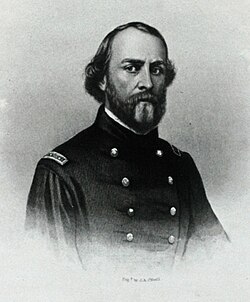
Sullivan Ballou (1829-1861) was a lawyer and politician from Rhode Island. Married with two sons, he was an active Republican, supporter of Abraham Lincoln, and served in the Rhode Island legislature. At the outbreak of the American Civil War he received a commission in the 2nd Rhode Island Regiment and was soon sent to Washington, DC. Injured in the 1st Battle of Bull Run (July 21, 1861), he was too wounded to remove from the battlefield and was left in the care of Army surgeons. He died July 28 .
This letter to his wife was written from Camp Clark, outside Washington, DC. as his unit prepared for action. While some historians question that authorship, this lesson assumes the letter was written by Major Sullivan Ballou at that time.
TEXT:
July the 14th, 1861
Washington D.C.
My very dear Sarah:
The indications are very strong that we shall move in a few days—perhaps tomorrow. Lest I should not be able to write you again, I feel impelled to write lines that may fall under your eye when I shall be no more.
Our movement may be one of a few days duration and full of pleasure—and it may be one of severe conflict and death to me. Not my will, but thine O God, be done. If it is necessary that I should fall on the battlefield for my country, I am ready. I have no misgivings about, or lack of confidence in, the cause in which I am engaged, and my courage does not halt or falter. I know how strongly American Civilization now leans upon the triumph of the Government, and how great a debt we owe to those who went before us through the blood and suffering of the Revolution. And I am willing—perfectly willing—to lay down all my joys in this life, to help maintain this Government, and to pay that debt.
But, my dear wife, when I know that with my own joys I lay down nearly all of yours, and replace them in this life with cares and sorrows—when, after having eaten for long years the bitter fruit of orphanage myself, I must offer it as their only sustenance to my dear little children—is it weak or dishonorable, while the banner of my purpose floats calmly and proudly in the breeze, that my unbounded love for you, my darling wife and children, should struggle in fierce, though useless, contest with my love of country.
Sarah, my love for you is deathless, it seems to bind me to you with mighty cables that nothing but Omnipotence could break; and yet my love of Country comes over me like a strong wind and bears me irresistibly on with all these chains to the battlefield.
The memories of the blissful moments I have spent with you come creeping over me, and I feel most gratified to God and to you that I have enjoyed them so long. And hard it is for me to give them up and burn to ashes the hopes of future years, when God willing, we might still have lived and loved together and seen our sons grow up to honorable manhood around us. I have, I know, but few and small claims upon Divine Providence, but something whispers to me—perhaps it is the wafted prayer of my little Edgar—that I shall return to my loved ones unharmed. If I do not, my dear Sarah, never forget how much I love you, and when my last breath escapes me on the battlefield, it will whisper your name.
Forgive my many faults, and the many pains I have caused you. How thoughtless and foolish I have often been! How gladly would I wash out with my tears every little spot upon your happiness, and struggle with all the misfortune of this world, to shield you and my children from harm. But I cannot. I must watch you from the spirit land and hover near you, while you buffet the storms with your precious little freight, and wait with sad patience till we meet to part no more.
But, O Sarah! If the dead can come back to this earth and flit unseen around those they loved, I shall always be near you; in the brightest day and in the darkest night—amidst your happiest scenes and gloomiest hours—always, always; and if there be a soft breeze upon your cheek, it shall be my breath; or the cool air fans your throbbing temple, it shall be my spirit passing by.
Sarah, do not mourn me dead; think I am gone and wait for me, for we shall meet again.
As for my little boys, they will grow as I have done, and never know a father’s love and care. Little Willie is too young to remember me long, and my blue-eyed Edgar will keep my frolics with him among the dimmest memories of his childhood. Sarah, I have unlimited confidence in your maternal care and your development of their characters. Tell my two mothers his and hers I call God’s blessing upon them. O Sarah, I wait for you there! Come to me, and lead thither my children.
Sullivan
INQUIRY:
- Soldiers still often write “death letters” when they are in combat. What would be the purpose(s) of these letters?
- The Governor of Rhode Island traveled to Virginia in March, 1862, to retrieve Ballou’s remains, which had been left behind when the Union troops retreated from the battlefield. This letter was never mailed to Sarah; it was found in Major Ballou’s effects after his death and was given to her. The original letter has not been found but multiple copies exist. Does the fact that the original has not yet been found change the effects of the letter? Why or why not?
- Sarah was 24 years old when her husband died, and she never remarried. She moved to New Jersey and lived with her son William, where she died in 1917 at age 80. She and her husband are buried together in Providence, RI, Swan Point Cemetery, and some say that this letter was buried with her. Why might her family have buried the letter with her? Research “grave goods.” In what cultures and for what purposes have grave goods been prominent?
- There is some controversy about this letter, with some literary historians positing that it does not convey Ballou’s style of writing. Is it possible that under intense emotional stress one’s writing style can alter?
- Identify at least six appeals in this letter, including ones to emotion (pathos), to ethics (ethos), to logic (logos), and to kairos (timeliness). How did Ballou weave these appeals together? Which appeals do you believe are strongest? Why?
- How did Ballou reference the future? What was his purpose in doing so?
- Was Ballou a religious man? How do you know?
- Identify examples of juxtaposition and contrast in the letter. What purposes do they serve?
- What type of officer do you believe Ballou would have been? Justify your response.
- What message would this letter have conveyed to Ballou’s wife Sarah? Justify your response.
ADDITIONAL RESOURCES:
https://www.pbslearningmedia.org/resource/honorable-manhood-video/ken-burns-the-civil-war/
https://www.nps.gov/articles/-my-very-dear-wife-the-last-letter-of-major-sullivan-ballou.htm

 Read Closely