Tag: slavery

1845: Douglass’s Narrative

ESSENTIAL QUESTION

How did Frederick Douglass convey the importance of escape for a fugitive slave?

CONTEXT

Frederick Douglass (1817?-1895) was born into slavery in Maryland. As a young boy he was sent to Baltimore to be a house servant, and with the assistance of his master’s wife he learned to read and write. He escaped from slavery in 1838, went to New York City, and soon changed his name to Frederick Douglass. He became an accomplished orator for the abolition movement; he was so accomplished that many doubted he could ever have been a slave. Thus he wrote Narrative of the Life of Frederick Douglass, from which this text is taken, describing his escape. During the Civil War he assisted in recruiting Black soldiers to the Union Army and actively supported freedmen after the War. He died in 1895.

TEXT

The wretchedness of slavery, and the blessedness of freedom, were perpetually before me. It was life and death with me. But I remained firm, and, according to my resolution, on the third day of September, 1838, I left my chains, and succeeded in reaching New York without the slightest interruption of any kind. How I did so,—what means I adopted,—what direction I travelled, and by what mode of conveyance,—I must leave unexplained

I have been frequently asked how I felt when I found myself in a free State. I have never been able to answer the question with any satisfaction to myself. It was a moment of the highest excitement I ever experienced. I suppose I felt as one may imagine the unarmed mariner to feel when he is rescued by a friendly man-of-war from the pursuit of a pirate. In writing to a dear friend, immediately after my arrival at New York, I said I felt like one who had escaped a den of hungry lions. This state of mind, however, very soon subsided; and I was again seized with a feeling of great insecurity and loneliness. I was yet liable to be taken back, and subjected to all the tortures of slavery… There I was in the midst of thousands, and yet a perfect stranger; without home and without friends, in the midst of thousands of my own brethren—children of a common Father, and yet I dared not to unfold to any one of them my sad condition. I was afraid to speak to any one for fear of speaking to the wrong one, and thereby falling into the hands of money-loving kidnappers, whose business it was to lie in wait for the panting fugitive, as the ferocious beasts of the forest lie in wait for their prey. The motto which I adopted when I started from slavery was this—“Trust no man!” I saw in every white man an enemy, and in almost every colored man cause for distrust. It was a most painful situation; and, to understand it, one must needs experience it, or imagine himself in similar circumstances. Let him be a fugitive slave in a strange land—a land given up to be the hunting-ground for slaveholders—whose inhabitants are legalized kidnappers—where he is every moment subjected to the terrible liability of being seized upon by his fellowmen, as the hideous crocodile seizes upon his prey!—I say, let him place himself in my situation—without home or friends—without money or credit—wanting shelter, and no one to give it—wanting bread, and no money to buy it,—and at the same time let him feel that he is pursued by merciless men-hunters, and in total darkness as to what to do, where to go, or where to stay,—perfectly helpless both as to the means of defence and means of escape,—in the midst of plenty, yet suffering the terrible gnawings of hunger,—in the midst of houses, yet having no home,—among fellow-men, yet feeling as if in the midst of wild beasts, whose greediness to swallow up the trembling and half-famished fugitive is only equaled by that with which the monsters of the deep swallow up the helpless fish upon which they subsist,—I say, let him be placed in this most trying situation,—the situation in which I was placed,—then, and not till then, will he fully appreciate the hardships of, and know how to sympathize with, the toil-worn and whip-scarred fugitive slave.

Thank Heaven, I remained but a short time in this distressed situation. I was relieved from it by the humane hand of Mr. David Ruggles, whose vigilance, kindness, and perseverance, I shall never forget. I am glad of an opportunity to express, as far as words can, the love and gratitude I bear him. Mr. Ruggles is now afflicted with blindness, and is himself in need of the same kind offices which he was once so forward in the performance of toward others. I had been in New York but a few days, when Mr. Ruggles sought me out, and very kindly took me to his boarding-house at the corner of Church and Lespenard Streets. Mr. Ruggles was then very deeply engaged in … attending to a number of other fugitive slaves, devising ways and means for their successful escape; and, though watched and hemmed in on almost every side, he seemed to be more than a match for his enemies...

INQUIRY

  1. In the first paragraph of this excerpt Douglass drew clear comparisons between slavery and freedom. What terms did he use? How does this affect the comparison?
  2. Why might he clearly have dated the day of his escape? Remember, many thought he was too literate to have ever been a slave.
  3. Why would he have refrained from listing the exact direction and people who helped him escape?
  4. Douglass used two images to convey his immediate feelings of freedom–that of a rescued mariner and that of someone rescued from a den of lions. What power do these images convey? What emotions do they call to mind? Do you see any Biblical references?
  5. Douglass’s written tone quickly changed. Analyze the change in tone, its purpose, and how he accomplished this.
  6. Douglass then went on to describe his distressed condition. He used a series of contrasts with very little punctuation, mainly dashes. What emotion did this convey? How?
  7. What was Mr. Ruggles’s role in New York? How do you know?
  8. What qualities of this written text suggest that Douglass would be a good speaker? Remember, he became a vocal advocate for abolition.

ADDITIONAL RESOURCES

https://gutenberg.org/files/23/23-h/23-h.htm

1861: Lincoln’s “Better Angels”

ESSENTIAL QUESTION

How did Abraham Lincoln use language to discourage Southern secession in his first inaugural address?

CONTEXT

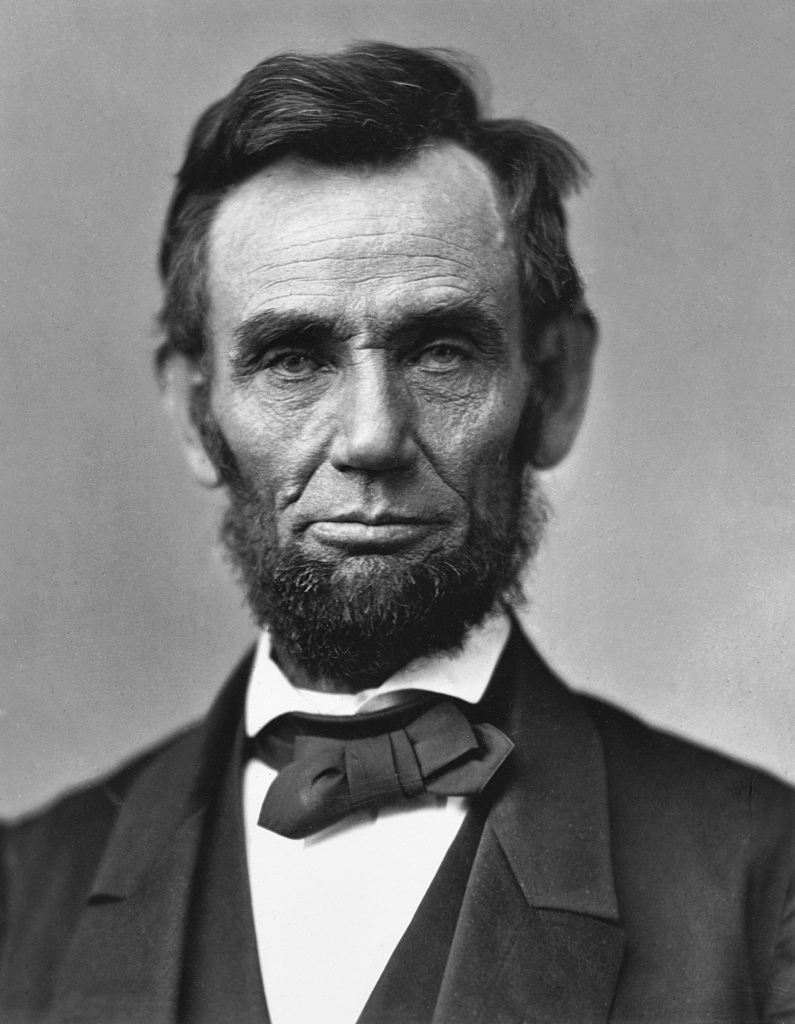
Abraham Lincoln (1809-1865) was the 16th President of the United States. Born in a log cabin on the Kentucky frontier, he was self-educated, studied to be a lawyer, and rose in politics, representing Illinois in Congress and eventually becoming a leader in the new Republican Party. National politics in the 1850s and early 1860s were contentious, belligerent, and antagonistic. A moderate Republican, Lincoln was elected president in 1860, even though he did not actively seek the nomination in the South and seven states had seceded from the Union by the time he delivered this inaugural at the US Capitol. Lincoln was assassinated in Washington, D.C., in April, 1865.

TEXT

…I have no purpose, directly or indirectly, to interfere with the institution of slavery in the States where it exists. I believe I have no lawful right to do so, and I have no inclination to do so…

…It follows from these views that no State upon its own mere motion can lawfully get out of the Union; that resolves and ordinances to that effect are legally void, and that acts of violence within any State or States against the authority of the United States are insurrectionary or revolutionary, according to circumstances….

…The Chief Magistrate derives all his authority from the people, and they have referred none upon him to fix terms for the separation of the States. The people themselves can do this if also they choose, but the Executive as such has nothing to do with it. His duty is to administer the present Government as it came to his hands and to transmit it unimpaired by him to his successor…

…In your hands, my dissatisfied fellow-countrymen, and not in mine, is the momentous issue of civil war. The Government will not assail you. You can have no conflict without being yourselves the aggressors. You have no oath registered in heaven to destroy the Government, while I shall have the most solemn one to “preserve, protect, and defend it.”

I am loath to close. We are not enemies, but friends. We must not be enemies. Though passion may have strained it must not break our bonds of affection. The mystic chords of memory, stretching from every battlefield and patriot grave to every living heart and hearthstone all over this broad land, will yet swell the chorus of the Union, when again touched, as surely they will be, by the better angels of our nature.

INQUIRY

  1. Why did Lincoln state he would not interfere with the institution of slavery?
  2. Explain Lincoln’s views on secession.
  3. How did Lincoln address Southern citizens?
  4. What was the tone of these excerpts from them 1st Inaugural? How do you know? How did the tone change?
  5. To whom did Lincoln give the responsibility for beginning the Civil War?
  6. What were the “mystic chords of memory”? Why did Lincoln use that metaphor?
  7. What did Lincoln mean in his closing by referring to the “better angels of our nature”?
  8. Lincoln won reelection in 1864, and much had happened in the four years since the 1st Inaugural. Secession had become a fact and after the Emancipation Proclamation the purpose of the Civil War focused on the eradication of slavery. In Lincoln’s 2nd inaugural address (March, 1865) he closed with the words, “With malice toward none with charity for all with firmness in the right as God gives us to see the right let us strive on to finish the work we are in to bind up the nation’s wounds, to care for him who shall have borne the battle and for his widow and his orphan ~ to do all which may achieve and cherish a just and lasting peace among ourselves and with all nations.” What was the tone of those words? How did that tone differ from the tone of the 1st Inaugural text?

ADDITIONAL RESOURCES

https://avalon.law.yale.edu/19th_century/lincoln1.asp

https://www.whitehouse.gov/about-the-white-house/presidents/abraham-lincoln/

https://www.nps.gov/articles/000/-with-malice-toward-none-lincoln-s-second-inaugural.htm

1851: Sojourner Truth, “A Woman”

ESSENTIAL QUESTION

How did Sojourner Truth weave support for the abolition movement and the women’s rights movement into a single presentation?

CONTEXT

Sojourner Truth (1797-1883) was born Isabella Baumfree, enslaved on a New York estate owned by a Dutch American. After her master ignored the New York anti-slavery law of 1827, she ran away, experienced a religious conversion, and by 1843 was an itinerant minister, changing her name to Sojourner Truth. Involved in the abolition and women’s rights movements of the 1850s, she was invited to speak at the 1851 Women’s Rights Convention in Akron, Ohio. She spoke without notes.

The text below is from the more well-known version of Truth’s speech that she delivered at the Convention, but there were at least two versions published. Marius Robinson (1806-1878), a white abolitionist, minister, and newspaper editor, was in the audience in 1851; he transcribed her speech and printed it in the newspaper Anti Slavery Bugle on June 21, 1851. But the more well-known version was published in 1863 by Frances Gage (1808-1884), a white activist in the abolition, women’s rights, and temperance movements, who had introduced Sojourner Truth at the 1851 Convention. While Gage, who worked with the Union during the Civil War to help freed slaves, maintained Truth’s main ideas, she altered the wording, including a Southern dialect. Gage’s version of the speech appeared in the New York Independent on April 23, 1863.

TEXT (1863 version)

Well, children, where there is so much racket there must be something out of kilter. I think that ‘twixt the negroes of the South and the women at the North, all talking about rights, the white men will be in a fix pretty soon. But what’s all this here talking about?

That man over there says that women need to be helped into carriages, and lifted over ditches, and to have the best place everywhere. Nobody ever helps me into carriages, or over mud-puddles, or gives me any best place! And ain’t I a woman? Look at me! Look at my arm! I have ploughed and planted, and gathered into barns, and no man could head me! And ain’t I a woman? I could work as much and eat as much as a man – when I could get it – and bear the lash as well! And ain’t I a woman? I have borne thirteen children, and seen most all sold off to slavery, and when I cried out with my mother’s grief, none but Jesus heard me! And ain’t I a woman?

Then they talk about this thing in the head; what’s this they call it? [member of audience whispers, “intellect”] That’s it, honey. What’s that got to do with women’s rights or negroes’ rights? If my cup won’t hold but a pint, and yours holds a quart, wouldn’t you be mean not to let me have my little half measure full?

Then that little man in black there, he says women can’t have as much rights as men, ’cause Christ wasn’t a woman! Where did your Christ come from? Where did your Christ come from? From God and a woman! Man had nothing to do with Him.

If the first woman God ever made was strong enough to turn the world upside down all alone, these women together ought to be able to turn it back , and get it right side up again! And now they is asking to do it, the men better let them.

Obliged to you for hearing me, and now old Sojourner ain’t got nothing more to say.

INQUIRY

  1. What is the effect of beginning the speech by asking a question? How might that catch the attention of the audience?
  2. In what ways did Truth compare herself to “other women”? Why did she use these comparisons?
  3. What is the effect of the parallel structure of the speech with the repetition of the phrase, “ain’t I a woman”?
  4. Truth was a member of the abolition movement and the women’s rights movement. Identify her arguments supporting each. How did she weave the arguments together?
  5. We don’t know what Sojourner Truth sounded like, but we do know that her days of slavery were spent in New York. Why might Gage have added Southern dialect to the speech (Gage’s publication was in 1863, during the Civil War)? How might this have influenced the intended audience of the speech in 1863?
  6. Can altering the wording of a speech change its meaning? To compare the two versions of Sojourner Truth’s speech, go to https://www.thesojournertruthproject.com/compare-the-speeches/ Do you believe the meaning of the speech was altered in the 1863 version? If so, how and in what way(s)?
  7. How might the transcripts of the two versions have been influenced by the thoughts and ideas of the people who made the transcriptions? Compare how Robinson and Gage might have viewed the speech differently and why.
  8. Can the meaning of a speech evolve over time? If so, how? Give examples.

ADDITIONAL RESOURCES

https://www.nps.gov/articles/sojourner-truth.htm

https://www.pbs.org/thisfarbyfaith/people/sojourner_truth.html