Month: April 2024

1976: Barbara Jordan & Community

ESSENTIAL QUESTION

How did Barbara Jordan call for a national community?

CONTEXT

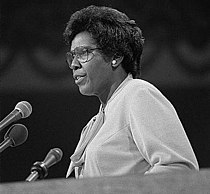
In 1966 Barbara Charline Jordan (1936-1996) became the first African American elected to the Texas Senate since 1883, and six years later she was the first African American woman elected to the US House of Representatives. A lawyer, educator, politician, and gifted orator, she gave remarks during the impeachment hearings of President Richard Nixon (1974). She was the first woman and the first African American to give a keynote address to the Democratic National Convention, and it is from that address that this text is drawn. She retired from politics in 1979 and taught at the University of Texas at Austin. She received many awards, including election into the National Women’s Hall of Fame (1990) and the Presidential Medal of Freedom (1994). She died in 1996 from complications from pneumonia and became the first African American to be interred in the Texas State Cemetery.

In 1976 Jordan was chosen to give the Keynote Address to the National Democratic Convention in Madison Square Garden, New York. Only two years after the Watergate Scandal involving President Nixon and others, 1976 was a time of deep national divisions and distrust of government. The Convention nominated Jimmy Carter, who defeated incumbent Republican Gerald Ford in the 1976 election.

TEXT

…We are a people in a quandry about the present. We are a people in search of our future. We are a people in search of a national community…

We must restore our belief in ourselves. We are a generous people so why can’t we be generous with each other? We need to take to heart the words spoken by Thomas Jefferson: Let us restore to social intercourse that harmony and that affection without which liberty and even life are but dreary things.

A nation is formed by the willingness of each of us to share in the responsibility for upholding the common good.

A government is invigorated when each of us is willing to participate in shaping the future of this nation…

If we promise as public officials, we must deliver. If we as public officials propose, we must produce. If we say to the American people it is time for you to be sacrificial; sacrifice. If the public official says that, we (public officials) must be the first to give. We must be. And again, if we make mistakes, we must be willing to admit them. We have to do that. What we have to do is strike a balance between the idea that government should do everything and the idea, the belief, that government ought to do nothing. Strike a balance.

…But a spirit of harmony will survive in America only if each of us remembers that we share a common destiny. If each of us remembers when self-interest and bitterness seem to prevail, that we share a common destiny…

INQUIRY

  1. What is a quandry?
  2. According to the text, how is a nation formed?
  3. Why does Jordan quote Thomas Jefferson? According to Jefferson, what are the consequences of not seeking “that harmony and that affection”?
  4. What are the responsibilities of public officials?
  5. How is a government invigorated?
  6. Jordan speaks of a balance. Describe the balance and how that balance might be achieved.
  7. What is the “common destiny” that Jordan references? Why is it important to remember that “common destiny”?
  8. In what ways can we encourage harmony in our lives?

ADDITIONAL RESOURCES

https://history.house.gov/People/Detail/16031

1968: RFK on King’s Assassination

ESSENTIAL QUESTION

What rhetorical devices did Robert Kennedy use to convey his grief and contextualize the assassination of Martin Luther King, Jr.?

CONTEXT

On April 4, 1968, Robert F. Kennedy was campaigning in Indiana for the Democratic Presidential Nomination. After making two speeches and before he boarded a plane for Indianapolis, he learned that Martin Luther King, Jr., had been shot in Memphis, Tennessee. When he landed in Indianapolis he learned that King had died of his wounds. He proceeded to a campaign rally site where a crowd was waiting to hear him speak. While local police stated that they could not protect Kennedy should the crowd decide to riot, he decided to speak anyway. Standing on the back of a flat-bed truck, he spoke for less that five minutes.

As you consider his remarks remember that Robert Kennedy’s brother, President John Kennedy, had been assassinated five years earlier, on November 22, 1963. As soon as RFK announced King’s death the crowd shouted and wailed. Note how Kennedy focused his remarks. Robert Kennedy was himself assassinated two months later, on June 6, 1968, while on a campaign trip in California.

TEXT

Ladies and Gentlemen,

I’m only going to talk to you just for a minute or so this evening, because I have some–some very sad new for all of you–Could you lower those signs, please?- I have some very sad news for all of you, and I think, sad news for all of our fellow citizens, and people who love peace all over the world; and that is that Martin Luther King was shot and was killed tonight in Memphis, Tennessee.

Martin Luther King dedicated his life to love and to justice between fellow human beings. He died in the cause of that effort. In this difficult day, in this difficult time for the United States, it’s perhaps well to ask what kind of a nation we are and what direction we want to move in. For those of you who are black–considering the evidence evidently is that there were white people who were responsible–you can be filled with bitterness, and with hatred, and a desire for revenge.

We can move in that direction as a country. In greater polarization-black people amongst blacks, and white amongst whites, filled with hatred toward one another. Or we can make an effort, as Martin Luther King did, to understand, and to comprehend, and replace that violence, that stain of bloodshed that has spread across our land, with an effort to understand, compassion, and love.

For those of you who are black and are tempted to fill with–be filled with hatred and mistrust of the injustice of such an act, against all white people, I would only say that I can also feel in my own heart the same kind of feeling. I had a member of my family killed, but he was killed by a white man. But we have to make an effort in the United States. We have to make an effort to understand, to get beyond, or go beyond those rather difficult times.

My favorite poem, my-my favorite poet was Aeschylus. And he once wrote, “Even in our sleep, pain which cannot forget falls drop by drop upon the heart, until, in our own despair, against our will, comes wisdom through the awful grace of God. “

What we need in the United States is not division; what we need in the United States is not hatred; what we need in the United States is not violence and lawlessness, but is love, and wisdom, and compassion toward one another, and a feeling of justice toward those who still suffer within our country, whether they be white or whether they be black…

But the vast majority of white people and the vast majority of black people in this country want to live together, want to improve the quality of our life, and want justice for all human beings that abide in our land. And let’s dedicate ourselves to what the Greeks wrote so many years ago: to tame the savageness of man and make gentle the life of this world. Let us dedicate ourselves to that, and say a prayer for our country and for our people…

INQUIRY

  1. How did Kennedy get his audience’s attention immediately and let them know this would not be a regular campaign speech? What was the effect of him asking the audience to lower the campaign signs? What words did he use?
  2. How did Kennedy describe Martin Luther King? How did Kennedy describe how black members of his audience might react to King’s assassination? Contrast these two descriptions. What is the effect of this contrast?
  3. How and why did Kennedy attempt to make a personal connection with his audience?
  4. What lesson did Kennedy ask his audience to take from the assassination?
  5. Interpret the Aeschylus quote.
  6. Why did Kennedy quote Aeschylus? What type of appeal is this, and what is the effect?
  7. As Kennedy listed what we do not need in the United States he uses anaphora, repetition of beginning clauses. What is the effect?
  8. Identify examples of appeals to logic, emotion, ethics, and authority in Kennedy’s speech. What are the effects of each?
  9. What lessons from Kennedy’s speech can apply to the United States today?

ADDITIONAL RESOURCES

https://en.wikisource.org/wiki/Speech_on_the_Assassination_of_Martin_Luther_King,_Jr.

https://www.jfklibrary.org/learn/about-jfk/the-kennedy-family/robert-f-kennedy/robert-f-kennedy-speeches/statement-on-assassination-of-martin-luther-king-jr-indianapolis-indiana-april-4-1968

1863: Lincoln’s Gettysburg Address

ESSENTIAL QUESTION

How and why does President Abraham Lincoln tie the Battle of Gettysburg to the American Revolution?

CONTEXT

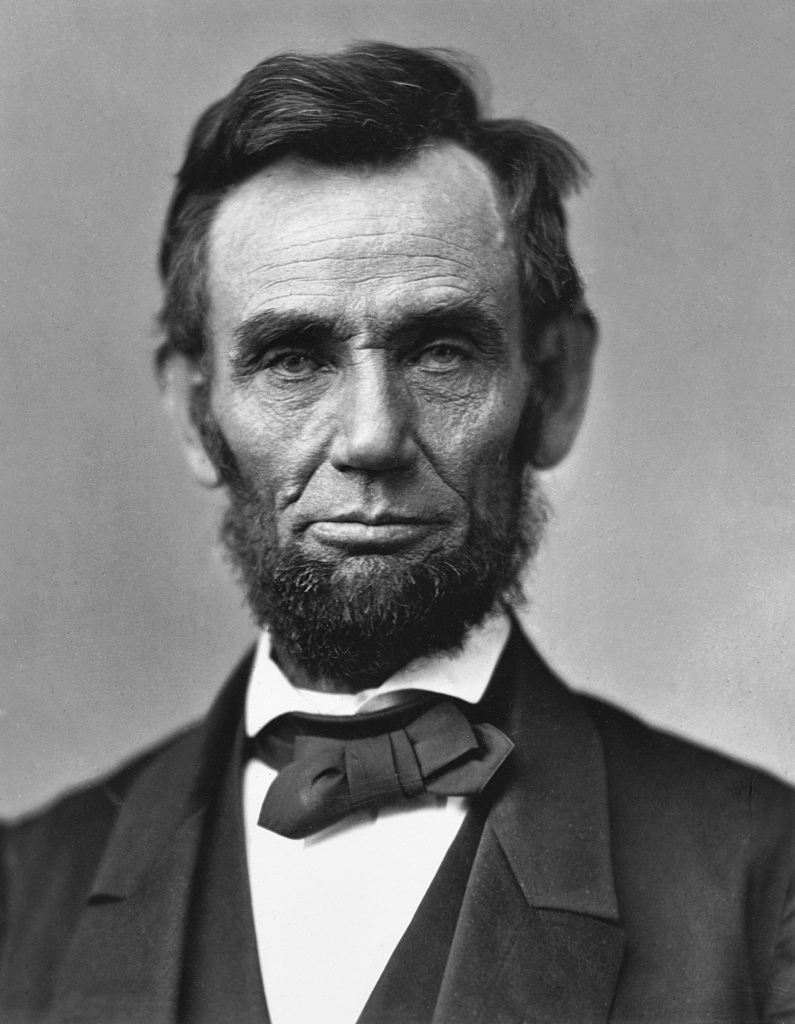
It was a short speech. Only 10 sentences. It was over so fast, photographers did not get a chance to capture an image of the President speaking at the site of the carnage–fifty thousand dead, wounded, or missing–that was the battle of Gettysburg (July 1-3, 1863). The battle was seen as a Union victory, and yet both the Confederate and Union generals-in-chief offered their resignations after the battle (neither of which was accepted). After a Commission was established to organize proper burials, it was felt that a dramatic oration, common at the time, was necessary, and the Commission’s choice was Edward Everett, a well-loved orator who had spoken at other battlefields, including Bunker Hill. Everett agreed to be the speaker at the dedication of this new national cemetery, and later federal officials, including President Lincoln, were invited to join the Commission’s program. But Everett would be the headliner–Lincoln’s short address would follow. After Everett’s two hour speech on November 19, 1863, in front of approximately 20,000 spectators, Lincoln rose and spoke for three minutes.

TEXT

Four score and seven years ago our fathers brought forth on this continent a new nation, conceived in liberty and dedicated to the proposition that all men are created equal.

Now we are engaged in a great civil war, testing whether that nation or any nation so conceived and so dedicated can long endure. We are met on a great battlefield of that war. We have come to dedicate a portion of that field as a final resting place for those who here gave their lives that that nation might live. It is altogether fitting and proper that we should do this.

But, in a larger sense, we cannot dedicate–we cannot consecrate–we cannot hallow–this ground. The brave men, living and dead, who struggled here have consecrated it far above our poor power to add or detract. The world will little note nor long remember what we say here, but it can never forget what they did here. It is for us, the living, rather, to be dedicated here to the unfinished work which they who fought here have thus far so noble advanced.

It is rather for us to be here dedicated to the great task remaining before us–that from these honored dead we take increased devotion to that cause for which they gave the last full measure of devotion; that we here highly resolve that these dead shall not have died in vain; that this nation, under God, shall have a new birth of freedom; and that government of the people, but the people, fore the people shall not perish from the earth.

INQUIRY

  1. Lincoln does not specifically mention specific military units, slavery, Gettysburg, or Pennsylvania. Why do you believe he focused more on generalities? What was the effect?
  2. What is the difference between describing an event and interpreting an event?
  3. What does Lincoln mean by “a new birth of freedom”?
  4. An allusion is an expression designed to call something to mind without specifically saying it. In what ways does Lincoln allude to the American Revolution? What is the effect?
  5. What is the tone (Lincoln’s attitude toward the subject) of this speech? How does Lincoln create that tone? What does he ask his audience to do?
  6. What is the mood (the attitude Lincoln wishes to create in his audience) of this speech? How does Lincoln create that mood? In what ways are the tone and mood of this speech related?
  7. To whom is Lincoln addressing the speech–the Union, the Confederacy, or both? Defend your answer.
  8. How and why does Lincoln connect Gettysburg to the American Revolution?
  9. Although Lincoln says that “the world will little note nor long remember what we say here…” and yet we do remember the words. Why do you believe these words have endured?
  10. In what ways can the past influence our lives today?

ADDITIONAL RESOURCES

Wills, Gary. Lincoln at Gettysburg The Words that Remade America. 1992. Copyright Literary Research, Inc.

1933: FDR and “Fear Itself”

ESSENTIAL QUESTION

In his First Inaugural Address, how did President Franklin Roosevelt use language to rally Americans to focus on a positive future rather than the bleak present reality?

CONTEXT

It was 1933 and America was in crisis, the most dangerous time, some said, since the American Revolution. In October, 1929, the US Stock Market crashed, bringing on the worse economic depression in American history. 25% of the workforce, one in four men, were unemployed at a time when there was no unemployment insurance of any kind. American productivity was only 1/3 of what it had been in early 1929. Many farmers lost their land and homes due to a drastic drop in prices. Factories shut down. Mines were abandoned. Banks closed. People were starving. Families split up to go elsewhere to look for work, but often there was no work to find. People looked to the federal government for help, but President Hoover’s policies did not address the problems of the nation.

Franklin Delano Roosevelt (1882-1945) won the presidential election in 1932 and immediately set about not only changing the American mindset but also changing the American future. This excerpt is from his first Inaugural Address given on March 4, 1933, at the US Capitol.

TEXT

…This is preeminently the time to speak the truth, the whole truth, frankly and boldly. Nor need we shrink from honestly facing conditions in our country today. This great nation will endure as it has endured, will revive and will prosper. So first of all let me assert me firm belief that the only thing we have to fear is fear itself,–nameless, unreasoning, unjustified terror which paralyzes needed efforts to convert retreat into advance. In every dark hour of our national life a leadership of frankness and vigor has met with that understanding and support of the people themselves which is essential to victory. I am convinced that you will again give that support to leadership in these critical days…

…Happiness lies not in the mere possession of money; it lies in the joy of achievement, in the thrill of creative effort. The joy and moral stimulation of work no longer must be forgotten in the mad chase of evanescent profits. These dark days will be worth all they cost is if they teach us that our true destiny is not to be ministered unto but to minister to ourselves and to our fellowmen…Our greatest primary task is to put people to work…

,..If I read the temper of our people correctly we now realize as we have never realized before our interdependence on each other: that we cannot merely take but we must give as well: that if we are to go forward we must move as a trained and loyal army willing to sacrifice for the good of a common discipline, because without such discipline no progress is made, no leadership becomes effective…

INQUIRY

  1. Why does FDR focus on speaking “the truth”? What does this imply about the behavior of the previous President’s administration?
  2. What does “endure” mean? What is the effect of using this verb in this circumstance?
  3. FDR uses the verbs, “endure”, “revive”, and “proper” in that order. How does this define his plans for his administration?
  4. One of the most well-known quotations from this speech is “…the only thing we have to fear is fear itself…” What does that mean?
  5. According to FDR, what is the effect of this fear? What might be the importance of FDR using the verb “paralyze”, considering that he had been disabled with polio since 1921 when he was 39 years old?
  6. Describe the partnership between the government and the public that FDR is calling upon.
  7. What will the role of work be in the days to come? Why is it important that people work rather than simply be given money or materials?
  8. Identify at least three examples of contrasts in this excerpt. Explain the effects of each example.
  9. FDR uses the image of a “trained and loyal army willing to sacrifice for the good of a common discipline.” What is the effect of this image?
  10. Describe an example in your life that required hard work but from which you gained “the joy of achievement…[or] the thrill of creative effort”.

ADDITIONAL RESOURCES

https://avalon.law.yale.edu/20th_century/froos1.asp

1910: TR “In the Arena”

ESSENTIAL QUESTION

Which is more important–honest, hard-won effort, or easy success?

CONTEXT

Theodore Roosevelt (1858-1919) was the 26th US President, serving from 1901-1909. He became President upon the assassination of President William McKinley and later won a term on his own. Previously he served as the governor of New York and was a leader in the Republican Party.

Born in New York, TR, as he was often known, was a sickly child and worked hard to build himself up physically. He attended Harvard College, served in the Spanish-American War, and became an active naturalist, conservationist, author, statesman, and explorer. He won the Nobel Peace Prize in 1906.

After returning from an 11-month African safari in 1910, he and his wife embarked on an extended tour of Europe. As a world-wide celebrity, he received many invitations while on the trip, including one to speak at the Sorbonne in Paris. This text is excerpted from his speech made there on April 23, 1910, entitled “Citizenship in a Republic.” It is often referred to as “The Man in the Arena” speech.

TEXT

…Let the man of learning, the man of lettered leisure, beware of that queer [strange] and cheap temptation to pose to himself and to others as a cynic, as the man who has outgrown emotions and beliefs, the man to whom good and evil are as one. The poorest way to face life is to face it with a sneer. There are many men who feel a kind of twisted pride in cynicism; there are many who confine themselves to criticism of the way others do what they themselves dare not even attempt. There is no more unhealthy being, no man less worthy of respect, than he who either really holds, or feigns to hold, an attitude of sneering disbelief toward all that is great and lofty, whether in achievement or in that noble effort which, even if it fails, comes second to achievement. A cynical habit of thought and speech, a readiness to criticize work which the critic himself never tries to perform, an intellectual aloofness which will not accept contact with life’s realities—all these are marks, not as the possessor would fain to think, of superiority, but of weakness. They mark the men unfit to bear their part painfully in the stern strife of living, who seek, in the affectation of contempt for the achievement of others, to hide from others and from themselves their own weakness. The role is easy; there is none easier, save only the role of the man who sneers alike at both criticism and performance.

It is not the critic who counts; not the man who points out how the strong man stumbles or where the doer of deeds could have done them better. The credit belongs to the man who is actually in the arena, whose face is marred by dust and sweat and blood; who strives valiantly; who errs, who comes short again and again, because there is no effort without error and shortcoming; but who does actually strive to do the deeds; who knows the great enthusiasms, the great devotions; who spends himself in a worthy cause; who at the best knows in the end the triumph of high achievement, and who at the worst, if he fails, at least fails while daring greatly, so that his place shall never be with those cold and timid souls who neither know victory nor defeat...

INQUIRY

  1. In 1912, while giving a speech in an unsuccessful run for a third term as president, Roosevelt was shot in the chest in an assassination attempt from 12 feet away. The bullet passed through his steel eyeglass case and a 50-page handwritten copy of his speech, before it lodged in his chest muscle. Roosevelt proceeded to deliver a 90-minute speech with blood seeping into his shirt. Doctors later determined that the best course was to leave the bullet in his chest as it had not punctured his lung, and TR carried the bullet the rest of his life. He returned to the campaign trail two weeks later. How does this event provide an example of Roosevelt’s “man in the arena”?
  2. In 1913, after losing the presidential election of 1912, Roosevelt left on an expedition to explore to its source the “River of Doubt” in the Brazilian Rainforest. While on the expedition Roosevelt suffered a leg wound which progressed into a life-threatening sickness. Roosevelt lost 50 pounds but survived the expedition. In what ways did this expedition provide an example of his “man in the arena” philosophy?
  3. How does TR define a “cynic”?
  4. According to TR, what are the signs of cynicism? Why should it be avoided?
  5. How can one avoid the cynical attitudes TR describes?
  6. How does TR describe the man in the arena? What images and verbs does he use? What are the effects of his word choice?
  7. How does TR compare success and attempts?
  8. Do you agree with TR’s ideas about success and honest effort? Why or why not? Give examples.

ADDITIONAL RESOURCES

https://www.presidency.ucsb.edu/documents/address-the-sorbonne-paris-france-citizenship-republic

https://www.theodorerooseveltcenter.org/Learn-About-TR/TR-Encyclopedia/Culture-and-Society/Man-in-the-Arena.aspx

The River of Doubt: Theodore Roosevelt’s Darkest Journey by Candice Millard (published 2006)

1940: Churchill, Blood and Beaches

ESSENTIAL QUESTION

How did Winston Churchill use language to help lead the British in the early days of WWII?

CONTEXT

Sir Winston Churchill (1874-1965) was a British politician, author, and international statesman during World War II and the early 1950s. Born into a wealthy family and a member of the aristocracy, he served in the military as a young man and joined His Majesty’s government in 1900. He became Prime Minister in 1940 and led Britain through World War II, working with American President Franklin D. Roosevelt as well as Joseph Stalin of Russia.

Seen by many historians as one of the most significant world figures of the 20th century, Churchill wrote several books on history and is considered a master orator. In 1939, Britain declared war on Germany (America would not enter the war until December, 1941). By 1940 England faced a dismal future and many called for a negotiated peace with Hitler, the leader of Nazi Germany. Churchill realized that Hitler was intent upon world domination and set out to convince Britain that they must fight Hitler, even though at the time Britain was suffering under constant aerial bombardment and military defeat. Two of his well known speeches from this early period are excerpted below. The first text is from Churchill’s first speech to the Parliament (the equivalent of the American Congress), made on May 13, 1940.

The second text is from Churchill’s address to the British House of Commons after the “Miracle of Dunkirk.” By the end of May, Hitler had overrun France and the British Army had been surrounded at the port of Dunkirk. The only option was to evacuate the Army across the English Channel. Expectations were low–perhaps 45,000 troops might escape German capture–but over 330,000 troops made it back to England. Churchill reported the “miracle” but wanted to remind Britain that the war was not over. He also wanted to remind US President Franklin Roosevelt that Britain needed American help.

TEXT 1

I would say to the House…I have nothing to offer but blood, toil, tears and sweat. We have before us an ordeal of the most grievous kind. We have before us many, many long months of struggle and of suffering. You ask, what is our policy? I can say: It is to wage war, by sea, land and air, with all our might and with all the strength that God can give us; to wage war against a monstrous tyranny, never surpassed in the dark, lamentable catalogue of human crime. That is our policy. You ask, what is our aim? I can answer in one word: It is victory, victory at all costs, victory in spite of all terror, victory, however long and hard the road may be; for without victory, there is no survival…

TEXT 2

I have, myself, full confidence that if all do their duty, if nothing is neglected, and if the best arrangements are made, as they are being made, we shall prove ourselves once again able to defend our Island home, to ride out the storm of war, and to outlive the menace to tyranny, if necessary for years, if necessary alone…Even though large tracts of Europe and many old and famous States have fallen or may fall into the grip of the Gestapo and all the odious apparatus of Nazi rule, we shall not flag or fail. We shall go on to the end, we shall fight in France, we shall fight on the seas and oceans, we shall fight with growing confidence and growing strength in the air, we shall defend our Island, whatever the cost may be, we shall fight on the beaches, we shall fight on the landing grounds, we shall fight in the fields, and in the streets, we shall fight in the hills; we shall never surrender….

INQUIRY

  1. What imagery does Churchill use in the first text to portray a difficult road ahead for the British?
  2. What is the tone of the first text? How do you know? Cite examples from the text.
  3. Identify an appeal to ethos that Churchill uses in Text 1.
  4. What does Churchill identify as Britain’s aim?
  5. What is the effect of Churchill repeatedly using the word “victory” in sentence 8 in text 1?
  6. How does Churchill convey that victory must be achieved?
  7. In Text 2, how does Churchill encourage the British people?
  8. What is the tone of Churchill’s phrase, “if necessary for years, if necessary alone”? To what country is this line addressed?
  9. Anaphora is the repetition of beginning words or phrases in a series of sentences. Churchill does this in sentence 3 of Text 2. What is the effect of this repetition? What tone does it convey?
  10. How does Churchill encourage each British man, woman, and child, regardless of whether they are serving in the military, to help “defend our Island home”?
  11. Compare the tones of Text 1 and Text 2. How does Churchill convey these different tones?

ADDITIONAL RESOURCES

winstonchurchill.org

1791: Franklin’s Virtues

ESSENTIAL QUESTION

What qualities did Benjamin Franklin consider to be important in developing himself as a young man?

CONTEXT

Benjamin Franklin (1706-1790) was one of the best known founding fathers. He was a writer, scientist, diplomat, publisher, inventor, and a leading intellectual of the late 18th century. He helped draft the American Declaration of Independence and was the first president of what would become the University of Pennsylvania. His life and legacy in the founding of the United States is reflected in the fact that his image is still on the $100 bill. From a poor family, Franklin built his publishing business from nothing but was always interested in ways to improve himself and the world around him.

As a young man wanting to make his way in the world, Franklin took a hard look at his own behaviors and thought of ways to improve himself. In 1726, at about the age of 20, Franklin wrote his 13 Virtues, listed below as taken from Franklin’s Autobiography. He decided that he would not try to change everything at once–that was overwhelming–but he would work on one virtue for a week and then move on to the next one.

As you read his list of virtues, consider the different areas of his life that Franklin was attempting to discipline. Where appropriate, clarification of terms are included in brackets.

TEXT

Franklin’s 13 Virtues

  1. Temperance: Eat not to dullness [being too full]. Drink not to elevation [being drunk].
  2. Silence: Speak not but what may benefit others or yourself. Avoid trifling conversation [gossip].
  3. Order: Let all your things have their places. Let each part of your business have its time.
  4. Resolution: Resolve to perform [Determine to accomplish] what you ought [should]. Perform without fail what you resolve.
  5. Frugality: Make no expense but to do good to others or yourself: i.e. waste nothing.
  6. Industry: Lose no time. Be always employed in [busy with] something useful. Cut off all unnecessary actions.
  7. Sincerity: Use no hurtful deceit. Think innocently and justly; and, if you speak, speak accordingly.
  8. Justice: Wrong none, by doing injuries or omitting the benefits that are your duty.
  9. Moderation: Avoid extremes. Forbear [politely do not] resenting injuries so much as you think they deserve.
  10. Cleanliness: Tolerate no uncleanliness in body, clothes or habitation [living area].
  11. Tranquility: Be not disturbed at trifles [unimportant things], or at accidents common or unavoidable.
  12. Chastity: Rarely use venery [sexual indulgence] but for health or offspring; never to dullness, weakness or the injury of your own or another’s peace or reputation.
  13. Humility: Imitate Jesus and Socrates.

INQUIRY

  1. Looking at the list of virtues, classify the virtues in three or four groups of virtues. Justify your answer.
  2. Franklin intended to list the virtues in a specific order so that each virtue could support the development of the next one on the list; for instance, temperance could help support the virtue of silence. Do you agree with his order? Do you see ones that might be reordered? Justify your answer.
  3. Was it wise for Franklin to attempt to master a new virtue each week? Why or why not?
  4. Which three virtues do you consider most important for Franklin as a young man in 1726? Why?
  5. Franklin added the 13th virtue later because a friend told him he had a problem with self-pride. What does it say about Franklin that he was willing to amend his list?
  6. In what ways do each virtue relate to self-discipline?
  7. Which three virtues would you consider most important for yourself? Why?
  8. Write your own list of 13 virtues. Chart your progress over 13 weeks. What conclusions can you draw from the experience?

ADDITIONAL RESOURCES

https://www.fi.edu/en/science-and-education/benjamin-franklin

https://www.pbs.org/kenburns/benjamin-franklin/

https://www.gutenberg.org/files/20203/20203-h/20203-h.htm 

https://guides.loc.gov/finding-benjamin-franklin