Month: June 2025

1974: Nixon Resigns

ESSENTIAL QUESTION:

How can the powers of the US President be limited?

CONTEXT:

Richard Milhous Nixon (1913-1994) was the 37th president of the US, serving from 1969 until 1974. Prior to his presidency he served in several political offices, including as vice president under President Dwight D. Eisenhower. Elected President in 1968, he resigned in 1974 in the wake of the Watergate Scandal, a break-in at the Democratic Party Headquarters in Washington, DC, and the Nixon administration’s cover-up of that criminal act. Nixon was the only US president to resign from office. This text is from his last public speech as president and was broadcast live on radio and TV on August 8, 1974. Nixon died in New York in 1994.

TEXT:

This is the 37th time I have spoken to you from this office, where so many decisions have been made that shaped the history of this Nation. Each time I have done so to discuss with you some matter that I believe affected the national interest.

In all the decisions I have made in my public life, I have always tried to do what was best for the Nation. Throughout the long and difficult period of Watergate, I have felt it was my duty to persevere, to make every possible effort to complete the term of office to which you elected me. In the past few days, however, it has become evident to me that I no longer have a strong enough political base in the Congress to justify continuing that effort. As long as there was such a base, I felt strongly that it was necessary to see the constitutional process through to its conclusion, that to do otherwise would be unfaithful to the spirit of that deliberately difficult process and a dangerously destabilizing precedent for the future. But with the disappearance of that base, I now believe that the constitutional purpose has been served, and there is no longer a need for the process to be prolonged.

I would have preferred to carry through to the finish whatever the personal agony it would have involved, and my family unanimously urged me to do so. But the interest of the Nation must always come before any personal considerations. From the discussions I have had with Congressional and other leaders, I have concluded that because of the Watergate matter I might not have the support of the Congress that I would consider necessary to back the very difficult decisions and carry out the duties of this office in the way the interests of the Nation would require.

I have never been a quitter. To leave office before my term is completed is abhorrent to every instinct in my body. But as President, I must put the interest of America first. America needs a full-time President and a full-time Congress, particularly at this time with problems we face at home and abroad. To continue to fight through the months ahead for my personal vindication would almost totally absorb the time and attention of both the President and the Congress in a period when our entire focus should be on the great issues of peace abroad and prosperity without inflation at home.

Therefore, I shall resign the Presidency effective at noon tomorrow. Vice President Ford will be sworn in as President at that hour in this office….

By taking this action, I hope that I will have hastened the start of that process of healing which is so desperately needed in America.

I regret deeply any injuries that may have been done in the course of the events that led to this decision. I would say only that if some of my Judgments were wrong, and some were wrong, they were made in what I believed at the time to be the best interest of the Nation.

So, let us all now join together in affirming that common commitment and in helping our new President succeed for the benefit of all Americans….

INQUIRY:

  1. Nixon’s successor as president, Gerald Ford, had not been elected; he was appointed to the office of vice president after Nixon’s elected vice president, Spiro Agnew, resigned in 1973 (from charges of tax evasion). Gerald Ford, as president after Nixon’s resignation, then nominated Nelson Rockefeller as vice president. Thus from 1974 until 1977 neither the president nor the vice president were elected by the people. What part of the US Constitution provides for succession to the presidency? Why would it have been necessary to nominate a vice president if there was not one currently in office? Who had to approve Rockefeller’s appointment as vice president?
  2. What did Nixon give as the reasons that he chose to resign?
  3. Investigate the Watergate Scandal and how and why it destroyed confidence in the Nixon presidency.
  4. What is impeachment? Where and in what ways does the US Constitution discuss impeachment?
  5. Congress had already begun the impeachment process against Nixon, but he resigned before the articles of impeachment could be passed. Would it have been better for the country if he had gone through with the impeachment process? Why or why not?
  6. How important is it for a president to have a “political base” in Congress? Why?
  7. In what ways did Nixon deflect blame from himself for the necessity to resign? In what ways did he accept blame?
  8. How did Nixon change the tone of this speech in the next to last sentence? In the last sentence?

ADDITIONAL RESOURCES:

https://www.pbs.org/newshour/spc/character/links/nixon_speech.html
https://www.nixonlibrary.gov/president-nixon

https://www.whitehousehistory.org/bios/richard-nixon

1962: Carson’s “Silent Spring”

ESSENTIAL QUESTION:

What role can literature play in shaping American policy?

CONTEXT:

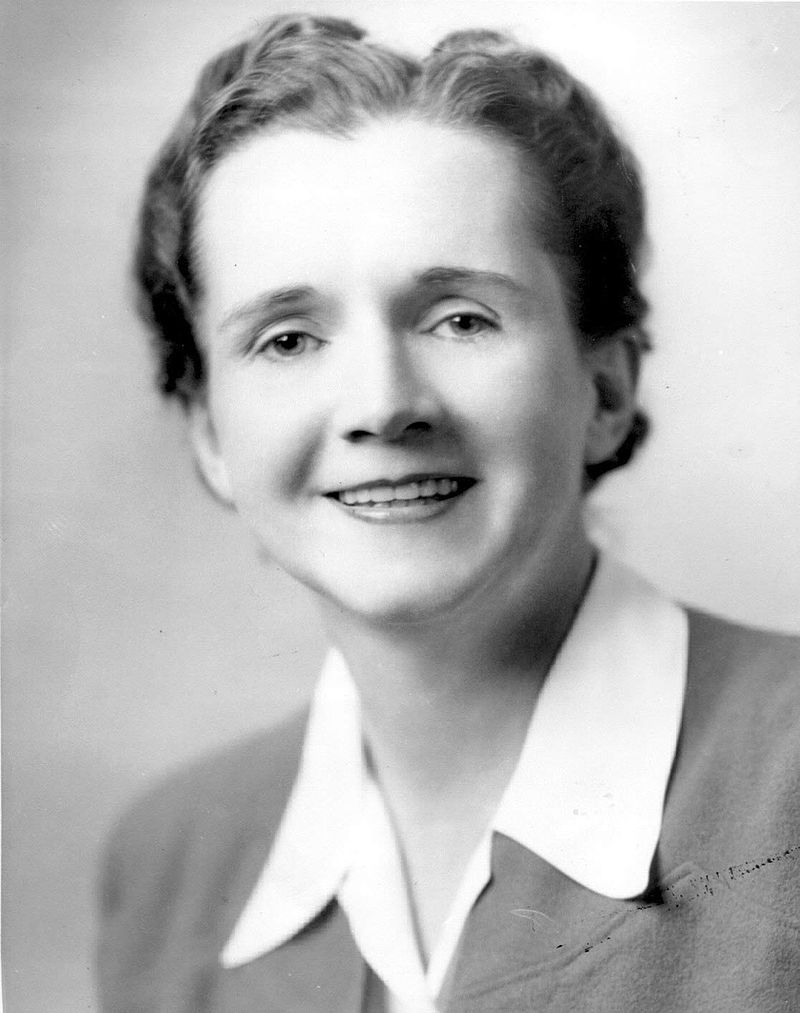
Rachel Carson (1907-1964) was an American conservationist, marine biologist, and writer of several best selling books detailing marine life. In 1962 she published Silent Spring, a book which brought the environmental movement to the attention of the American People by combining scientific research and narrative writing to appeal to a broad audience. She reasoned that widespread use of synthetic pesticides (such as DDT) were harmful in the short and long terms, entering the food chain and threatening humans. Although chemical companies fiercely opposed the work, it brought a change in national pesticide policy and led to a nationwide ban of DDT and other pesticides. The work inspired a grassroots environmental movement, leading to the creation of the US Environmental Protection Agency. Carson died of breast cancer in 1964 at her home in Silver Spring, Maryland.

TEXT:

There was once a town in the heart of America where all life seemed to be in harmony with its surroundings. The town lay in the midst of a checkerboard of prosperous farms, with fields of grain and hillsides of orchards, where white clouds of bloom drifted above the green land. In autumn, oak and maple and birch set up a blaze of color that flamed and flickered across a backdrop of pines. Then foxes barked in the hills and deer crossed the fields, half hidden in the mists of the mornings. Along the roads, laurel, viburnum, and alder, great ferns and wild flowers delighted the traveler’s eye through much of the year. Even in winter, the roadsides were places of beauty, where countless birds came to feed on the berries and on the seed heads of the dried weeds rising above the snow….

Then, one spring, a strange blight crept over the area, and everything began to change. Some evil spell had settled on the community; mysterious maladies swept the flocks of chickens, and the cattle and sheep sickened and died. Everywhere was the shadow of death. The farmers told of much illness among their families. In the town, the doctors were becoming more and more puzzled by new kinds of sickness that had appeared among their patients. There had been several sudden and unexplained deaths, not only among the adults but also among the children, who would be stricken while they were at play, and would die within a few hours. And there was a strange stillness. The birds, for example—where had they gone? Many people, baffled and disturbed, spoke of them. The feeding stations in the back yards were deserted….

This town does not actually exist; I know of no community that has experienced all the misfortunes I describe. Yet every one of them has actually happened somewhere in the world, and many communities have already suffered a substantial number of them. A grim specter has crept upon us almost unnoticed, and soon my imaginary town may have thousands of real counterparts. What is silencing the voices of spring in countless towns in America?….

It is widely known that radiation has done much to change the very nature of the world, the very nature of its life; strontium 90, released into the air through nuclear explosions, comes to earth in rain or drifts down as fallout, lodges in soil, enters into the grass or corn or wheat grown there, and, in time, takes up its abode in the bones of a human being, there to remain until his death. It is less well known that many man-made chemicals act in much the same way as radiation; they lie long in the soil, and enter into living organisms, passing from one to another. Or they may travel mysteriously by underground streams, emerging to combine, through the alchemy of air and sunlight, into new forms, which kill vegetation, sicken cattle, and work unknown harm on those who drink from once pure wells….. Now, in the modern world, there is no time. The speed with which new hazards are created reflects the impetuous and heedless pace of man, rather than the deliberate pace of nature….

INQUIRY:

  1. Carson’s first two paragraphs sharply contrast an imaginary town. Why did she start with such an idyllic place? How does this influence the tone of this excerpt?
  2. Although Carson did not specifically mention DDT in this excerpt, her work led to the banning of the substance. DDT is the short form of dichlorodiphenyltrichloroethane, a colorless, odorless chemical compound. It was used widely during World War II with civilian and military populations to control malaria, typhus and other insect-born diseases. In 1945 it was made available to American farmers to use as an insecticide. But today it is classified as a “probably human carcinogen” by US and international authorities and is banned in the US and most other countries. How did Carson imply the dangers of DDT? What images did she use?
  3. Compare these first two paragraphs. Why did Carson’s narrative voice (telling a story) convey her message more strongly that a list of scientific facts might have? What imagery did she use?
  4. The US banned DDT in 1972. This, along with the passage of the Endangered Species Act (1973) were major factors in the recovery of the bald eagle and the peregrine falcon from near extinction. Bald eagles are still protected but are no longer listed as endangered of extinction.; the peregrine falcon is also no longer listed as endangered. Investigate the Endangered Species Act. Which species have been “recovered” so that they were removed from the Endangered Species List? What is the importance of a varied biosphere?
  5. What is the significance of Carson’s title of this book? In what way is it a metaphor? In what way is it a warning?
  6. Investigate other works that have changed American policies, such as “Common Sense” (Thomas Paine), Uncle Tom’s Cabin (Harriet Beecher Stowe), The Jungle (Upton Sinclair), or others. Why and in what ways did these works influence Americans and American history?

ADDITIONAL RESOURCES:

https://www.newyorker.com/magazine/1962/06/16/silent-spring-part-1

https://www.history.com/articles/rachel-carson-silent-spring-impact-environmental-movement

1570: Haudenosaunee Constitution

ESSENTIAL QUESTION:

How did early Native American culture reflect their values?

CONTEXT:

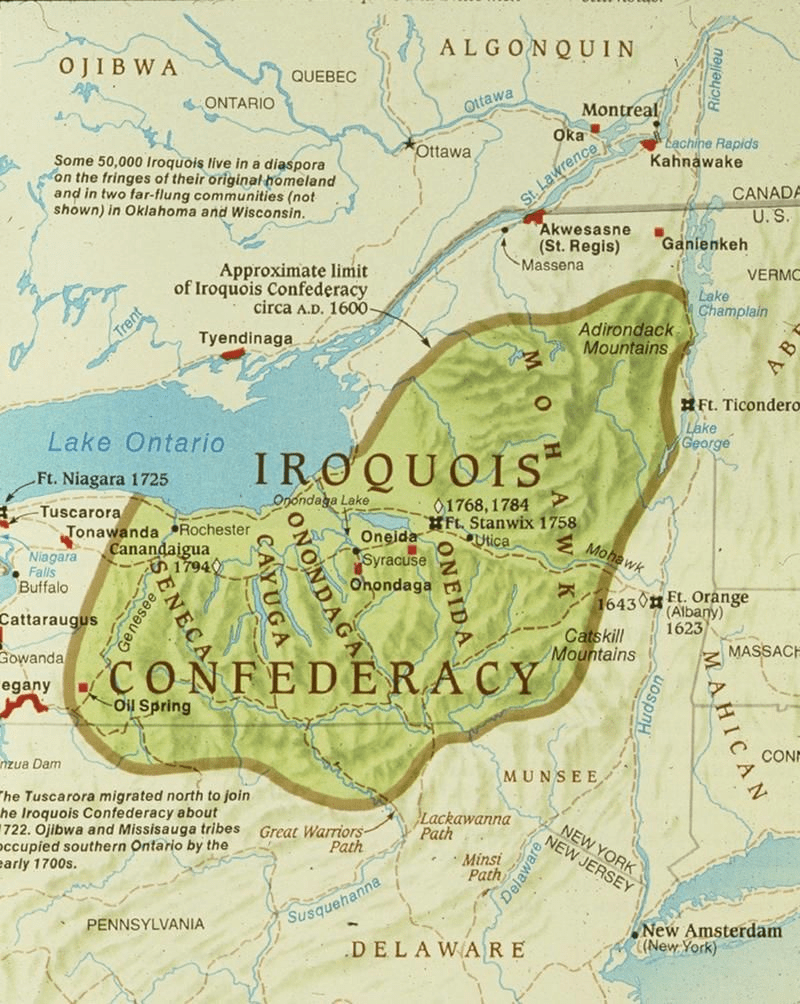
The Haudenosaunee were a group of Native Americans in what would become the New England colonies in America, and they were present well before colonial settlement. They are sometimes called the “Iroquois Confederacy,” but this was a name given to them by French fur trappers; the English called them the “League of Five Nations.” The Haudenosaunee were actually a language and cultural group, and from this grew the Haudenosaunee Confederacy, a political union. The Seneca, Cayuga, Onondaga, Oneida, and Mohawk tribes were original members, and the Tuscarora joined the Confederacy in approximately 1722.

The Haudenosaunee Confederacy developed a Constitution which was oral, recorded on wampum belts, and may have dated to as early as 1190. Passed down through the generations, it was later written and translated into English in the 19th century. Known as “The Great Law of Peace,” the Constitution emphasized peace and unity among the nations, consensus decision making, established a legal system, and created delegates to form a Grand Council. This text is drawn from a translation.

The Haudenosaunee Confederacy still exists today.

TEXT:

This is wisdom and justice of the part of the Great Spirit to create and raise chiefs, give and establish unchangable laws, rules and customs between the Five Nation Indians, viz the Mohawks, Oneidas, Onondagas, Cayugas and Senecas and the other nations of Indians in North America. The object of these laws is to establish peace between the numerous nations of Indians, hostility will be done away with, for the preservation and protection of life, property and liberty…

And when the Five Nation Indians confederation chiefs assemble to hold a council, the council shall be duly opened and closed by the Onondaga chiefs, the Firekeepers. They will offer thanks to the Great Spirit that dwells in the heave above the source and ruler of our lives, and it is him that sends daily blessings upon us, our daily wants and daily health, and they will then declare the council open for the transaction of business, and give decisions of all that is done in the council…

INQUIRY:

  1. In the first sentence, what does the Great Spirit do?
  2. What is the purpose of these laws, rules and customs?
  3. How do the Nations open their Council? Why is that significant?
  4. For what do the Nations offer thanks? How does that characterize their relationship with the Great Spirit?
  5. How does the Haudenosaunee Constitution blend laws and values?
  6. Haudenosaunee means “people of the longhouse.” They not only lived in longhouses but also saw their culture as a connected people within a metaphorical longhouse, serving as an image of the connection of the tribes of the Confederacy. How does living close to each other encourage the principles of the Haudenosaunee?
  7. Historians debate the influence of the Haudenosaunee Constitution on the US Constitution. Certainly Benjamin Franklin was familiar with the principles of the Haudenosaunee Constitution; he invited representatives of the Iroquois Nations to the Provincial Council of Pennsylvania in 1744 and the Albany Congress in 1754 to help promote peace, equity and justice in the gathering of colonies. The US Senate, in 1987, formally recognized that the framers of the US Constitution admired the principles and practices of the Confederacy (yet the Constitution itself was based more upon Enlightenment principles of the time). What similarities do you see with this excerpt and the US Constitution?
  8. Investigate the Albany Congress and the Albany Plan of Union. What similarities do you see with the Haudenosaunee Constitution?
  9. During the American colonial period the Haudenosaunee developed political alliances with the French and the English, based on their own tribal benefits. Yet during the American Revolution the Confederacy fractured, with some tribes siding with the English and some with the Americans. How did this violate one of their core principles?
  10. Many historians recognize the Haudenosaunee Confederacy as the world oldest democracy. Do you agree? Why or why not?

ADDITIONAL RESOURCES:

haudenosauneeconfederacy.com

https://web.pdx.edu/~caskeym/iroquois_web/html/greatlaw.html

1883: The New Colossus

ESSENTIAL QUESTION:

How can the meaning of a symbol change over time?

CONTEXT:

The Statue of Liberty is a huge neoclassical sculpture of a draped woman, possibly inspired by the Roman goddess of liberty, Libertas, standing on Liberty Island in New York Harbor. She holds a torch above in her right hand and in her left she holds a tablet inscribed July 4, 1776, the accepted date of the American Declaration of Independence.

The large statue was designed by Frederic Auguste Bartholdi of France, and it was intended to be celebrate America’s 100 years of Independence in 1876 and represent the friendship between the US and France. It was erected on Liberty Island in New York Harbor in 1886. A gift to the US from France, it served as a lighthouse in the Harbor from 1886 until 1902. It is made primarily of copper, which has oxidized to green over the years. It serves as a symbol of freedom and was the first thing many immigrants of the early 20th century saw as they entered New York Harbor. Between 1900 and 1915, almost 15 million immigrants arrived in America, more that in the previous 40 years combined.

In 1883 poet Emma Lazarus wrote a verse to help raise money to build the base for the Statue. In 1903 the poem was engraved on a bronze plaque which is located inside the base. This text is her poem and was entitled “The New Colossos.”

TEXT:

Not like the brazen giant of Greek fame,
With conquering limbs astride from land to land,
Here at our sea-washed, sunset gates shall stand
A mighty woman with a torch, whose flame
Is the imprisoned lightning, and her name
Mother of Exiles. From her beacon-hand
Glows worldwide welcome; her mild eyes command
The air-bridged harbor that twin cities frame.

“Keep, ancient lands, your storied pomp!” cries she
With silent lips. “Give me your tired, your poor,
Your huddled masses yearning to breathe free,
The wretched refuse of your teeming shore.
Send these, the homeless, tempest-tost to me,
I lift my lamp beside the golden door!”

INQUIRY:

  1. In her first two lines Lazarus alluded to the Colossos of Rhodes. The Colossos of Rhodes was a giant bronze status erected in the town of Rhodes, Greece, near the harbor and stood 110 feet tall. It was considered a wonder of the ancient world. Destroyed by an earthquake in 226 BCE, it symbolized ancient engineering and artistry and celebrated Greek military victories. Why did Lazarus begin her poem by contrasting the Statue of Liberty with the Colossos of Rhodes? What is the effect of this contrast?
  2. How did Lazarus describe New York Harbor?
  3. How did Lazarus describe the Statue of Liberty? What is her name? How does this name identify the purpose of the Statue?
  4. How did Lazarus characterize the torch? What was it’s purpose?
  5. What does the Statue mean when she says, “Keep, ancient lands, your storied pomp”? To whom is this addressed?
  6. To whom is the Statue lifting “my lamp beside the golden door”? Describe them. How do you know?
  7. What is the golden door?
  8. What is the tone of this poem? How do you know? Cite from the poem.
  9. Research American immigration laws and how they have changed since 1903. Especially note how immigration has remained a political issue over time.
  10. In what ways has the meaning of the Statue of Liberty changed since 1903?

ADDITIONAL RESOURCES:

https://www.nps.gov/stli/learn/historyculture/places_creating_statue.htm#:~:text=The%20head%20and%20shoulders%20were,Statue%20of%20Liberty%20in%20Paris.

https://en.wikipedia.org/wiki/Statue_of_Liberty

https://en.wikipedia.org/wiki/The_New_Colossus