Tag: American history

1962: Carson’s “Silent Spring”

ESSENTIAL QUESTION:

What role can literature play in shaping American policy?

CONTEXT:

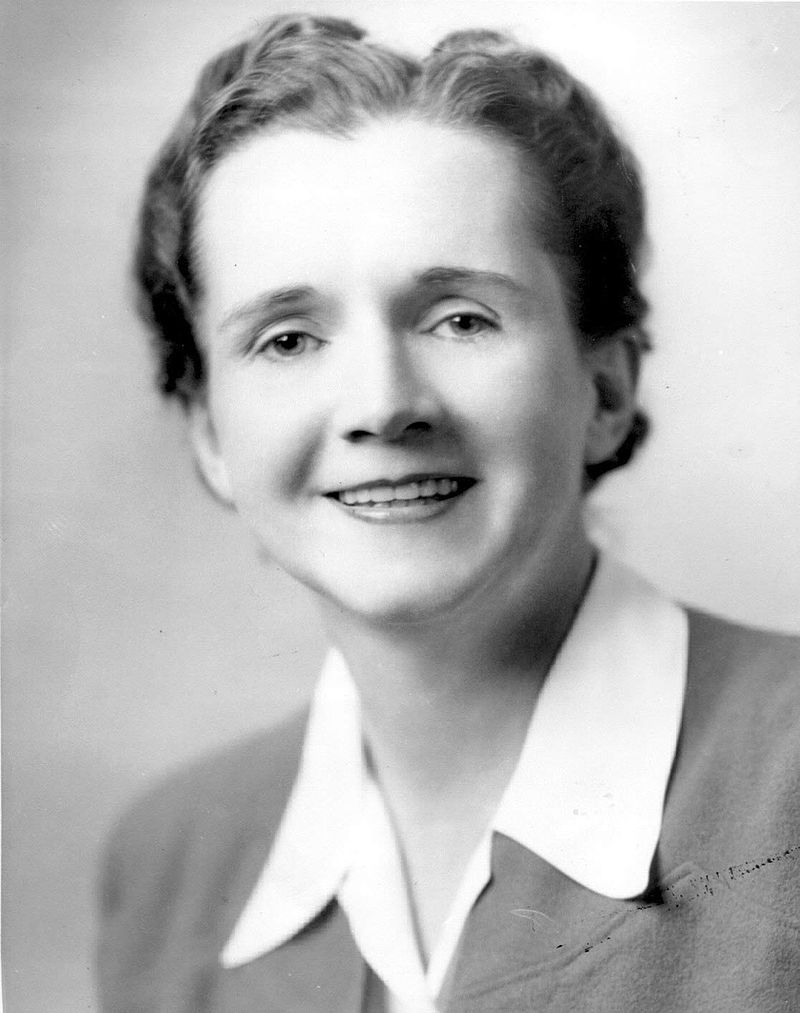
Rachel Carson (1907-1964) was an American conservationist, marine biologist, and writer of several best selling books detailing marine life. In 1962 she published Silent Spring, a book which brought the environmental movement to the attention of the American People by combining scientific research and narrative writing to appeal to a broad audience. She reasoned that widespread use of synthetic pesticides (such as DDT) were harmful in the short and long terms, entering the food chain and threatening humans. Although chemical companies fiercely opposed the work, it brought a change in national pesticide policy and led to a nationwide ban of DDT and other pesticides. The work inspired a grassroots environmental movement, leading to the creation of the US Environmental Protection Agency. Carson died of breast cancer in 1964 at her home in Silver Spring, Maryland.

TEXT:

There was once a town in the heart of America where all life seemed to be in harmony with its surroundings. The town lay in the midst of a checkerboard of prosperous farms, with fields of grain and hillsides of orchards, where white clouds of bloom drifted above the green land. In autumn, oak and maple and birch set up a blaze of color that flamed and flickered across a backdrop of pines. Then foxes barked in the hills and deer crossed the fields, half hidden in the mists of the mornings. Along the roads, laurel, viburnum, and alder, great ferns and wild flowers delighted the traveler’s eye through much of the year. Even in winter, the roadsides were places of beauty, where countless birds came to feed on the berries and on the seed heads of the dried weeds rising above the snow….

Then, one spring, a strange blight crept over the area, and everything began to change. Some evil spell had settled on the community; mysterious maladies swept the flocks of chickens, and the cattle and sheep sickened and died. Everywhere was the shadow of death. The farmers told of much illness among their families. In the town, the doctors were becoming more and more puzzled by new kinds of sickness that had appeared among their patients. There had been several sudden and unexplained deaths, not only among the adults but also among the children, who would be stricken while they were at play, and would die within a few hours. And there was a strange stillness. The birds, for example—where had they gone? Many people, baffled and disturbed, spoke of them. The feeding stations in the back yards were deserted….

This town does not actually exist; I know of no community that has experienced all the misfortunes I describe. Yet every one of them has actually happened somewhere in the world, and many communities have already suffered a substantial number of them. A grim specter has crept upon us almost unnoticed, and soon my imaginary town may have thousands of real counterparts. What is silencing the voices of spring in countless towns in America?….

It is widely known that radiation has done much to change the very nature of the world, the very nature of its life; strontium 90, released into the air through nuclear explosions, comes to earth in rain or drifts down as fallout, lodges in soil, enters into the grass or corn or wheat grown there, and, in time, takes up its abode in the bones of a human being, there to remain until his death. It is less well known that many man-made chemicals act in much the same way as radiation; they lie long in the soil, and enter into living organisms, passing from one to another. Or they may travel mysteriously by underground streams, emerging to combine, through the alchemy of air and sunlight, into new forms, which kill vegetation, sicken cattle, and work unknown harm on those who drink from once pure wells….. Now, in the modern world, there is no time. The speed with which new hazards are created reflects the impetuous and heedless pace of man, rather than the deliberate pace of nature….

INQUIRY:

  1. Carson’s first two paragraphs sharply contrast an imaginary town. Why did she start with such an idyllic place? How does this influence the tone of this excerpt?
  2. Although Carson did not specifically mention DDT in this excerpt, her work led to the banning of the substance. DDT is the short form of dichlorodiphenyltrichloroethane, a colorless, odorless chemical compound. It was used widely during World War II with civilian and military populations to control malaria, typhus and other insect-born diseases. In 1945 it was made available to American farmers to use as an insecticide. But today it is classified as a “probably human carcinogen” by US and international authorities and is banned in the US and most other countries. How did Carson imply the dangers of DDT? What images did she use?
  3. Compare these first two paragraphs. Why did Carson’s narrative voice (telling a story) convey her message more strongly that a list of scientific facts might have? What imagery did she use?
  4. The US banned DDT in 1972. This, along with the passage of the Endangered Species Act (1973) were major factors in the recovery of the bald eagle and the peregrine falcon from near extinction. Bald eagles are still protected but are no longer listed as endangered of extinction.; the peregrine falcon is also no longer listed as endangered. Investigate the Endangered Species Act. Which species have been “recovered” so that they were removed from the Endangered Species List? What is the importance of a varied biosphere?
  5. What is the significance of Carson’s title of this book? In what way is it a metaphor? In what way is it a warning?
  6. Investigate other works that have changed American policies, such as “Common Sense” (Thomas Paine), Uncle Tom’s Cabin (Harriet Beecher Stowe), The Jungle (Upton Sinclair), or others. Why and in what ways did these works influence Americans and American history?

ADDITIONAL RESOURCES:

https://www.newyorker.com/magazine/1962/06/16/silent-spring-part-1

https://www.history.com/articles/rachel-carson-silent-spring-impact-environmental-movement

1570: Haudenosaunee Constitution

ESSENTIAL QUESTION:

How did early Native American culture reflect their values?

CONTEXT:

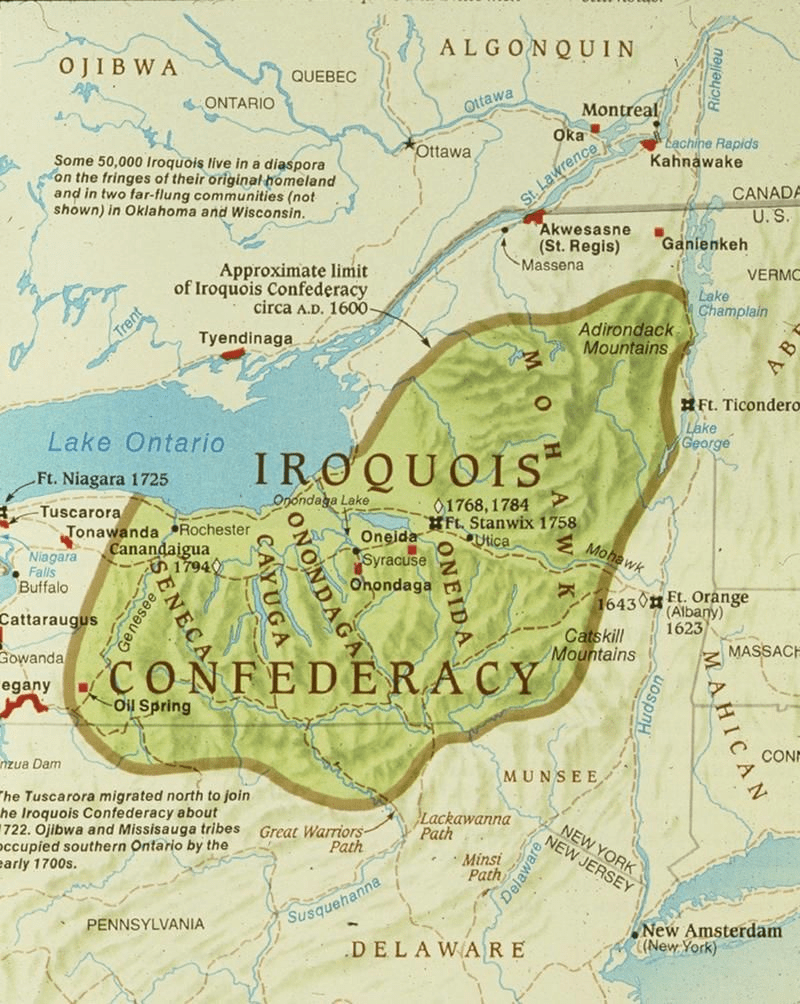
The Haudenosaunee were a group of Native Americans in what would become the New England colonies in America, and they were present well before colonial settlement. They are sometimes called the “Iroquois Confederacy,” but this was a name given to them by French fur trappers; the English called them the “League of Five Nations.” The Haudenosaunee were actually a language and cultural group, and from this grew the Haudenosaunee Confederacy, a political union. The Seneca, Cayuga, Onondaga, Oneida, and Mohawk tribes were original members, and the Tuscarora joined the Confederacy in approximately 1722.

The Haudenosaunee Confederacy developed a Constitution which was oral, recorded on wampum belts, and may have dated to as early as 1190. Passed down through the generations, it was later written and translated into English in the 19th century. Known as “The Great Law of Peace,” the Constitution emphasized peace and unity among the nations, consensus decision making, established a legal system, and created delegates to form a Grand Council. This text is drawn from a translation.

The Haudenosaunee Confederacy still exists today.

TEXT:

This is wisdom and justice of the part of the Great Spirit to create and raise chiefs, give and establish unchangable laws, rules and customs between the Five Nation Indians, viz the Mohawks, Oneidas, Onondagas, Cayugas and Senecas and the other nations of Indians in North America. The object of these laws is to establish peace between the numerous nations of Indians, hostility will be done away with, for the preservation and protection of life, property and liberty…

And when the Five Nation Indians confederation chiefs assemble to hold a council, the council shall be duly opened and closed by the Onondaga chiefs, the Firekeepers. They will offer thanks to the Great Spirit that dwells in the heave above the source and ruler of our lives, and it is him that sends daily blessings upon us, our daily wants and daily health, and they will then declare the council open for the transaction of business, and give decisions of all that is done in the council…

INQUIRY:

  1. In the first sentence, what does the Great Spirit do?
  2. What is the purpose of these laws, rules and customs?
  3. How do the Nations open their Council? Why is that significant?
  4. For what do the Nations offer thanks? How does that characterize their relationship with the Great Spirit?
  5. How does the Haudenosaunee Constitution blend laws and values?
  6. Haudenosaunee means “people of the longhouse.” They not only lived in longhouses but also saw their culture as a connected people within a metaphorical longhouse, serving as an image of the connection of the tribes of the Confederacy. How does living close to each other encourage the principles of the Haudenosaunee?
  7. Historians debate the influence of the Haudenosaunee Constitution on the US Constitution. Certainly Benjamin Franklin was familiar with the principles of the Haudenosaunee Constitution; he invited representatives of the Iroquois Nations to the Provincial Council of Pennsylvania in 1744 and the Albany Congress in 1754 to help promote peace, equity and justice in the gathering of colonies. The US Senate, in 1987, formally recognized that the framers of the US Constitution admired the principles and practices of the Confederacy (yet the Constitution itself was based more upon Enlightenment principles of the time). What similarities do you see with this excerpt and the US Constitution?
  8. Investigate the Albany Congress and the Albany Plan of Union. What similarities do you see with the Haudenosaunee Constitution?
  9. During the American colonial period the Haudenosaunee developed political alliances with the French and the English, based on their own tribal benefits. Yet during the American Revolution the Confederacy fractured, with some tribes siding with the English and some with the Americans. How did this violate one of their core principles?
  10. Many historians recognize the Haudenosaunee Confederacy as the world oldest democracy. Do you agree? Why or why not?

ADDITIONAL RESOURCES:

haudenosauneeconfederacy.com

https://web.pdx.edu/~caskeym/iroquois_web/html/greatlaw.html

1883: The New Colossus

ESSENTIAL QUESTION:

How can the meaning of a symbol change over time?

CONTEXT:

The Statue of Liberty is a huge neoclassical sculpture of a draped woman, possibly inspired by the Roman goddess of liberty, Libertas, standing on Liberty Island in New York Harbor. She holds a torch above in her right hand and in her left she holds a tablet inscribed July 4, 1776, the accepted date of the American Declaration of Independence.

The large statue was designed by Frederic Auguste Bartholdi of France, and it was intended to be celebrate America’s 100 years of Independence in 1876 and represent the friendship between the US and France. It was erected on Liberty Island in New York Harbor in 1886. A gift to the US from France, it served as a lighthouse in the Harbor from 1886 until 1902. It is made primarily of copper, which has oxidized to green over the years. It serves as a symbol of freedom and was the first thing many immigrants of the early 20th century saw as they entered New York Harbor. Between 1900 and 1915, almost 15 million immigrants arrived in America, more that in the previous 40 years combined.

In 1883 poet Emma Lazarus wrote a verse to help raise money to build the base for the Statue. In 1903 the poem was engraved on a bronze plaque which is located inside the base. This text is her poem and was entitled “The New Colossos.”

TEXT:

Not like the brazen giant of Greek fame,
With conquering limbs astride from land to land,
Here at our sea-washed, sunset gates shall stand
A mighty woman with a torch, whose flame
Is the imprisoned lightning, and her name
Mother of Exiles. From her beacon-hand
Glows worldwide welcome; her mild eyes command
The air-bridged harbor that twin cities frame.

“Keep, ancient lands, your storied pomp!” cries she
With silent lips. “Give me your tired, your poor,
Your huddled masses yearning to breathe free,
The wretched refuse of your teeming shore.
Send these, the homeless, tempest-tost to me,
I lift my lamp beside the golden door!”

INQUIRY:

  1. In her first two lines Lazarus alluded to the Colossos of Rhodes. The Colossos of Rhodes was a giant bronze status erected in the town of Rhodes, Greece, near the harbor and stood 110 feet tall. It was considered a wonder of the ancient world. Destroyed by an earthquake in 226 BCE, it symbolized ancient engineering and artistry and celebrated Greek military victories. Why did Lazarus begin her poem by contrasting the Statue of Liberty with the Colossos of Rhodes? What is the effect of this contrast?
  2. How did Lazarus describe New York Harbor?
  3. How did Lazarus describe the Statue of Liberty? What is her name? How does this name identify the purpose of the Statue?
  4. How did Lazarus characterize the torch? What was it’s purpose?
  5. What does the Statue mean when she says, “Keep, ancient lands, your storied pomp”? To whom is this addressed?
  6. To whom is the Statue lifting “my lamp beside the golden door”? Describe them. How do you know?
  7. What is the golden door?
  8. What is the tone of this poem? How do you know? Cite from the poem.
  9. Research American immigration laws and how they have changed since 1903. Especially note how immigration has remained a political issue over time.
  10. In what ways has the meaning of the Statue of Liberty changed since 1903?

ADDITIONAL RESOURCES:

https://www.nps.gov/stli/learn/historyculture/places_creating_statue.htm#:~:text=The%20head%20and%20shoulders%20were,Statue%20of%20Liberty%20in%20Paris.

https://en.wikipedia.org/wiki/Statue_of_Liberty

https://en.wikipedia.org/wiki/The_New_Colossus

1962: JFK and Cuba

ESSENTIAL QUESTION:

In what ways can diplomacy be more effective that physical force?

CONTEXT:

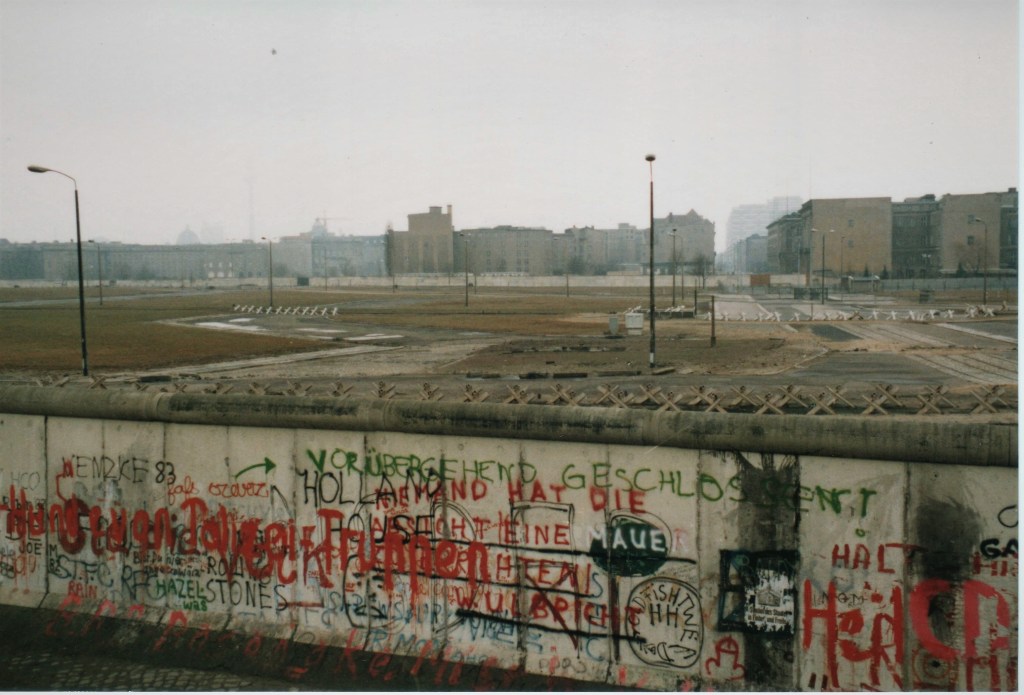
In 1962 the US and the USSR (Soviet Union) were embroiled in the Cold War, a period of intense global tension lasting from 1947 until 1991. Born in the aftermath of World War II amid different views of the future of the world, the US and the Soviet Union (and their respective allies) were intense enemies. Although actual military conflict did not break out as part of the Cold War, competition was keen in several areas. The US wished to contain the spread of Soviet Communism to other countries, and each side developed nuclear weapons with a MAD philosophy. MAD, or mutually assured destruction, meant that each side wanted to develop enough weapons to discourage the other side from firing on them first: if the Soviets fired on the US, the US could retaliate with enough fire power to destroy the Soviet Union. Each side competed to build the first rockets and capsules into space, not only to explore but also to use them to supplement military strategy. The Soviet section of the German capitol of Berlin (from the end of WWII) was walled off from the rest of Berlin (the famous Berlin Wall). Years later the Cold War finally deescalated with the fall of Soviet regimes in the late 1980s, the fall of the Berlin Wall in 1989, and the collapse of the Soviet Union in 1991.

But in 1962 the Cold War had escalated to a flash point, and war between the US and the Soviet Union seemed imminent. On October 14, 1962, an American spy plane photographed nuclear missile launch sites being built in Cuba. Cuba is an island only 90 miles south of Florida, and nuclear missiles launched from there could easily reach the US, Canada, Mexico, and areas throughout the Caribbean. While US President John Kennedy’s military advisors strongly recommended a military response, Kennedy, known as JFK, (1917-1963) chose another course of action. On October 22 he announced the threat to America and his plans to install a blockade around Cuba to prevent any additional construction. However, a blockade is legally an act of war, so Kennedy labeled his action a “quarantine.” While the Soviet Premier Nikita Khrushchev initially refused to remove the weapons and an American pilot was shot down by Cuban soldiers, on October 28 a diplomatic resolution was reached whereby the Soviets removed the missiles from Cuba and the US promised not to invade Cuba and removed missiles they had stationed in Turkey. In addition, a direct line of communication was established between the US and USSR to prevent future misunderstandings.

This text is taken from JFK’s speech to the American people announcing the Crisis. broadcasted on radio and television on October 22, 1962.

TEXT:

This government, as promised, has maintained the closest surveillance of the Soviet military buildup
on the island of Cuba. Within the past week, unmistakable evidence has established the fact that a
series of offensive missile sites is now in preparation on that imprisoned island. The purpose of these
bases can be none other than to provide a nuclear strike capability against the Western Hemisphere.
..

Acting, therefore, in the defense of our own security and of the entire Western Hemisphere, and under the authority entrusted to me by the Constitution as endorsed by the resolution of the Congress, I have directed that the following initial steps be taken immediately:


To halt this offensive buildup, a strict quarantine on all offensive military equipment under shipment to Cuba is being initiated. All ships of any kind bound for Cuba from whatever nation and port will, if found to contain cargoes of offensive weapons, be turned back. This quarantine will be extended, if needed, to other types of cargo and carriers. We are not at this time, however, denying the necessities of life as the Soviets attempted to do in their Berlin blockade of 1948…

It shall be the policy of this nation to regard any nuclear missile launched from Cuba against any nation in the Western Hemisphere as an attack on the United States, requiring a full retaliatory response upon the Soviet Union.

Under the Charter of the United Nations, we are asking tonight that an emergency meeting of the Security Council be convoked without delay to take action against this latest Soviet threat to world peace. Our resolution will call for the prompt dismantling and withdrawal of all offensive weapons in Cuba, under the supervision of U.N. observers, before the quarantine can be lifted.

I call upon Chairman Khrushchev to halt and eliminate this clandestine, reckless, and provocative threat to world peace and to stable relations between our two nations. I call upon him further to abandon this course of world domination, and to join in an historic effort to end the perilous arms race and to transform the history of man. He has an opportunity now to move the world back from the abyss of destruction — by returning to his government’s own words that it had no need to station missiles outside its own territory, and withdrawing these weapons from Cuba — by refraining from any action which will widen or deepen the present crisis — and then by participating in a search for peaceful and permanent solutions. …

My fellow citizens: let no one doubt that this is a difficult and dangerous effort on which we have set out. No one can foresee precisely what course it will take or what costs or casualties will be incurred.
Many months in which both our patience and our will will be tested — months in which many threats
and denunciations will keep us aware of our dangers. But the greatest danger of all would be to do
nothing. …

Our goal is not the victory of might, but the vindication of right — not peace at the expense of freedom, but both peace and freedom, here in this hemisphere, and we hope, around the world. God
willing, that goal will be achieved
.

INQUIRY:

  1. Kennedy used several adjectives in the first paragraph. What is the effect of “closest” surveillance and “unmistakable” evidence? How does this set the tone of the speech?
  2. In Kennedy’s argument how did he affirm the purpose of the Soviet weapons? What phrase did he use?
  3. How did JFK define his quarantine? What items would be prevented from continuing on to Cuba?
  4. Why did JFK reference the Berlin Blockade of 1948? (For more information on that blockade, see https://history.state.gov/milestones/1945-1952/berlin-airlift )
  5. According to JFK, what will be the response of the US should any of the Soviet missiles be launched?
  6. Why did JFK call for an emergency meeting of the UN Security Council? What type of appeal is this (ethos, pathos, logos)?
  7. What did JFK ask Khrushchev to do? Characterize his options as presented by Kennedy.
  8. Why did JFK warn the American people that this would be a “difficult and dangerous” effort? Remember, WWII had ended only 17 years before this speech.
  9. What did JFK clearly state as America’s goal in this crisis? Based on this goal, why do you believe he chose a non-military response first?
  10. Identify the tone of this speech. Does it change? If so, where and how do you know?
  11. Research EXCOMM, JFK’s 12-member advisory committee. What was their role in the Crisis?
  12. Do you believe JFK’s goal had been achieved? Why or why not?

ADDITIONAL RESOURCES:

https://history.state.gov/milestones/1961-1968/cuban-missile-crisis

https://microsites.jfklibrary.org/cmc/

https://www.jfklibrary.org/learn/about-jfk/historic-speeches/address-during-the-cuban-missile-crisis

2015: Obama at Selma

ESSENTIAL QUESTION:

How does the First March on Selma reflect the strength of the Civil Rights Movement?

CONTEXT:

On March 7, 1965, the first of a series of three protest marches demanding voting rights for African Americans took place in Selma, Alabama. The three marches were to go from Selma to Montgomery (the capital of Alabama), a 54 miles trek. The marches were organized by non-violent groups and were part of the larger civil rights movement to guarantee voting rights for African Americans, who had been denied voting rights through various means for decades.

On March 7, 1965, the marchers were ordered by local authorities not to cross the Edmund Pettus Bridge in Selma. The non-violent march continued and police rushed the crowd with batons and tear gas. The march was televised and led to a national call for voting rights legislation. On August 6, 1965, Congress passed the Voting Rights Act of 1965.

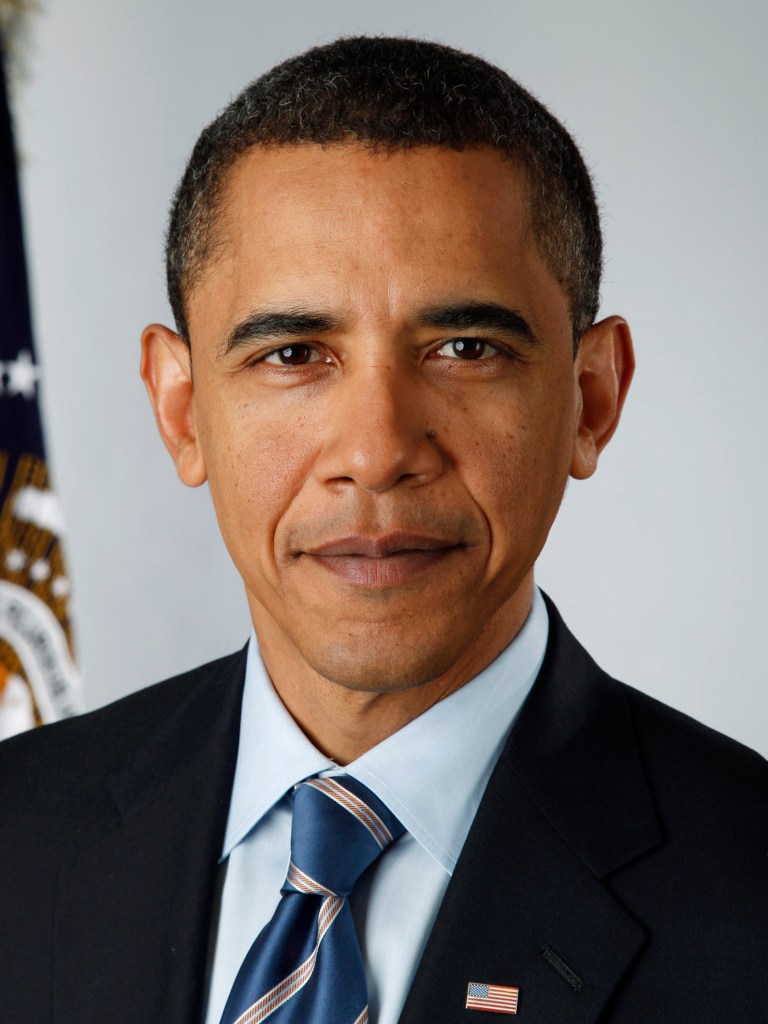
On the 50th anniversary of the March, in 2015, President Obama and his family joined many at the same bridge to commemorate the March of 1965. This text is taken from his speech on that occasion.

TEXT:

It is a rare honor in this life to follow one of your heroes.  And John Lewis is one of my heroes.

Now, I have to imagine that when a younger John Lewis woke up that morning 50 years ago and made his way to Brown Chapel, heroics were not on his mind.  A day like this was not on his mind.  Young folks with bedrolls and backpacks were milling about.  Veterans of the movement trained newcomers in the tactics of non-violence; the right way to protect yourself when attacked.  A doctor described what tear gas does to the body, while marchers scribbled down instructions for contacting their loved ones.  The air was thick with doubt, anticipation and fear…

As John noted, there are places and moments in America where this nation’s destiny has been decided.  Many are sites of war — Concord and Lexington, Appomattox, Gettysburg.  Others are sites that symbolize the daring of America’s character — Independence Hall and Seneca Falls, Kitty Hawk and Cape Canaveral.

Selma is such a place.  In one afternoon 50 years ago, so much of our turbulent history — the stain of slavery and anguish of civil war; the yoke of segregation and tyranny of Jim Crow; the death of four little girls in Birmingham; and the dream of a Baptist preacher — all that history met on this bridge. 

It was not a clash of armies, but a clash of wills; a contest to determine the true meaning of America…

INQUIRY:

  1. Obama uses the word “hero” in the first sentence. How does this image bring the speech to a personal level?
  2. In the next paragraph, Obama includes both “veterans of the movement” and “young folks.” How does this contribute to the description of the original march? Why is it important to know what types of people were part of the original march?
  3. What is the effect of a doctor describing what tear gas does to the body?
  4. Why were some marchers writing instructions for contracting their loved ones? What does this say about their expectations of the march?
  5. In the next paragraph Obama lists times when “the nation’s destiny has been decided” and “sites that symbolize the daring of America’s character”. How does this contribute to the importance of his subject and how does he connect these events to Selma?
  6. In the second sentence of the fourth paragraph Obama lists elements of American history. What are these elements? Why does he list them this way? How does this explain the significance of the events on the Pettus Bridge?
  7. In the last paragraph Obama deemphasizes the military response but instead emphasizes “a clash of wills.” How does this characterize and emphasize the importance of the Selma March?
  8. For what would you be willing to protest if you believed it could result in physical harm? What are other ways of protesting?

ADDITIONAL RESOURCES:

https://www.archives.gov/research/african-americans/vote/selma-marches

https://obamawhitehouse.archives.gov/the-press-office/2015/03/07/remarks-president-50th-anniversary-selma-montgomery-marches

https://www.history.com/articles/selma-montgomery-march

1939: Lou Gehrig leaves Baseball

ESSENTIAL QUESTION

How did Lou Gehrig use language to convey strength and optimism in the face of tragedy?

CONTEXT

Henry Louis Gehrig (1903-1941) was born in New York City and played first base for 17 seasons for the New York Yankees baseball team. He received many awards, was inducted into the Baseball Hall of Fame, and was the first player to have his uniform number retired by a team. Many consider him one of the best players of the game.

On May 2, 1939, he voluntarily took himself out of the game because an undiagnosed ailment was affecting his play. It was determined that he had amyotrophic lateral sclerosis (ALS), a degenerative neuromuscular disease often known as Lou Gehrig’s disease. On July 4, 1939, he delivered the speech from which this text is taken at Yankee Stadium. Gehrig lived less than two years after his diagnosis.

TEXT

Fans, for the past two weeks you have been reading about a bad break I got. Today, I consider myself the luckiest man on the face of the earth.

I have been in ballparks for seventeen years and have never received anything but kindness and encouragement from you fans. When you look around, wouldn’t you consider it a privilege to associate yourself which such fine looking men as are standing in uniform in this ballpark today?

Sure I’m lucky.

Who wouldn’t consider it an honor to have known Jacob Ruppert? Also, the builder of baseball’s greatest empire, Ed Barrow? To have spent six years with that wonderful little fellow, Miller Huggins? Then to have spent the next nine years with that outstanding leader, that smart student of psychology, the best manager in baseball today, Joe McCarthy?

Sure I’m lucky.

When the New York Giants, a team you would give your right arm to beat, and vice versa, sends you a gift — that’s something. When everybody down to the groundskeepers and those boys in white coats remember you with trophies — that’s something.

When you have a wonderful mother-in-law who takes sides with you in squabbles with her own daughter — that’s something. When you have a father and a mother who work all their lives so you can have an education and build your body — it’s a blessing When you have a wife who has been a tower of strength and shown more courage than you dreamed existed — that’s the finest I know.

So, I close in saying that I might have been given a bad break, but I’ve got an awful lot to live for.

INQUIRY

  1. What contrast did Gehrig establish in the first two sentences? How did that affect the tone of the speech?
  2. To whom did Gehrig address this speech? How do you know? Why do you think he chose them as his primary audience?
  3. Why did Gehrig choose to deliver the speech in Yankee Stadium?
  4. Gehrig used anaphora, the repetition of a phrase several times within a work. Identify the phrase he repeated. What was the effect of his repetition of this phrase?
  5. Gehrig mentioned several people in this speech–Rupert, Barrow, Huggins, and McCarthy. Research these individuals and determine their relationships to Gehrig. What is the effect of mentioning people by name in a speech?
  6. Investigate the rivalry between the New York Yankees and the New York Giants in the late 1930s. How did that rivalry influence Gehrig’s speech?
  7. Gehrig mentioned his family and their sacrifices. What is the role of family sacrifice for an athlete to achieve greatness?
  8. What is the tone of this speech? How do you know?
  9. In his last sentence, Gehrig set up a clear contrast. What was the contrast? In what ways was it ironic?
  10. The person who survived the longest on record with ALS was Steven Hawking, who lived 55 years after he was diagnosed with a slowly developing form of the disease, but the average survival rate is about 3-5 years. How might knowledge of a life-threatening disease affect your view of life?

ADDITIONAL RESOURCES

https://www.americanrhetoric.com/speeches/lougehrigfarewelltobaseball.htm

1845: Douglass’s Narrative

ESSENTIAL QUESTION

How did Frederick Douglass convey the importance of escape for a fugitive slave?

CONTEXT

Frederick Douglass (1817?-1895) was born into slavery in Maryland. As a young boy he was sent to Baltimore to be a house servant, and with the assistance of his master’s wife he learned to read and write. He escaped from slavery in 1838, went to New York City, and soon changed his name to Frederick Douglass. He became an accomplished orator for the abolition movement; he was so accomplished that many doubted he could ever have been a slave. Thus he wrote Narrative of the Life of Frederick Douglass, from which this text is taken, describing his escape. During the Civil War he assisted in recruiting Black soldiers to the Union Army and actively supported freedmen after the War. He died in 1895.

TEXT

The wretchedness of slavery, and the blessedness of freedom, were perpetually before me. It was life and death with me. But I remained firm, and, according to my resolution, on the third day of September, 1838, I left my chains, and succeeded in reaching New York without the slightest interruption of any kind. How I did so,—what means I adopted,—what direction I travelled, and by what mode of conveyance,—I must leave unexplained

I have been frequently asked how I felt when I found myself in a free State. I have never been able to answer the question with any satisfaction to myself. It was a moment of the highest excitement I ever experienced. I suppose I felt as one may imagine the unarmed mariner to feel when he is rescued by a friendly man-of-war from the pursuit of a pirate. In writing to a dear friend, immediately after my arrival at New York, I said I felt like one who had escaped a den of hungry lions. This state of mind, however, very soon subsided; and I was again seized with a feeling of great insecurity and loneliness. I was yet liable to be taken back, and subjected to all the tortures of slavery… There I was in the midst of thousands, and yet a perfect stranger; without home and without friends, in the midst of thousands of my own brethren—children of a common Father, and yet I dared not to unfold to any one of them my sad condition. I was afraid to speak to any one for fear of speaking to the wrong one, and thereby falling into the hands of money-loving kidnappers, whose business it was to lie in wait for the panting fugitive, as the ferocious beasts of the forest lie in wait for their prey. The motto which I adopted when I started from slavery was this—“Trust no man!” I saw in every white man an enemy, and in almost every colored man cause for distrust. It was a most painful situation; and, to understand it, one must needs experience it, or imagine himself in similar circumstances. Let him be a fugitive slave in a strange land—a land given up to be the hunting-ground for slaveholders—whose inhabitants are legalized kidnappers—where he is every moment subjected to the terrible liability of being seized upon by his fellowmen, as the hideous crocodile seizes upon his prey!—I say, let him place himself in my situation—without home or friends—without money or credit—wanting shelter, and no one to give it—wanting bread, and no money to buy it,—and at the same time let him feel that he is pursued by merciless men-hunters, and in total darkness as to what to do, where to go, or where to stay,—perfectly helpless both as to the means of defence and means of escape,—in the midst of plenty, yet suffering the terrible gnawings of hunger,—in the midst of houses, yet having no home,—among fellow-men, yet feeling as if in the midst of wild beasts, whose greediness to swallow up the trembling and half-famished fugitive is only equaled by that with which the monsters of the deep swallow up the helpless fish upon which they subsist,—I say, let him be placed in this most trying situation,—the situation in which I was placed,—then, and not till then, will he fully appreciate the hardships of, and know how to sympathize with, the toil-worn and whip-scarred fugitive slave.

Thank Heaven, I remained but a short time in this distressed situation. I was relieved from it by the humane hand of Mr. David Ruggles, whose vigilance, kindness, and perseverance, I shall never forget. I am glad of an opportunity to express, as far as words can, the love and gratitude I bear him. Mr. Ruggles is now afflicted with blindness, and is himself in need of the same kind offices which he was once so forward in the performance of toward others. I had been in New York but a few days, when Mr. Ruggles sought me out, and very kindly took me to his boarding-house at the corner of Church and Lespenard Streets. Mr. Ruggles was then very deeply engaged in … attending to a number of other fugitive slaves, devising ways and means for their successful escape; and, though watched and hemmed in on almost every side, he seemed to be more than a match for his enemies...

INQUIRY

  1. In the first paragraph of this excerpt Douglass drew clear comparisons between slavery and freedom. What terms did he use? How does this affect the comparison?
  2. Why might he clearly have dated the day of his escape? Remember, many thought he was too literate to have ever been a slave.
  3. Why would he have refrained from listing the exact direction and people who helped him escape?
  4. Douglass used two images to convey his immediate feelings of freedom–that of a rescued mariner and that of someone rescued from a den of lions. What power do these images convey? What emotions do they call to mind? Do you see any Biblical references?
  5. Douglass’s written tone quickly changed. Analyze the change in tone, its purpose, and how he accomplished this.
  6. Douglass then went on to describe his distressed condition. He used a series of contrasts with very little punctuation, mainly dashes. What emotion did this convey? How?
  7. What was Mr. Ruggles’s role in New York? How do you know?
  8. What qualities of this written text suggest that Douglass would be a good speaker? Remember, he became a vocal advocate for abolition.

ADDITIONAL RESOURCES

https://gutenberg.org/files/23/23-h/23-h.htm

1893: Turner’s Frontier

ESSENTIAL QUESTION

Analyze the role of the settlement of the American West in US history.

CONTEXT

Frederick Jackson Turner (1861-1932) was born into a middle class family in Wisconsin. Well-educated, he earned his Ph.D. in history from Johns Hopkins University in 1890, and by 1910 he was considered one of the most influential historians in America. In his research, essays, and lectures he emphasized the importance of the frontier in forming the American character. When the US Superintendent of the Census reported in 1890 that there were no unsettled areas left in the western US, Turner considered this the close of a major historical movement. Although his theories received criticism and became unpopular in the 1960s, his ideas were not forgotten and influenced the development of environmental history.

His most well known theory is his “Frontier Thesis,” explained in a essay he first presented to the American Historical Association at the World’s Fair in Chicago, Illinois, in 1893. It was later incorporated into his book The Frontier in American History (1920) and has been reprinted many times. He explained how the frontier shaped America relative to democracy and violence; the clash of “civilization” and “savagery” led to the development of a new type of American, one who was a strong individual. As settlers moved west they left more of the Eastern US culture behind and developed new ways of doing things to solve problems created by the new environment. His ideas contributed to the ideas of American exceptionalism. This text is from the Frontier Thesis.

TEXT

...From the time the mountains rose between the pioneer and the seaboard, a new order of Americanism arose. The West and the East began to get out of touch of each other. The settlements from the sea to the mountains kept connection with the rear and had a certain solidarity. But the over-mountain men grew more and more independent. The East took a narrow view of American advance, and nearly lost these men. Kentucky and Tennessee history bears abundant witness to the truth of this statement. The East began to try to hedge and limit westward expansion….The frontier promoted the formation of a composite nationality for the American people….the advance of the frontier decreased our dependence on England….the frontier created a demand for merchants….

The result is that, to the frontier, the American intellect owes its striking characteristics. That coarseness and strength combined with acuteness and inquisitiveness, that practical, inventive turn of mind, quick to find expedients, that masterful grasp of material things, lacking in the artistic but powerful to effect great ends, that restless, nervous energy,, that dominant individualism, working for good and for evil,, and withal that buoyancy and exuberance which comes with freedom–these are the traits of the frontier, or traits called out elsewhere because of the existence of the frontier.

For a moment, at the frontier, the bonds of custom are broken and unrestraint is triumphant….The stubborn American environment is there with its imperious summons to accept its conditions; the inherited ways of doing things are also there; and yet, in spite of environment, and in spite of custom, each frontier did indeed furnish anew field of opportunity, a gate of escape from the bondage of the past; and freshness, and confidence, and scorn for older society, impatience of its restraints and its ideas, and indifference to its lessons, have accompanied the fronter….And now,…the frontier has gone, and with its going has closed the first period of American history.

INQUIRY

  1. Turner’s Frontier Thesis was considered controversial in 1893. Before then, historians focused on religious freedoms, slavery, nationalism, or other ideas as the core elements of American history. What element(s) of his Thesis do you find most interesting? Why?
  2. American exceptionalism is often defined as the idea that America is a unique and perhaps morally superior country due to ideological or historical reasons. Compare Turner’s Thesis with the idea of American exceptionalism. Is his logic sound? Why/why not? Give examples.
  3. Wyoming first gave women the right to vote in 1869, followed by several other western states. Yet women did not receive the right to vote nationally until 1920. How might this support or refute Turner’s Thesis?
  4. Turner’s critics stated that he did not consider all cultures, including Blacks and Native Americans, in his analysis. Does he specifically exclude them? What is the effect of him speaking in broad generalities?
  5. How did some of Turner’s ideas make their ways into Hollywood movies, especially the Westerns of the 1950s and 1960s? Give examples. Do you see the ideas in more recent movies or videos? Support your response with examples.
  6. Develop two arguments, one supporting and one refuting Turner’s Thesis.
  7. Do you agree that the close of the frontier in 1890 marked the end of the “first period of American history”? Why or why not?

ADDITIONAL RESOURCES

https://www.wisconsinhistory.org/Records/Article/CS13829

https://www.wisconsinhistory.org/Records/Article/CS1676

1776: John Adams & July 4

ESSENTIAL QUESTION

How did John Adams convey the complex emotions he felt at the adoption of American Independence in 1776?

CONTEXT

John Adams (1735-1826) was an American statesman, diplomat, writer, and second president of the United States. A founding father, he helped guide the idea of American Independence through the Second Continental Congress. Later, during the American Revolution, he was a senior diplomat in Europe and served as George Washington’s Vice President. He died of a heart attack on July 4, 1826, the 50th Anniversary of the Declaration of Independence (which was also the death date of Thomas Jefferson).

John and his wife Abigail spent many years apart due to his political responsibilities, and they wrote each other letters often. This text is from a letter John wrote to Abigail in July of 1776 while he attended the Second Continental Congress in Philadelphia. Congress signed the Lee Resolution (Richard Henry Lee was a delegate from Virginia) on July 2; the Resolution contained three elements–separation from the British Crown, a plan for a confederation of the colonies, and a call to pursue foreign alliances. After much discussion, on July 4 Congress voted on and approved with amendments the report from a Committee of Five delegates (Adams was a member of the Committee) tasked with writing a declaration to explain the Colonies’ bid for freedom. By the next day, the Declaration of Independence was printed and began to be distributed (only print technology was available). On August 2, 1776, most delegates signed the Declaration and it became official.

TEXT

But the Day is past. The Second Day of July 1776, will be the most memorable Epocha, in the History of America.—I am apt to believe that it will be celebrated, by succeeding Generations, as the great anniversary Festival. It ought to be commemorated, as the Day of Deliverance by solemn Acts of Devotion to God Almighty. It ought to be solemnized with Pomp and Parade, with Shews, Games, Sports, Guns, Bells, Bonfires and Illuminations from one End of this Continent to the other from this Time forward forever more.

You will think me transported with Enthusiasm but I am not.—I am well aware of the Toil and Blood and Treasure, that it will cost Us to maintain this Declaration, and support and defend these States.—Yet through all the Gloom I can see the Rays of ravishing Light and Glory. I can see that the End is more than worth all the Means. And that Posterity will tryumph in that Days Transaction, even altho We should rue it, which I trust in God We shall not.

INQUIRY

  1. What is an epocha? What implication did Adams make by using that term?
  2. Why did Adams recognize July 2?
  3. Why did Adams use the term, “day of deliverance”? Deliverance from what?
  4. Identify Adams’s appeals to ethos and authority.
  5. How did Adams describe what he sees as future “anniversary” festivals? Do you believe his prediction has come true? Give examples.
  6. Why did Adams insert the statement, “I am well aware of the Toil and Blood and Treasure…”?
  7. Adams shifted the tone of this letter twice in this excerpt. Identify those shifts and how they were accomplished.
  8. What emotions did Adams convey in this letter?
  9. This excerpt is from many letters that John Adams wrote his wife Abigail–actually he wrote her two letters on July 3, 1776, the date of this letter. The earlier letter from July 3 stated, in part, …Yesterday the greatest Question was decided, which ever was de­bated in America, and a greater perhaps, never was or will be decided among Men. A Resolution was passed without one dissenting Colony “that these united Colonies, are, and of right ought to be free and independent States, and as such, they have, and of Right ought to have full Power to make War, conclude Peace, establish Commerce, and to do all the other Acts and Things, which other States may rightfully do.” You will see in a few days a Declaration setting forth the Causes, which have impell’d Us to this mighty Revolution, and the Reasons which will justify it, in the Sight of God and Man. A Plan of Confederation will be taken up in a few days... How might this correspondence have led to confusion about the date of American Independence?
  10. Why was the actual date of American Independence important? Is it important today? Why or why not?

ADDITIONAL RESOURCES

“John Adams to Abigail Adams, 3 July 1776,” Founders Online, National Archives, https://founders.archives.gov/documents/Adams/04-02-02-0016. [Original source: The Adams Papers, Adams Family Correspondence, vol. 2, June 1776 – March 1778, ed. L. H. Butterfield. Cambridge, MA: Harvard University Press, 1963, pp. 29–33.]

https://founders.archives.gov/documents/Adams/04-02-02-0016

1775: Henry-Liberty or Death!

ESSENTIAL QUESTION

How did Patrick Henry use rhetoric to challenge the Virginia House of Burgesses to embrace the American Revolution?

CONTEXT

Patrick Henry (1736-1799) was born in Hanover County, in the British Colony of Virginia. After an unsuccessful attempt as a merchant, he became a lawyer through self-instruction (at that time lawyers were not required to attend law school). A successful attorney, he was elected to the Virginia House of Burgesses (the colonial legislature) where he spoke vehemently against the Stamp Act of 1765. He was elected to the First Continental Congress (1774), strongly urged independence, and helped draft the Virginia Declaration of Rights and the original Virginia Constitution. He served multiple terms as Virginia’s governor and later opposed the US Constitution as written because it implied a strong central government and did not include a Bill of Rights. He was a slaveholder his entire adult life, and although he hoped to see slavery end he had no thoughts about how to bring that about.

As a child Henry heard many preachers as part of The Great Awakening Movement, and he incorporated their rhetorical styles into his addresses, including emotion as well as reason. By 1775 Henry believed that war and American independence were inevitable and he was in contact with many of the Founding Fathers. The House of Burgesses could not officially meet (the governor of Virginia had dissolved it) so the members decided to reconvene on their own. Henry was elected as Hanover County’s delegate to the Second Virginia Convention held in Richmond in March, 1775, where he made this speech. Henry died of stomach cancer at home in 1799.

Henry was known as a speaker but not as a writer; he spoke without notes. This text is taken from Henry’s speech, even though there was no verbatim transcript. It appeared in the first biography of Henry, published in 1817 by William Wirt. Wirt wrote to those who were there and heard Henry’s speech as well as others who knew people who where there, asking for words, tone, and mood. Wirt then compiled his research and published the speech in his biography.

TEXT

No man thinks more highly than I do of the patriotism, as well as abilities, of the very worthy gentlemen who have just addressed the House. But different men often see the same subject in different lights; and, therefore, I hope it will not be thought disrespectful to those gentlemen if, entertaining as I do opinions of a character very opposite to theirs, I shall speak forth my sentiments freely and without reserve. This is no time for ceremony. The question before the House is one of awful moment to this country. For my own part, I consider it as nothing less than a question of freedom or slavery; and in proportion to the magnitude of the subject ought to be the freedom of the debate...

Mr. President, it is natural to man to indulge in the illusions of hope. We are apt to shut our eyes against a painful truth, and listen to the song of that siren till she transforms us into beasts. Is this the part of wise men, engaged in a great and arduous struggle for liberty? Are we disposed to be of the number of those who, having eyes, see not, and, having ears, hear not, the things which so nearly concern their temporal salvation? For my part, whatever anguish of spirit it may cost, I am willing to know the whole truth; to know the worst, and to provide for it.

I have but one lamp by which my feet are guided, and that is the lamp of experience. I know of no way of judging of the future but by the past. And judging by the past, I wish to know what there has been in the conduct of the British ministry for the last ten years to justify those hopes with which gentlemen have been pleased to solace themselves and the House. Is it that insidious smile with which our petition has been lately received? Trust it not, sir; it will prove a snare to your feet. Suffer not yourselves to be betrayed with a kiss. Ask yourselves how this gracious reception of our petition comports with those warlike preparations which cover our waters and darken our land. Are fleets and armies necessary to a work of love and reconciliation? Have we shown ourselves so unwilling to be reconciled that force must be called in to win back our love? Let us not deceive ourselves, sir. These are the implements of war and subjugation; the last arguments to which kings resort. I ask gentlemen, sir, what means this martial array, if its purpose be not to force us to submission? Can gentlemen assign any other possible motive for it? Has Great Britain any enemy, in this quarter of the world, to call for all this accumulation of navies and armies? No, sir, she has none. They are meant for us: they can be meant for no other. They are sent over to bind and rivet upon us those chains which the British ministry have been so long forging. And what have we to oppose to them? Shall we try argument? Sir, we have been trying that for the last ten years. Have we anything new to offer upon the subject? Nothing. We have held the subject up in every light of which it is capable; but it has been all in vain. Shall we resort to entreaty and humble supplication? What terms shall we find which have not been already exhausted? Let us not, I beseech you, sir, deceive ourselves. Sir, we have done everything that could be done to avert the storm which is now coming on. We have petitioned; we have remonstrated; we have supplicated; we have prostrated ourselves before the throne, and have implored its interposition to arrest the tyrannical hands of the ministry and Parliament. Our petitions have been slighted; our remonstrances have produced additional violence and insult; our supplications have been disregarded; and we have been spurned, with contempt, from the foot of the throne! In vain, after these things, may we indulge the fond hope of peace and reconciliation. There is no longer any room for hope. If we wish to be free– if we mean to preserve inviolate those inestimable privileges for which we have been so long contending–if we mean not basely to abandon the noble struggle in which we have been so long engaged, and which we have pledged ourselves never to abandon until the glorious object of our contest shall be obtained–we must fight! I repeat it, sir, we must fight! An appeal to arms and to the God of hosts is all that is left us!

They tell us, sir, that we are weak; unable to cope with so formidable an adversary. But when shall we be stronger? Will it be the next week, or the next year? Will it be when we are totally disarmed, and when a British guard shall be stationed in every house? Shall we gather strength by irresolution and inaction? Shall we acquire the means of effectual resistance by lying supinely on our backs and hugging the delusive phantom of hope, until our enemies shall have bound us hand and foot? Sir, we are not weak if we make a proper use of those means which the God of nature hath placed in our power. The millions of people, armed in the holy cause of liberty, and in such a country as that which we possess, are invincible by any force which our enemy can send against us. Besides, sir, we shall not fight our battles alone. There is a just God who presides over the destinies of nations, and who will raise up friends to fight our battles for us. The battle, sir, is not to the strong alone; it is to the vigilant, the active, the brave. Besides, sir, we have no election. If we were base enough to desire it, it is now too late to retire from the contest. There is no retreat but in submission and slavery! Our chains are forged! Their clanking may be heard on the plains of Boston! The war is inevitable–and let it come! I repeat it, sir, let it come.

It is in vain, sir, to extenuate the matter. Gentlemen may cry, Peace, Peace– but there is no peace. The war is actually begun! The next gale that sweeps from the north will bring to our ears the clash of resounding arms! Our brethren are already in the field! Why stand we here idle? What is it that gentlemen wish? What would they have? Is life so dear, or peace so sweet, as to be purchased at the price of chains and slavery? Forbid it, Almighty God! I know not what course others may take; but as for me, give me liberty or give me death!

INQUIRY

  1. Henry began his speech by acknowledging his colleagues that did not agree with him. What was the effect of this acknowledgement?
  2. Why did Henry draw the juxtaposition of “freedom or slavery”? How might that have resonated with his audience (most of whom we wealthy landowners and politicians, including slave holders)?
  3. How did Henry characterize the “illusion of hope”? What is a “siren song”?
  4. What guided Henry’s feet? How did he justify his thoughts about the British? Give examples from the text.
  5. What was the effect of Henry’s parallel structure when he said “We have petitioned; we have remonstrated; we have supplicated; we have prostrated“?
  6. Why did Henry argue that the Americans must fight?
  7. Describe Henry’s appeals to authority and ethos, including his multiple biblical allusions.
  8. How did Henry argue against those who said that America was not ready to fight the British? What arguments and appeals did he use?
  9. How and why did Henry use the metaphor of chains?
  10. Henry ended the speech with a series of questions. What was the effect?
  11. Henry used antithesis in a famous quote from this speech, “I know not what course others may take; but as for me, give me liberty or give me death“. What was the effect of putting these two opposites next to each other?
  12. Identify examples of Henry’s uses of both emotion and logic. How did he tie them together in one argument?

ADDITIONAL RESOURCES

https://avalon.law.yale.edu/18th_century/patrick.asp

https://www.colonialwilliamsburg.org/learn/deep-dives/give-me-liberty-or-give-me-death