Month: February 2026

1861: Sullivan Ballou Letter

ESSENTIAL QUESTION:

How did Major Sullivan Ballou use language to convey his deepest emotions to his wife?

CONTEXT:

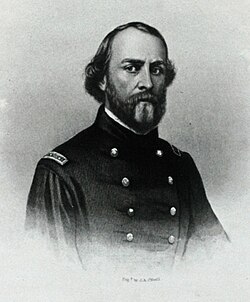
Sullivan Ballou (1829-1861) was a lawyer and politician from Rhode Island. Married with two sons, he was an active Republican, supporter of Abraham Lincoln, and served in the Rhode Island legislature. At the outbreak of the American Civil War he received a commission in the 2nd Rhode Island Regiment and was soon sent to Washington, DC. Injured in the 1st Battle of Bull Run (July 21, 1861), he was too wounded to remove from the battlefield and was left in the care of Army surgeons. He died July 28 .

This letter to his wife was written from Camp Clark, outside Washington, DC. as his unit prepared for action. While some historians question that authorship, this lesson assumes the letter was written by Major Sullivan Ballou at that time.

TEXT:

July the 14th, 1861

Washington D.C.

My very dear Sarah:

The indications are very strong that we shall move in a few days—perhaps tomorrow. Lest I should not be able to write you again, I feel impelled to write lines that may fall under your eye when I shall be no more.

Our movement may be one of a few days duration and full of pleasure—and it may be one of severe conflict and death to me. Not my will, but thine O God, be done. If it is necessary that I should fall on the battlefield for my country, I am ready. I have no misgivings about, or lack of confidence in, the cause in which I am engaged, and my courage does not halt or falter. I know how strongly American Civilization now leans upon the triumph of the Government, and how great a debt we owe to those who went before us through the blood and suffering of the Revolution. And I am willing—perfectly willing—to lay down all my joys in this life, to help maintain this Government, and to pay that debt.

But, my dear wife, when I know that with my own joys I lay down nearly all of yours, and replace them in this life with cares and sorrows—when, after having eaten for long years the bitter fruit of orphanage myself, I must offer it as their only sustenance to my dear little children—is it weak or dishonorable, while the banner of my purpose floats calmly and proudly in the breeze, that my unbounded love for you, my darling wife and children, should struggle in fierce, though useless, contest with my love of country.

Sarah, my love for you is deathless, it seems to bind me to you with mighty cables that nothing but Omnipotence could break; and yet my love of Country comes over me like a strong wind and bears me irresistibly on with all these chains to the battlefield.

The memories of the blissful moments I have spent with you come creeping over me, and I feel most gratified to God and to you that I have enjoyed them so long. And hard it is for me to give them up and burn to ashes the hopes of future years, when God willing, we might still have lived and loved together and seen our sons grow up to honorable manhood around us. I have, I know, but few and small claims upon Divine Providence, but something whispers to me—perhaps it is the wafted prayer of my little Edgar—that I shall return to my loved ones unharmed. If I do not, my dear Sarah, never forget how much I love you, and when my last breath escapes me on the battlefield, it will whisper your name.

Forgive my many faults, and the many pains I have caused you. How thoughtless and foolish I have often been! How gladly would I wash out with my tears every little spot upon your happiness, and struggle with all the misfortune of this world, to shield you and my children from harm. But I cannot. I must watch you from the spirit land and hover near you, while you buffet the storms with your precious little freight, and wait with sad patience till we meet to part no more.

But, O Sarah! If the dead can come back to this earth and flit unseen around those they loved, I shall always be near you; in the brightest day and in the darkest night—amidst your happiest scenes and gloomiest hours—always, always; and if there be a soft breeze upon your cheek, it shall be my breath; or the cool air fans your throbbing temple, it shall be my spirit passing by.

Sarah, do not mourn me dead; think I am gone and wait for me, for we shall meet again.

As for my little boys, they will grow as I have done, and never know a father’s love and care. Little Willie is too young to remember me long, and my blue-eyed Edgar will keep my frolics with him among the dimmest memories of his childhood. Sarah, I have unlimited confidence in your maternal care and your development of their characters. Tell my two mothers his and hers I call God’s blessing upon them. O Sarah, I wait for you there! Come to me, and lead thither my children.

Sullivan

INQUIRY:

  1. Soldiers still often write “death letters” when they are in combat. What would be the purpose(s) of these letters?
  2. The Governor of Rhode Island traveled to Virginia in March, 1862, to retrieve Ballou’s remains, which had been left behind when the Union troops retreated from the battlefield. This letter was never mailed to Sarah; it was found in Major Ballou’s effects after his death and was given to her. The original letter has not been found but multiple copies exist. Does the fact that the original has not yet been found change the effects of the letter? Why or why not?
  3. Sarah was 24 years old when her husband died, and she never remarried. She moved to New Jersey and lived with her son William, where she died in 1917 at age 80. She and her husband are buried together in Providence, RI, Swan Point Cemetery, and some say that this letter was buried with her. Why might her family have buried the letter with her? Research “grave goods.” In what cultures and for what purposes have grave goods been prominent?
  4. There is some controversy about this letter, with some literary historians positing that it does not convey Ballou’s style of writing. Is it possible that under intense emotional stress one’s writing style can alter?
  5. Identify at least six appeals in this letter, including ones to emotion (pathos), to ethics (ethos), to logic (logos), and to kairos (timeliness). How did Ballou weave these appeals together? Which appeals do you believe are strongest? Why?
  6. How did Ballou reference the future? What was his purpose in doing so?
  7. Was Ballou a religious man? How do you know?
  8. Identify examples of juxtaposition and contrast in the letter. What purposes do they serve?
  9. What type of officer do you believe Ballou would have been? Justify your response.
  10. What message would this letter have conveyed to Ballou’s wife Sarah? Justify your response.

ADDITIONAL RESOURCES:

https://www.pbslearningmedia.org/resource/honorable-manhood-video/ken-burns-the-civil-war/

https://www.nps.gov/articles/-my-very-dear-wife-the-last-letter-of-major-sullivan-ballou.htm
1814: Key’s “Rockets Red Glare”

ESSENTIAL QUESTION:

How does The Star Spangled Banner represent America?

CONTEXT:

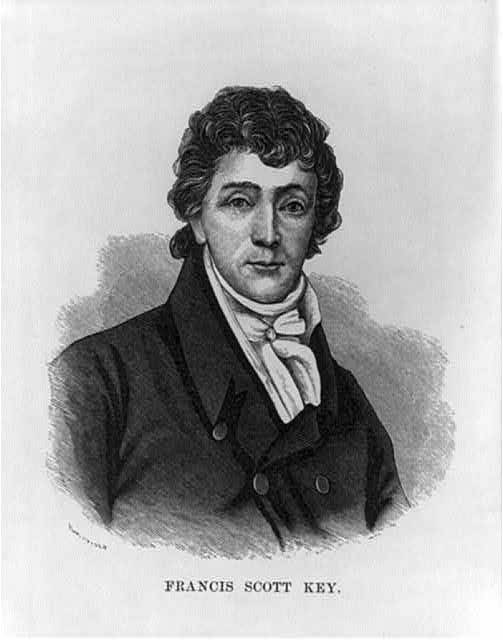
Francis Scott Key (1780-1843) was an amateur poet and well-known lawyer who argued before the US Supreme Court. From Frederick, Maryland, he wrote a poem entitled “The Defense of Fort M’Henry” which would eventually become “The Star Spangled Banner.”

In 1814 the British Army burned Washington, DC, and a friend of Key’s, William Beanes, was arrested by the British and taken to a prison ship. With the permission of US President Madison, Keys went to Baltimore, Maryland. With the help of an American agent for prisoners of war, Keys located his friend and secured his release. However, they had overheard plans for the upcoming British attack on Baltimore, and thus they could not return to shore until after the battle.

The British began to fire upon Fort McHenry in Baltimore Harbor on September 13; the attack lasted 25 hours. Key witnessed the bombardment throughout the night, not knowing how the battle was going. But in the morning on September 14 he saw the large (30 X 42 feet) American garrison flag flying over the fort (the flag is now in the Smithsonian National Museum of American History). The flag Key observed had 15 stripes and 15 stars (the current 13 stripes limit was not adopted until 1818). Key began composing his poem on the back of a letter he kept in his pocket. It was published first as a broadside that week and was soon set to song lyrics. By the Civil War it was a popular song for national unity and the US military began using it in the 1890s for flag ceremonies.

Although it is a difficult song to sing and some lyrics are considered controversial, it became increasingly popular and was the unofficial national anthem by the end of the 19th century. In April 1930 the House of Representatives passed a bill introduced by Representative John Linthicum of Maryland to make “The Star-Spangled Banner” the nation’s official anthem. Despite critics who disliked the melody or felt the law unnecessary, the Senate passed the bill the following year, and President Herbert Hoover signed it into law on March 2, 1931.

TEXT:

O say can you see, by the dawn’s early light,
What so proudly we hail’d at the twilight’s last gleaming,
Whose broad stripes and bright stars through the perilous fight
O’er the ramparts we watch’d were so gallantly streaming?
And the rocket’s red glare, the bombs bursting in air,
Gave proof through the night that our flag was still there,
O say does that star-spangled banner yet wave
O’er the land of the free and the home of the brave?

On the shore dimly seen through the mists of the deep
Where the foe’s haughty host in dread silence reposes,
What is that which the breeze, o’er the towering steep,
As it fitfully blows, half conceals, half discloses?
Now it catches the gleam of the morning’s first beam,
In full glory reflected now shines in the stream,
’Tis the star-spangled banner – O long may it wave
O’er the land of the free and the home of the brave!

And where is that band who so vauntingly swore,
That the havoc of war and the battle’s confusion
A home and a Country should leave us no more?
Their blood has wash’d out their foul footstep’s pollution.
No refuge could save the hireling and slave
From the terror of flight or the gloom of the grave,
And the star-spangled banner in triumph doth wave
O’er the land of the free and the home of the brave.

O thus be it ever when freemen shall stand
Between their lov’d home and the war’s desolation!
Blest with vict’ry and peace may the heav’n rescued land
Praise the power that hath made and preserv’d us a nation!
Then conquer we must, when our cause it is just,
And this be our motto – “In God is our trust,”
And the star-spangled banner in triumph shall wave
O’er the land of the free and the home of the brave.

INQUIRY:

  1. Key was a slave owner, although as an attorney he represented several slaves in their search for freedom. He was a leader in the American Colonization Society, although he was against the abolition movement. The third verse is often seen as controversial, with its reference to slave and hireling; but many historians see this as a reference to the British Army in the War of 1812, including the Corps of Colonial Marines, British free troops of color who had formerly been slaves. How might this be misunderstood by an audience today?
  2. Examine the last two lines of each stanza of the poem. How does the image of the star spangled banner change? What is the progression?
  3. How does the punctuation of the last line change from stanza to stanza? What does that represent?
  4. What is the effect of repeating the last line at the end of each stanza?
  5. What does the sight of the flag represent in the first stanza? Does that change over the course of the poem? Justify your response.
  6. Remembering that this was originally a poem written during a battle, what was the tone of this work? What was the mood?
  7. Why do you believe the first stanza was adopted as our national anthem? What does it say about the US?
  8. Choose a national anthem from another country (see https://nationalanthems.info/ for information). Research the anthem and the country and compare it to the American national anthem. How does that anthem represent the country from which it originates?

ADDITIONAL RESOURCES:

https://amhistory.si.edu/starspangledbanner/the-lyrics.aspx

https://guides.loc.gov/star-spangled-banner/beginning-your-research

https://www.loc.gov/collections/patriotic-melodies/articles-and-essays/star-spangled-banner/

1941: Roosevelt’s Four Freedoms

ESSENTIAL QUESTION:

How did President Franklin Roosevelt explain the purpose of World War II?

CONTEXT:

Franklin Delano Roosevelt (1882-1945) was the 32nd president of the United States (1933-1945), the only president to serve more than two terms. During his presidency America saw many years of the Great Depression as well as involvement in World War II. On January 6, 1941, he delivered his Annual Message to Congress, from which this text is drawn.

In his Message he outlined American foreign policy, focusing on three items: a commitment to national defense; supporting those foreign nations who were resisting aggression and therefore keeping war away from the American Hemisphere; and supporting any peace made on the basis of morality and the security of those nations fighting to secure democracy. It is important to note that the United States had not officially entered the War at this point but was providing assistance to Great Britain (and eventually others) through actions including the Neutrality “Cash and Carry” Act (1939), the Destroyer Deal (1940), and the Lend-Lease Act (1940).

TEXT:

In the future days, which we seek to make secure, we look forward to a world founded upon four essential human freedoms.

The first is freedom of speech and expression–everywhere in the world.

The second is freedom of every person to worship God in his own way–everywhere in the world.

The third is freedom from want–which, translated into world terms, means economic understandings which will secure to every nation a healthy peacetime life for its inhabitants–everywhere in the world.

The fourth is freedom from fear–which, translated into world terms, means a world-wide reduction of armaments to such a point and in such a thorough fashion that no nation will be in a position to commit an act of physical aggression against any neighbor–anywhere in the world...

This nation has placed its destiny in the hands and heads and hearts of its millions of free men and women; and its faither in freedom under the guidance of God. Freedom means the supremacy of human rights everywhere. Our support goes to those who struggle to gain those rights or keep them. Our strength is our unity of purpose. To that high concept there can be no end save victory.

INQUIRY:

  1. In 1943, well-known illustrator Norman Rockwell published paintings of each of the freedoms in The Saturday Evening Post in February/March, 1943 for four consecutive weeks, each illustration accompanied by an essay written by a well-known author. In response to popular demand, prints of the Four Freedoms were later sold to raise money for the war effort. Images of Rockwell’s paintings are available in the additional resources below. Investigate the images. What impact might the visual representation of the Four Freedoms have that the written word might not?
  2. Roosevelt used parallel construction and repetition when he listed the freedoms. What was the effect of these rhetorical devices?
  3. Discuss the four freedoms and list them in priority order. Justify your choices.
  4. Even though the US had not entered the war at the time of this speech, Roosevelt clearly identified each freedom for the world, not just the US. Given the world situation in early 1941, what do you believe was his purpose? How might that wording have been influenced by the aid the US was giving Great Britain in early 1941?
  5. Roosevelt closed his remarks explaining the essential democratic values which were the purpose of the War, a war which had already engulfed Great Britain and most of Europe. What was the purpose of ending the speech with these words?
  6. In the additional resources below you will find a video of Roosevelt delivering this section of his speech. View the video. What tone did Roosevelt use in this speech?
  7. Roosevelt made this address to the US Congress. Was that his only audience? What other audiences, within the US and around the world, might he have been addressing? Explain your response.
  8. In this lesson you have access to three versions of this speech–written text, audio delivery, and artistic interpretation. How do these versions support each other? Which version do you believe would have been most effective? Justify your response.

ADDITIONAL RESOURCES:

https://www.americanrhetoric.com/speeches/fdrthefourfreedoms.htm

https://www.mfah.org/blogs/inside-mfah/norman-rockwells-four-freedoms

https://www.nrm.org/2012/10/collections-four-freedoms/

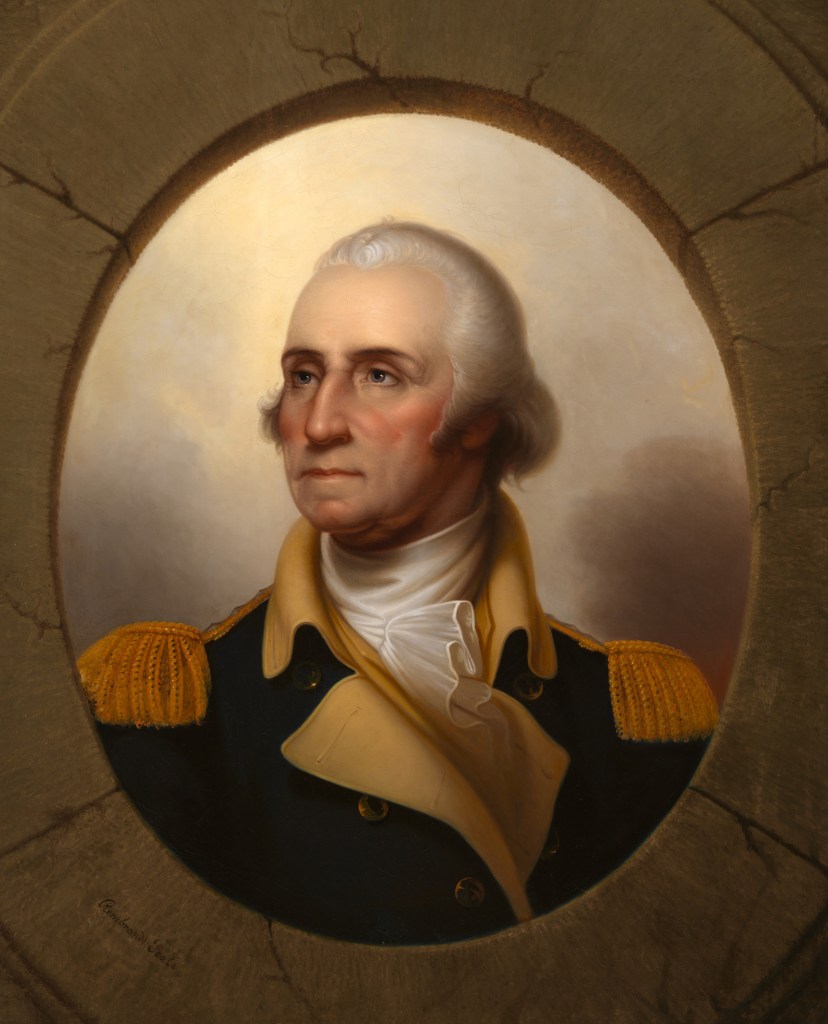
1776: Washington at Year’s End

ESSENTIAL QUESTION:

How did George Washington use language to convince his Continentals to remain in arms even after the difficult year of 1776?

CONTEXT:

As the year 1776 drew to a close, the American war effort was in crisis. The British occupied New York. Congress had abandoned Philadelphia in the face of the British advance and moved to Baltimore. General George Washington (1732-1799) worried, as his army was scheduled to dissolve; many one-year enlistments would elapse at year’s end. On December 23, Thomas Paine’s published The Crisis, and Washington had the series of essays read to his troops camped up and down the Delaware River in an attempt to improve morale.

On Christmas Eve his army crossed the Delaware River and defeated the British at the Battle of Trenton the next morning in less than one hour . The Americans then crossed back into Pennsylvania; on December 28 they crossed back to Trenton, planning to launch another attack on the British. But a more immediate problem existed; in three days, the Army’s enlistments would expire.

On December 30, Washington gathered his men and addressed his troops as a comrade in arms, asking them to stay six more weeks and offering a ten-dollar bounty (on December 27 Congress had authorized Washington to offer bounties for enlistment). When volunteers were asked for, no one stepped out. One soldier spoke up and reminded the General of all they had sacrificed; exhausted and lacking proper equipment, they were looking forward to going home. Seated on his horse, Washington rode along the line of men and spoke the words below.

TEXT:

My brave fellows, you have done all I asked you to do, and more than can be reasonably expected; but your country is at stake, your wives, your houses and all that you hold dear. You have worn yourselves out with fatigues and hardships, but we know not how to spare you. If you will consent to stay one month longer, you will render that service to the cause of liberty, and to your country, which you probably can never do under any other circumstances.

INQUIRY:

  1. How did Washington acknowledge the soldiers’ sacrifices? Why was that important?
  2. After Washington’s words, soldiers grouped and discussed. One man said “I’ll go if you will.” What feeling did this comment convey? Would you have agreed to stay?
  3. Another soldier whispered, “We can’t go home under such circumstances.” What feeling did this comment convey? Would you have agreed with this soldier?
  4. The men responded in small groups at first until finally 200 of the regiment had agreed to stay. Washington then spoke to each additional regiment personally, and eventually he had 3000 soldiers remain. What was the effect of Washington addressing each regiment in person?
  5. The men who stayed in the Army were not required to reenlist on paper–Washington said he would trust each man upon his word. What did this say about Washington’s attitude toward his Continental Troops?
  6. What appeals to emotion did Washington use in this speech? Why do you believe they worked?
  7. What was the tone of Washington’s speech? Cite examples.
  8. Do you believe this speech displays leadership on Washington’s part? Why or why not?

ADDITIONAL RESOURCES:

Chernow, Ron. Washington: A Life. New York: Penguin Books, 2010.

“George Washington to Robert Morris, 31 December 1776,” Founders Online, National Archives, https://founders.archives.gov/documents/Washington/03-07-02-0389. [Original source: The Papers of George Washington, Revolutionary War Series, vol. 7, 21 October 1776–5 January 1777, ed. Philander D. Chase. Charlottesville: University Press of Virginia, 1997, p. 497.]

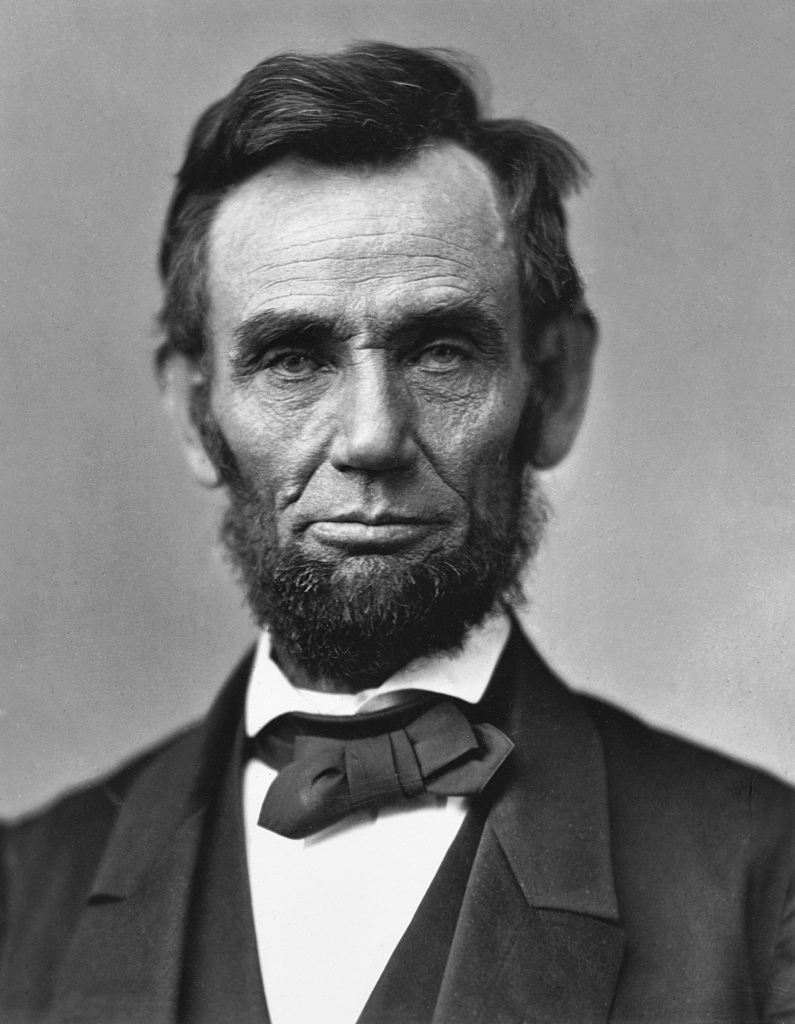
1865: Lincoln’s 2nd Inaugural

ESSENTIAL QUESTION:

How did Abraham Lincoln use language to convey his view of Reconstruction?

CONTEXT:

In 1864, the fourth year of the American Civil War, a presidential election was held in which incumbent Abraham Lincoln ran against General George McClellan, the campaign focusing on Lincoln’s war record. In late 1864 many believed Lincoln would lose this election, fearing that McClellan might negotiate with the Confederacy and end the war without emancipation. But when the electoral college votes were tallied, a series of Northern victories (including the fall of Atlanta) and the voting power of Union soldiers had given Lincoln a clear majority.

On March 4, 1865, 41 days before he would be assassinated, Abraham Lincoln delivered his second inaugural address, only 700 words and 20% the length of his first inaugural speech. He spoke from the North Portico of the Capitol Building, with its newly completed dome, and this inaugural address was the first in which African Americans were allowed to attend. Reflecting upon the four years of war, Lincoln outlined plans to heal the nation, and his words are engraved on the north interior wall of the Lincoln Memorial in Washington, DC.

TEXT:

Fellow countrymen: at this second appearing to take the oath of the presidential office there is less occasion for an extended address than there was at the first. Then a statement somewhat in detail of a course to be pursued seemed fitting and proper. Now, at the expiration of four years during which public declarations have been constantly called forth on every point and phase of the great contest which still absorbs the attention and engrosses the energies of the nation little that is new could be presented. The progress of our arms, upon which all else chiefly depends is as well known to the public as to myself and it is I trust reasonably satisfactory and encouraging to all. With high hope for the future no prediction in regard to it is ventured.

“On the occasion corresponding to this four years ago all thoughts were anxiously directed to an impending civil war. All dreaded it ~ all sought to avert it. While the inaugural address was being delivered from this place devoted altogether to saving the Union without war insurgent agents were in the city seeking to destroy it without war ~ seeking to dissolve the Union and divide effects by negotiation. Both parties deprecated war but one of them would make war rather than let the nation survive, and the other would accept war rather than let it perish. And the war came.

“One eighth of the whole population were colored slaves not distributed generally over the union but localized in the southern part of it. These slaves constituted a peculiar and powerful interest. All knew that this interest was somehow the cause of the war. To strengthen perpetuate and extend this interest was the object for which the insurgents would rend the Union even by war while the government claimed no right to do more than to restrict the territorial enlargement of it. Neither party expected for the war the magnitude or the duration which it has already attained. Neither anticipated that the cause of the conflict might cease with or even before the conflict itself should cease. Each looked for an easier triumph and a result less fundamental and astounding. Both read the same Bible and pray to the same God and each invokes His aid against the other. It may seem strange that any men should dare to ask a just God’s assistance in wringing their bread from the sweat of other men’s faces but let us judge not that we be not judged. The prayers of both could not be answered ~ that of neither has been answered fully. The Almighty has His own purposes. “Woe unto the world because of offenses for it must needs be that offenses come but woe to that man by whom the offense cometh.” If we shall suppose that American slavery is one of those offenses which in the providence of God must needs come but which having continued through His appointed time He now wills to remove and that He gives to both North and South this terrible war as the woe due to those by whom the offense came shall we discern therein any departure from those divine attributes which the believers in a living God always ascribe to Him. Fondly do we hope ~ fervently do we pray ~ that this mighty scourge of war may speedily pass away. Yet, if God wills that it continue until all the wealth piled by the bondsman’s two hundred and fifty years of unrequited toil shall be sunk and until every drop of blood drawn with the lash shall be paid by another drawn with the sword as was said three thousand years ago so still it must be said ‘the judgments of the Lord are true and righteous altogether.’

“With malice toward none with charity for all with firmness in the right as God gives us to see the right let us strive on to finish the work we are in to bind up the nation’s wounds, to care for him who shall have borne the battle and for his widow and his orphan ~ to do all which may achieve and cherish a just and lasting peace among ourselves and with all nations.”

INQUIRY:

  1. Why did Lincoln believe this inaugural address could be shorter that the one he delivered in 1861?
  2. When Lincoln said, “Both parties deprecated war but one of them would make war rather than let the nation survive, and the other would accept war rather than let it perish,” how did he contrast the political aims of the North and South in 1861–to what political aims did he allude?
  3. How did Lincoln characterize the American Civil War? What did he see as its cause?
  4. Identify biblical allusions Lincoln made in this speech. What were the effects of these allusions?
  5. Identify examples of alliteration, repetition, and parallel structure, all of which are important especially in speeches. What purpose did they accomplish in this address?
  6. What was the tone of this address? Compare the tone to Lincoln’s first inaugural address, made in 1861. What might account for the differences?
  7. How did Lincoln view America’s future? Give examples.

ADDITIONAL RESOURCES:

https://www.nps.gov/linc/learn/historyculture/lincoln-second-inaugural.htm

https://www.loc.gov/resource/ppmsc.02928/

https://guides.loc.gov/presidential-election-1864

https://www.americanrhetoric.com/speeches/abrahamlincolnsecondinauguraladdress.htm