Author: caseyc54

1778: Washington at Valley Forge

ESSENTIAL QUESTION:

How did the experience of Valley Forge broaden the meaning of the American Revolution?

CONTEXT:

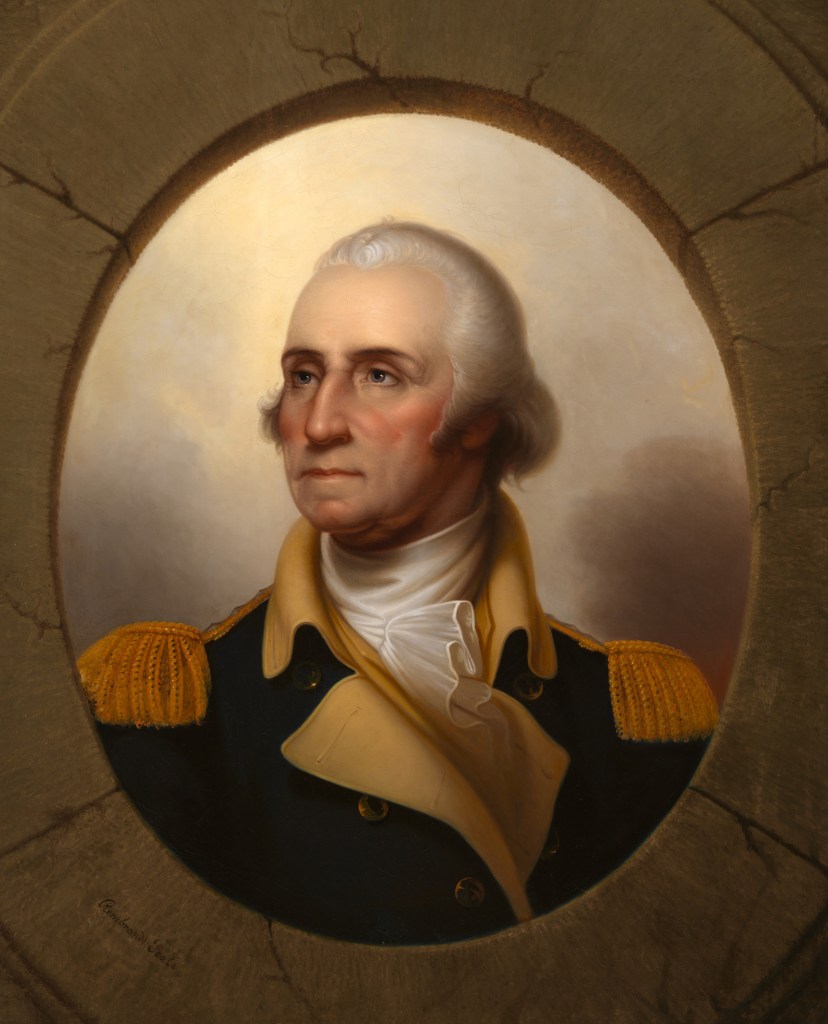
By the winter of 1777, the American Revolution was two years old. George Washington (1732-1799) was the new commander of the American forces as his army went into winter camp near Valley Forge, Pennsylvania, and the conditions of the army were grim. Men and officers were leaving the army and food was scarce. For months Washington had lobbied the Continental Congress, the political organization that was responsible for the War, for supplies, often to no avail.

Eventually Congress sent a committee to Valley Forge to inspect the situation, many believing that their observations could be used as an excuse to dismiss Washington as the Army’s commander. When they arrived Washington presented them with a letter from which this text is drawn. The original letter, over 16,000 words, presented Washington’s suggestions for overhauling the Army, offering ideas for officer pensions, reorganizing the chain of command, instituting a draft, offering merit promotions, overhauling the quartermaster (supply) departments, and other issues. By the time the Committee left Valley Forge, they supported Washington. Washington continued to communicate with Congress, helping them to understand the realities of sustaining an army in the field. Congress continued to debate but did pass several of his suggestions.

TEXT: (spelling has been modernized)

…In regard to clothing…the mode of providing hitherto in practice, is by no means adequate to the end; and that, unless our future efforts are more effectual, it will be next to impossible to keep an army in the field…I am in hopes that valuable consequences will accrue from a resolution of Congress…directing that the several states [the individual states]…”exert their utmost endeavors to procure, in addition to the allowances of clothing heretofore made by Congress, supplies of blankets &c. for the comfortable subsistence of the officers and soldiers of their respective battalions..”

For my own part…I have little conception, that our extensive wants can be completely satisfied, in any other way, than by national, or governmental contracts, between Congress and the Court of France… Besides placing our supplies, in so essential an article, on a sure and unfailing foundation, it would cement the connection between the two countries, and if discovered, prove a new and powerful topic of hostility, between France and Britain…

To make soldiers look well and bestow proper attention and care upon their clothes…gives a taste for decency and uniformity and makes the officers regardful of the appearance of the men, as tending to promote health, and foster a becoming pride of dress, which raises soldiers in their own esteem and makes them respectable to their enemy…

INQUIRY:

  1. How did Washington describe the process of distributing clothes to the soldiers?
  2. What might be the consequences if this problem is not resolved?
  3. What did the Continental Congress do to try and alleviate the problem?
  4. Who would receive the clothes provided by each individual state, for instance, North Carolina or Massachusetts?
  5. In addition to Congress and the individual states, what other resource did Washington suggest to help provide supplies?
  6. What two advantages of a French alliance did Washington suggest?
  7. Why did Washington believe it was important for an army to be well-clothed? List at least two reasons.
  8. Do you believe it is important to be well-clothed, clean and well-kept? Why or why not?
  9. Some historians have characterized Valley Forge as a turning point in that it shifted the American Revolution from solely a discussion of the political ideal of liberty to include the realities of sustaining an army in the field. Do you agree? Why/why not?

ADDITIONAL RESOURCES:

https://www.nps.gov/vafo/index.htm

https://www.nps.gov/vafo/learn/historyculture/valley-forge-history-and-significance.htm

https://founders.archives.gov/documents/Washington/03-13-02-0335

“George Washington to a Continental Congress Camp Committee, 29 January 1778,” Founders Online, National Archives, https://founders.archives.gov/documents/Washington/03-13-02-0335. [Original source: The Papers of George Washington, Revolutionary War Series, vol. 13, 26 December 1777 – 28 February 1778, ed. Edward G. Lengel. Charlottesville: University of Virginia Press, 2003, pp. 376–409.]

https://founders.archives.gov/documents/Washington/03-12-02-0611

“George Washington to Henry Laurens, 22 December 1777,” Founders Online, National Archives, https://founders.archives.gov/documents/Washington/03-12-02-0611. [Original source: The Papers of George Washington, Revolutionary War Series, vol. 12, 26 October 1777 – 25 December 1777, ed. Frank E. Grizzard, Jr. and David R. Hoth. Charlottesville: University Press of Virginia, 2002, pp. 667–671.]

1620: Mayflower Compact

ESSENTIAL QUESTION:

Analyze the Mayflower Compact as a cornerstone of American democracy.

CONTEXT:

In the late 1500s, a number of religious groups arose in England trying to establish different practices from the Anglican Church, the official church of England. One of these groups was called the Puritans, because they wanted to make the Anglican Church more pure and simple. Another group was called the Separatists, because they wanted to separate from the Anglican Church altogether. The Pilgrims were separatists, and they were severely persecuted for their religious beliefs. They eventually moved to Holland where religious ideas were more tolerant.

But the Pilgrims remained Englishmen at heart, and eventually they were able to convince King James I of England to allow them to emigrate to the new colonies in America. In September 1620 they set sail for America with royal permission, called a patent, to settle in the colony of Virginia (which had been settled by Englishmen years before). The colony at that time was much larger than the state of Virginia today–in those days it reached present New York.

Rough seas led the Mayflower, the Pilgrim’s ship, to land in Cape Cod, Massachusetts, well north of where they were supposed to be. Since they were outside the control of the King’s patent, they needed to decide how they would be governed. They agreed to write a document for their own self-government, called The Mayflower Compact. This text is from that agreement. The Pilgrims later obtained a patent from the Council of New England in 1621 and settled Plymouth Colony.

TEXT:

IN THE NAME OF GOD, AMEN. We, whose names are underwritten, the Loyal Subjects of our dread Sovereign Lord King James, by the Grace of God, of Great Britain, France, and Ireland, King, Defender of the Faith, &c. Having undertaken for the Glory of God, and Advancement of the Christian Faith, and the Honour of our King and Country, a Voyage to plant the first Colony in the northern Parts of Virginia; Do by these Presents, solemnly and mutually, in the Presence of God and one another, covenant and combine ourselves together into a civil Body Politick, for our better Ordering and Preservation, and Furtherance of the Ends aforesaid: And by Virtue hereof do enact, constitute, and frame, such just and equal Laws, Ordinances, Acts, Constitutions, and Officers, from time to time, as shall be thought most meet and convenient for the general Good of the Colony; unto which we promise all due Submission and Obedience.

IN WITNESS whereof we have hereunto subscribed our names at Cape-Cod the eleventh of November, in the Reign of our Sovereign Lord King James, of England, France, and Ireland, the eighteenth, and of Scotland the fifty-fourth, Anno Domini; 1620.or [signatures follow]

INQUIRY:

  1. Why did the signers begin by stating that they were loyal subjects of the King?
  2. What is a “civil body politic”?
  3. Why did the signers organize the “civil body politic”? What was its purpose?
  4. Plymouth Colony was an ocean away from the English King in London. How might this have affected the power and position of the local Puritans, ordinary men not accustomed to rank and privilege?
  5. The Pilgrims obtained a patent for the colony of Plymouth in 1621, but the Mayflower Compact was read at government meetings for many years. How might this reflect how the settlers saw their colony?
  6. Only men signed the Mayflower Compact. What does this suggest about the role of women at the time?
  7. If you elect the captain of a sports team or a group, how does this reflect the principle of the Mayflower Compact?
  8. What basic principle of US government was established by the Mayflower Compact?

ADDITIONAL RESOURCES:

https://www.mass.gov/news/the-mayflower-compact

https://www.neh.gov/humanities/2015/novemberdecember/feature/who-were-the-pilgrims-who-celebrated-the-first-thanksgiving

1783: Washington resigns

ESSENTIAL QUESTION:

Assess the short and long term significance of General George Washington’s resignation of his military commission.

CONTEXT:

George Washington (1732-1799) served as the Commander in Chief of the American Forces in the American Revolution and in 1789 became the first president of the United States. While fighting in the American Revolution ended mainly with the Battle of Yorktown (1781), the war itself only ended with the Treaty of Paris (1783). In that two year period, the American Army stayed organized, with Washington as its leader, as the threat of new fighting remained. As Commander in Chief Washington constantly petitioned Congress for pay and better conditions for the soldiers who had fought in the Revolution, but there was little money; money had to be requested by Congress of the individual states. Several mutinies occurred over unpaid wages, supplies, and expiring enlistments, including the Pennsylvania Line Mutiny (1781) and the Newburgh Conspiracy (1783). Washington was able to quell these uprisings and retain control of the Army.

Washington had been appointed Commander in Chief of the American Forces in May of 1775, and many thought he would remain in power throughout his life. But the Treaty of Paris (1783) had been signed three months earlier and Washington saw his job as a military commander completed. During the War he had been granted broad powers and many thought he would continue to use them. But he did not. Having bid farewell to his soldiers the month before, in December 1783 he bid farewell to his officers and two days before Christmas in 1783 he addressed the Continental Congress in Annapolis, Maryland, to resign his commission. He then traveled to his home at Mount Vernon, hoping to live out his days as a farmer. His quiet life did not last long; he was elected President of the United States six years later, serving from 1789 until 1797. Washington died at Mount Vernon in 1799.

TEXT:

The great events on which my resignation depended having at length taken place; I have now the honor of offering my sincere Congratulations to Congress and of presenting myself before them to surrender into their hands the trust committed to me, and to claim the indulgence of retiring from the Service of my Country...

I resign with satisfaction the Appointment I accepted with diffidence. A diffidence in my abilities to accomplish so arduous a task, which however was superseded by a confidence in the rectitude of our Cause, the support of the Supreme Power of the Union, and the patronage of Heaven…

While I repeat my obligations to the Army in general, I should do injustice to my own feelings not to acknowledge in this place the peculiar Services and distinguished merits of the Gentlemen who have been attached to my person during the War. It was impossible the choice of confidential Officers to compose my family should have been more fortunate. Permit me Sir, to recommend in particular those, who have continued in Service to the present moment, as worth of the favorable notice and patronage of Congress.

I consider it an indispensable duty to close this last solemn act of my Official life, by commending the Interests of our dearest Country to the protection of Almighty God, and those who have the superintendence of them, to his holy keeping.

Having now finished the work assigned me, I retire from the great theatre of Action; and bidding an Affectionate farewell to this August body under whose order I have so long acted, I here offer my Commission, and take my leave of all the employments of public life.

INQUIRY:

  1. Washington believed this would be his last act of public life, and he handed his commission and a copy of his remarks to Thomas Mifflin, the President of the Congress. He bowed to Congress and then left for Mount Vernon to be home for Christmas. What was the short term effect of Washington’s resignation?
  2. Many wanted Washington to remain in power as head of the Army and nation. Why would they want that?
  3. Washington said he accepted his commission with diffidence. What does that mean? What powers allowed him to overcome that diffidence? What does that say about Washington as a leader?
  4. How did Washington view his officers? What language did he use?
  5. What did Washington ask the Congress to provide for his officers?
  6. Investigate the Newburgh Conspiracy (1783). How might that have influenced Washington’s comments?
  7. Washington made several religious references. What does this say about his attitude regarding the success of the American Revolution?
  8. After Washington’s resignation the Continental Army essentially disbanded, leaving the colonies with no unified military force; eventually Congress took over the responsibilities of the Army. What dangers might the new United States have faced with no organized military force?
  9. When news of Washington voluntarily giving up political power to return to his farm spread across the nation and the world, people were astonished. How did this act represent what the American Revolution had been fought for?
  10. Today the US Constitution marks the President of the United States as the Commander in Chief of the Military. What fundamental principle of American democracy doe the placing of military power into the hands of a civilian (president) represent? How did Washington’s resignation establish this principle?

ADDITIONAL RESOURCES:

https://www.mountvernon.org/library/digitalhistory/digital-encyclopedia/article/resignation-of-military-commission

https://www.aoc.gov/explore-capitol-campus/art/general-george-washington-resigning-his-commission

https://founders.archives.gov/documents/Jefferson/01-06-02-0319-0004

Washington: A Life by Ron Chernow (Penguin Books, 2011)

1987: Reagan at the Gate

ESSENTIAL QUESTION:

How did the Berlin Wall represent the Cold War?

CONTEXT:

Ronald Reagan (1911-2004), president of the United States from 1981 until 1989, delivered one of his best known speeches at the Brandenburg Gate, a major historical landmark in Berlin, Germany, on June 12, 1987.

After World War II, Germany was divided into four sectors, each controlled by one of the Allied Forces. Berlin, Germany’s capitol, was also divided. The Soviet Union controlled East Germany and East Berlin, and the Western Allies (US, Great Britain, and France) controlled West Germany and West Berlin. Many East Germans fled to West Berlin to find better economic and political opportunities, and this became a major embarrassment for the East Germans. In 1961 they began building a wall using concrete blocks and wire to prevent this exodus. The 155 kilometer wall surrounded West Berlin, separating families and friends. But escapes to the West continued, and East Berlin strengthened the Wall; escapees could face death if caught. The Wall became a major symbol of the Cold War and the division between Western culture and the Soviets.

Although by the 1980s the Soviet economy was weakening and nationalist movements were arising within the Soviet Union, it would be 1991 before the Soviet Union dissolved. In 1987 President Reagan traveled to Berlin to give this speech, emphasizing the US support for West Berlin and West Germany and pressuring the Soviets to end the division of Berlin and Germany.

TEXT:

…Behind me stands a wall that encircles the free sectors of this city, part of a vast system of barriers that divides the entire continent of Europe. From the Baltic South, those barriers cut across Germany in a gash of barbed wire, concrete, dog runs, and guard towers. Farther south, there may be no visible, no obvious wall. But there remain armed guards and checkpoints all the same–still a restriction on the right to travel, still an instrument to impose upon ordinary men and women the will of a totalitarian state. Yet, it is here in Berlin where the wall emerges most clearly; here, cutting across your city, where the news photo and the television screen have imprinted this brutal division of a continent upon the mind of the world.

Standing before the Brandenburg Gate, every man is a German separated from his fellow men.
Every man is a Berliner, forced to look upon a scar…

…But in the West today, we see a free world that has achieved a level of prosperity and well-being unprecedented in all human history. In the Communist world, we see failure, technological backwardness, declining standards of health, even want of the most basic kind–too little food.
Even today, the Soviet Union still cannot feed itself. After these four decades, then, there stands before the entire world one great and inescapable conclusion: Freedom leads to prosperity. Freedom replaces the ancient hatreds among the nations with comity and peace. Freedom is
the victor.


And now—now the Soviets themselves may, in a limited way, be coming to understand the importance of freedom. We hear much from Moscow about a new policy of reform and openness. Some political prisoners have been released. Certain foreign news broadcasts are no longer being jammed. Some economic enterprises have been permitted to operate with greater freedom from state control.


Are these the beginnings of profound changes in the Soviet state? Or are they token gestures intended to raise false hopes in the West, or to strengthen the Soviet system without changing it? We welcome change and openness; for we believe that freedom and security go together, that the advance of human liberty—the advance of human liberty can only strengthen the cause of world peace.


There is one sign the Soviets can make that would be unmistakable, that would advance dramatically the cause of freedom and peace.
General Secretary Gorbachev, if you seek peace, if you seek prosperity for the Soviet Union and Eastern Europe, if you seek liberalization: Come here to this gate.
Mr. Gorbachev, open this gate.
Mr. Gorbachev—Mr. Gorbachev, tear down this wall!…

INQUIRY:

  1. The Brandenburg Gate in Berlin is located in what was the restricted zone when Berlin was divided. Why do you think Reagan chose the Gate as the site of this speech?
  2. How did Reagan describe the Wall? What tone did those terms convey?
  3. When Reagan used the term “will of a totalitarian state”, to which country was he referring? What is a totalitarian state?
  4. What was the effect of Reagan declaring “…every man is a German, separated from his fellow men. Every man is a Berliner, forced to look upon a scar…”? How did this define Reagan’s audience for the speech?
  5. How did Reagan compare the Communist world and the Free World?
  6. What did Reagan list as the results of freedom?
  7. Did Reagan believer that the Soviets were in the process of making changes? How do you know?
  8. What did Reagan state would be the main sign of changes and the desire for freedom in the Soviet Union?
  9. In what ways did the Berlin Wall represent the Cold War?
  10. The most well known line from this speech is the last one in this excerpt. Why do you think that line would be best remembered?

ADDITIONAL RESOURCES:

https://www.stiftung-berliner-mauer.de/en/topics/berlin-wall

https://www.archives.gov/publications/prologue/2007/summer/berlin.html

1881: Jackson’s “Century of Dishonor”

ESSENTIAL QUESTION:

Investigate America’s “Century of Dishonor.”

CONTEXT:

Helen Hunt Jackson (1830-1885), born in Massachusetts, was a poet, author, and Native American rights activist. She later moved to Colorado on the advice of her physicians to improve her poor health. In 1879 she was inspired by Chief Standing Bear (c. 1829-1908, a Ponca chief and Native American activist who argued successfully in 1879 for judicial rights in federal court), and she later wrote A Century of Dishonor, an expose of the crimes against Native Americans. It led to the founding of the Indian Rights Association (1930-1994). She died of stomach cancer in 1885.

This excerpt is from A Century of Dishonor.

TEXT: (NOTE: “Indian” is used as it was in the original text)

…There is not among these three hundred bands of Indians [in the United States] one which has not suffered cruelly at the hands either of the Government or of white settlers. The poorer, the more insignificant, the more helpless the band, the more certain the cruelty and outrage to which they have been subjected. This is especially true of the bands on the Pacific slopes.

These Indians found themselves of a sudden surrounded by and caught up in the
great influx of gold-seeking settlers, as helpless creatures on a shore are caught
up in a tidal wave. There was not time for the Government to make treaties;
not even time for communities to make laws. The tale of the wrongs, the
oppressions, the murders of the Pacific-slope Indians in the last thirty years
would be a volume by itself, and is too monstrous to be believed.
It makes little difference, however, where one opens the record of the
history of the Indians; every page and every year has its dark stain. The story of
one tribe is the story of all, varied only by differences of time and place; but
neither time nor place makes any difference in the main facts. Colorado is as
greedy and unjust in 1880 as was Georgia in 1830, and Ohio in 1795; and the
United States Government breaks promises now as deftly as then, and with added ingenuity long practice….

The history of the Government connections with the Indians is a
shameful record of broken treaties and unfulfilled promises. The history of the
border, white man’s connection with the Indians is a sickening record of
murder, outrage, robbery, and wrongs committed by the former, as the rule,
and occasional savage outbreaks and unspeakably barbarous deeds of
retaliation by the latter, as the exception….

INQUIRY: (NOTE: the term “Indian” is used in the questions as it was in Jackson’s text)

  1. What two sources did Jackson list as the source of Indian mistreatment?
  2. What role did the Gold Rush play in the mistreatment of the Indians?
  3. According to Jackson, were any tribes exempt from mistreatment? How do you know?
  4. How did Jackson characterize “the history of the Government connections” with the Indians?
  5. How did she characterize “the border, white man’s connection” with the Indians?
  6. Investigate Red Cloud, leader of the Oglala Sioux from 1865 until 1900. Evaluate his relationship with the US Government. Or choose another Native American leader to investigate, such as Sitting Bull, Geronimo, Tecumseh, Black Hawk, or Crazy Horse. Compare their relationships with the US Government during their times.
  7. The Battle of Wounded Knee in South Dakota occurred in 1890. Investigate this battle and assess how it characterized the attitude of the US Army at the time.
  8. The term “Indian” is now usually considered derogatory and offensive. “First Nations”, “Native Americans”, or other terms such as individual tribal names are considered more appropriate. Why does it matter? What value does a name have?

ADDITIONAL RESOURCES:

https://www.nps.gov/articles/000/a-century-of-dishonor-by-helen-hunt-jackson.htm

https://archive.org/details/centuryofdishono00jackrich/page/n7/mode/2up

https://www.gutenberg.org/files/50560/50560-h/50560-h.htm

https://aktalakota.stjo.org/american-indian-leaders/red-cloud/

1974: Nixon Resigns

ESSENTIAL QUESTION:

How can the powers of the US President be limited?

CONTEXT:

Richard Milhous Nixon (1913-1994) was the 37th president of the US, serving from 1969 until 1974. Prior to his presidency he served in several political offices, including as vice president under President Dwight D. Eisenhower. Elected President in 1968, he resigned in 1974 in the wake of the Watergate Scandal, a break-in at the Democratic Party Headquarters in Washington, DC, and the Nixon administration’s cover-up of that criminal act. Nixon was the only US president to resign from office. This text is from his last public speech as president and was broadcast live on radio and TV on August 8, 1974. Nixon died in New York in 1994.

TEXT:

This is the 37th time I have spoken to you from this office, where so many decisions have been made that shaped the history of this Nation. Each time I have done so to discuss with you some matter that I believe affected the national interest.

In all the decisions I have made in my public life, I have always tried to do what was best for the Nation. Throughout the long and difficult period of Watergate, I have felt it was my duty to persevere, to make every possible effort to complete the term of office to which you elected me. In the past few days, however, it has become evident to me that I no longer have a strong enough political base in the Congress to justify continuing that effort. As long as there was such a base, I felt strongly that it was necessary to see the constitutional process through to its conclusion, that to do otherwise would be unfaithful to the spirit of that deliberately difficult process and a dangerously destabilizing precedent for the future. But with the disappearance of that base, I now believe that the constitutional purpose has been served, and there is no longer a need for the process to be prolonged.

I would have preferred to carry through to the finish whatever the personal agony it would have involved, and my family unanimously urged me to do so. But the interest of the Nation must always come before any personal considerations. From the discussions I have had with Congressional and other leaders, I have concluded that because of the Watergate matter I might not have the support of the Congress that I would consider necessary to back the very difficult decisions and carry out the duties of this office in the way the interests of the Nation would require.

I have never been a quitter. To leave office before my term is completed is abhorrent to every instinct in my body. But as President, I must put the interest of America first. America needs a full-time President and a full-time Congress, particularly at this time with problems we face at home and abroad. To continue to fight through the months ahead for my personal vindication would almost totally absorb the time and attention of both the President and the Congress in a period when our entire focus should be on the great issues of peace abroad and prosperity without inflation at home.

Therefore, I shall resign the Presidency effective at noon tomorrow. Vice President Ford will be sworn in as President at that hour in this office….

By taking this action, I hope that I will have hastened the start of that process of healing which is so desperately needed in America.

I regret deeply any injuries that may have been done in the course of the events that led to this decision. I would say only that if some of my Judgments were wrong, and some were wrong, they were made in what I believed at the time to be the best interest of the Nation.

So, let us all now join together in affirming that common commitment and in helping our new President succeed for the benefit of all Americans….

INQUIRY:

  1. Nixon’s successor as president, Gerald Ford, had not been elected; he was appointed to the office of vice president after Nixon’s elected vice president, Spiro Agnew, resigned in 1973 (from charges of tax evasion). Gerald Ford, as president after Nixon’s resignation, then nominated Nelson Rockefeller as vice president. Thus from 1974 until 1977 neither the president nor the vice president were elected by the people. What part of the US Constitution provides for succession to the presidency? Why would it have been necessary to nominate a vice president if there was not one currently in office? Who had to approve Rockefeller’s appointment as vice president?
  2. What did Nixon give as the reasons that he chose to resign?
  3. Investigate the Watergate Scandal and how and why it destroyed confidence in the Nixon presidency.
  4. What is impeachment? Where and in what ways does the US Constitution discuss impeachment?
  5. Congress had already begun the impeachment process against Nixon, but he resigned before the articles of impeachment could be passed. Would it have been better for the country if he had gone through with the impeachment process? Why or why not?
  6. How important is it for a president to have a “political base” in Congress? Why?
  7. In what ways did Nixon deflect blame from himself for the necessity to resign? In what ways did he accept blame?
  8. How did Nixon change the tone of this speech in the next to last sentence? In the last sentence?

ADDITIONAL RESOURCES:

https://www.pbs.org/newshour/spc/character/links/nixon_speech.html

https://www.nixonlibrary.gov/president-nixon

https://www.whitehousehistory.org/bios/richard-nixon

1962: Carson’s “Silent Spring”

ESSENTIAL QUESTION:

What role can literature play in shaping American policy?

CONTEXT:

Rachel Carson (1907-1964) was an American conservationist, marine biologist, and writer of several best selling books detailing marine life. In 1962 she published Silent Spring, a book which brought the environmental movement to the attention of the American People by combining scientific research and narrative writing to appeal to a broad audience. She reasoned that widespread use of synthetic pesticides (such as DDT) were harmful in the short and long terms, entering the food chain and threatening humans. Although chemical companies fiercely opposed the work, it brought a change in national pesticide policy and led to a nationwide ban of DDT and other pesticides. The work inspired a grassroots environmental movement, leading to the creation of the US Environmental Protection Agency. Carson died of breast cancer in 1964 at her home in Silver Spring, Maryland.

TEXT:

There was once a town in the heart of America where all life seemed to be in harmony with its surroundings. The town lay in the midst of a checkerboard of prosperous farms, with fields of grain and hillsides of orchards, where white clouds of bloom drifted above the green land. In autumn, oak and maple and birch set up a blaze of color that flamed and flickered across a backdrop of pines. Then foxes barked in the hills and deer crossed the fields, half hidden in the mists of the mornings. Along the roads, laurel, viburnum, and alder, great ferns and wild flowers delighted the traveler’s eye through much of the year. Even in winter, the roadsides were places of beauty, where countless birds came to feed on the berries and on the seed heads of the dried weeds rising above the snow….

Then, one spring, a strange blight crept over the area, and everything began to change. Some evil spell had settled on the community; mysterious maladies swept the flocks of chickens, and the cattle and sheep sickened and died. Everywhere was the shadow of death. The farmers told of much illness among their families. In the town, the doctors were becoming more and more puzzled by new kinds of sickness that had appeared among their patients. There had been several sudden and unexplained deaths, not only among the adults but also among the children, who would be stricken while they were at play, and would die within a few hours. And there was a strange stillness. The birds, for example—where had they gone? Many people, baffled and disturbed, spoke of them. The feeding stations in the back yards were deserted….

This town does not actually exist; I know of no community that has experienced all the misfortunes I describe. Yet every one of them has actually happened somewhere in the world, and many communities have already suffered a substantial number of them. A grim specter has crept upon us almost unnoticed, and soon my imaginary town may have thousands of real counterparts. What is silencing the voices of spring in countless towns in America?….

It is widely known that radiation has done much to change the very nature of the world, the very nature of its life; strontium 90, released into the air through nuclear explosions, comes to earth in rain or drifts down as fallout, lodges in soil, enters into the grass or corn or wheat grown there, and, in time, takes up its abode in the bones of a human being, there to remain until his death. It is less well known that many man-made chemicals act in much the same way as radiation; they lie long in the soil, and enter into living organisms, passing from one to another. Or they may travel mysteriously by underground streams, emerging to combine, through the alchemy of air and sunlight, into new forms, which kill vegetation, sicken cattle, and work unknown harm on those who drink from once pure wells….. Now, in the modern world, there is no time. The speed with which new hazards are created reflects the impetuous and heedless pace of man, rather than the deliberate pace of nature….

INQUIRY:

  1. Carson’s first two paragraphs sharply contrast an imaginary town. Why did she start with such an idyllic place? How does this influence the tone of this excerpt?
  2. Although Carson did not specifically mention DDT in this excerpt, her work led to the banning of the substance. DDT is the short form of dichlorodiphenyltrichloroethane, a colorless, odorless chemical compound. It was used widely during World War II with civilian and military populations to control malaria, typhus and other insect-born diseases. In 1945 it was made available to American farmers to use as an insecticide. But today it is classified as a “probably human carcinogen” by US and international authorities and is banned in the US and most other countries. How did Carson imply the dangers of DDT? What images did she use?
  3. Compare these first two paragraphs. Why did Carson’s narrative voice (telling a story) convey her message more strongly that a list of scientific facts might have? What imagery did she use?
  4. The US banned DDT in 1972. This, along with the passage of the Endangered Species Act (1973) were major factors in the recovery of the bald eagle and the peregrine falcon from near extinction. Bald eagles are still protected but are no longer listed as endangered of extinction.; the peregrine falcon is also no longer listed as endangered. Investigate the Endangered Species Act. Which species have been “recovered” so that they were removed from the Endangered Species List? What is the importance of a varied biosphere?
  5. What is the significance of Carson’s title of this book? In what way is it a metaphor? In what way is it a warning?
  6. Investigate other works that have changed American policies, such as “Common Sense” (Thomas Paine), Uncle Tom’s Cabin (Harriet Beecher Stowe), The Jungle (Upton Sinclair), or others. Why and in what ways did these works influence Americans and American history?

ADDITIONAL RESOURCES:

https://www.newyorker.com/magazine/1962/06/16/silent-spring-part-1

https://www.history.com/articles/rachel-carson-silent-spring-impact-environmental-movement

1570: Haudenosaunee Constitution

ESSENTIAL QUESTION:

How did early Native American culture reflect their values?

CONTEXT:

The Haudenosaunee were a group of Native Americans in what would become the New England colonies in America, and they were present well before colonial settlement. They are sometimes called the “Iroquois Confederacy,” but this was a name given to them by French fur trappers; the English called them the “League of Five Nations.” The Haudenosaunee were actually a language and cultural group, and from this grew the Haudenosaunee Confederacy, a political union. The Seneca, Cayuga, Onondaga, Oneida, and Mohawk tribes were original members, and the Tuscarora joined the Confederacy in approximately 1722.

The Haudenosaunee Confederacy developed a Constitution which was oral, recorded on wampum belts, and may have dated to as early as 1190. Passed down through the generations, it was later written and translated into English in the 19th century. Known as “The Great Law of Peace,” the Constitution emphasized peace and unity among the nations, consensus decision making, established a legal system, and created delegates to form a Grand Council. This text is drawn from a translation.

The Haudenosaunee Confederacy still exists today.

TEXT:

This is wisdom and justice of the part of the Great Spirit to create and raise chiefs, give and establish unchangable laws, rules and customs between the Five Nation Indians, viz the Mohawks, Oneidas, Onondagas, Cayugas and Senecas and the other nations of Indians in North America. The object of these laws is to establish peace between the numerous nations of Indians, hostility will be done away with, for the preservation and protection of life, property and liberty…

And when the Five Nation Indians confederation chiefs assemble to hold a council, the council shall be duly opened and closed by the Onondaga chiefs, the Firekeepers. They will offer thanks to the Great Spirit that dwells in the heave above the source and ruler of our lives, and it is him that sends daily blessings upon us, our daily wants and daily health, and they will then declare the council open for the transaction of business, and give decisions of all that is done in the council…

INQUIRY:

  1. In the first sentence, what does the Great Spirit do?
  2. What is the purpose of these laws, rules and customs?
  3. How do the Nations open their Council? Why is that significant?
  4. For what do the Nations offer thanks? How does that characterize their relationship with the Great Spirit?
  5. How does the Haudenosaunee Constitution blend laws and values?
  6. Haudenosaunee means “people of the longhouse.” They not only lived in longhouses but also saw their culture as a connected people within a metaphorical longhouse, serving as an image of the connection of the tribes of the Confederacy. How does living close to each other encourage the principles of the Haudenosaunee?
  7. Historians debate the influence of the Haudenosaunee Constitution on the US Constitution. Certainly Benjamin Franklin was familiar with the principles of the Haudenosaunee Constitution; he invited representatives of the Iroquois Nations to the Provincial Council of Pennsylvania in 1744 and the Albany Congress in 1754 to help promote peace, equity and justice in the gathering of colonies. The US Senate, in 1987, formally recognized that the framers of the US Constitution admired the principles and practices of the Confederacy (yet the Constitution itself was based more upon Enlightenment principles of the time). What similarities do you see with this excerpt and the US Constitution?
  8. Investigate the Albany Congress and the Albany Plan of Union. What similarities do you see with the Haudenosaunee Constitution?
  9. During the American colonial period the Haudenosaunee developed political alliances with the French and the English, based on their own tribal benefits. Yet during the American Revolution the Confederacy fractured, with some tribes siding with the English and some with the Americans. How did this violate one of their core principles?
  10. Many historians recognize the Haudenosaunee Confederacy as the world oldest democracy. Do you agree? Why or why not?

ADDITIONAL RESOURCES:

haudenosauneeconfederacy.com

https://web.pdx.edu/~caskeym/iroquois_web/html/greatlaw.html

1883: The New Colossus

ESSENTIAL QUESTION:

How can the meaning of a symbol change over time?

CONTEXT:

The Statue of Liberty is a huge neoclassical sculpture of a draped woman, possibly inspired by the Roman goddess of liberty, Libertas, standing on Liberty Island in New York Harbor. She holds a torch above in her right hand and in her left she holds a tablet inscribed July 4, 1776, the accepted date of the American Declaration of Independence.

The large statue was designed by Frederic Auguste Bartholdi of France, and it was intended to be celebrate America’s 100 years of Independence in 1876 and represent the friendship between the US and France. It was erected on Liberty Island in New York Harbor in 1886. A gift to the US from France, it served as a lighthouse in the Harbor from 1886 until 1902. It is made primarily of copper, which has oxidized to green over the years. It serves as a symbol of freedom and was the first thing many immigrants of the early 20th century saw as they entered New York Harbor. Between 1900 and 1915, almost 15 million immigrants arrived in America, more that in the previous 40 years combined.

In 1883 poet Emma Lazarus wrote a verse to help raise money to build the base for the Statue. In 1903 the poem was engraved on a bronze plaque which is located inside the base. This text is her poem and was entitled “The New Colossos.”

TEXT:

Not like the brazen giant of Greek fame,
With conquering limbs astride from land to land,
Here at our sea-washed, sunset gates shall stand
A mighty woman with a torch, whose flame
Is the imprisoned lightning, and her name
Mother of Exiles. From her beacon-hand
Glows worldwide welcome; her mild eyes command
The air-bridged harbor that twin cities frame.

“Keep, ancient lands, your storied pomp!” cries she
With silent lips. “Give me your tired, your poor,
Your huddled masses yearning to breathe free,
The wretched refuse of your teeming shore.
Send these, the homeless, tempest-tost to me,
I lift my lamp beside the golden door!”

INQUIRY:

  1. In her first two lines Lazarus alluded to the Colossos of Rhodes. The Colossos of Rhodes was a giant bronze status erected in the town of Rhodes, Greece, near the harbor and stood 110 feet tall. It was considered a wonder of the ancient world. Destroyed by an earthquake in 226 BCE, it symbolized ancient engineering and artistry and celebrated Greek military victories. Why did Lazarus begin her poem by contrasting the Statue of Liberty with the Colossos of Rhodes? What is the effect of this contrast?
  2. How did Lazarus describe New York Harbor?
  3. How did Lazarus describe the Statue of Liberty? What is her name? How does this name identify the purpose of the Statue?
  4. How did Lazarus characterize the torch? What was it’s purpose?
  5. What does the Statue mean when she says, “Keep, ancient lands, your storied pomp”? To whom is this addressed?
  6. To whom is the Statue lifting “my lamp beside the golden door”? Describe them. How do you know?
  7. What is the golden door?
  8. What is the tone of this poem? How do you know? Cite from the poem.
  9. Research American immigration laws and how they have changed since 1903. Especially note how immigration has remained a political issue over time.
  10. In what ways has the meaning of the Statue of Liberty changed since 1903?

ADDITIONAL RESOURCES:

https://www.nps.gov/stli/learn/historyculture/places_creating_statue.htm#:~:text=The%20head%20and%20shoulders%20were,Statue%20of%20Liberty%20in%20Paris.

https://en.wikipedia.org/wiki/Statue_of_Liberty

https://en.wikipedia.org/wiki/The_New_Colossus

1962: JFK and Cuba

ESSENTIAL QUESTION:

In what ways can diplomacy be more effective that physical force?

CONTEXT:

In 1962 the US and the USSR (Soviet Union) were embroiled in the Cold War, a period of intense global tension lasting from 1947 until 1991. Born in the aftermath of World War II amid different views of the future of the world, the US and the Soviet Union (and their respective allies) were intense enemies. Although actual military conflict did not break out as part of the Cold War, competition was keen in several areas. The US wished to contain the spread of Soviet Communism to other countries, and each side developed nuclear weapons with a MAD philosophy. MAD, or mutually assured destruction, meant that each side wanted to develop enough weapons to discourage the other side from firing on them first: if the Soviets fired on the US, the US could retaliate with enough fire power to destroy the Soviet Union. Each side competed to build the first rockets and capsules into space, not only to explore but also to use them to supplement military strategy. The Soviet section of the German capitol of Berlin (from the end of WWII) was walled off from the rest of Berlin (the famous Berlin Wall). Years later the Cold War finally deescalated with the fall of Soviet regimes in the late 1980s, the fall of the Berlin Wall in 1989, and the collapse of the Soviet Union in 1991.

But in 1962 the Cold War had escalated to a flash point, and war between the US and the Soviet Union seemed imminent. On October 14, 1962, an American spy plane photographed nuclear missile launch sites being built in Cuba. Cuba is an island only 90 miles south of Florida, and nuclear missiles launched from there could easily reach the US, Canada, Mexico, and areas throughout the Caribbean. While US President John Kennedy’s military advisors strongly recommended a military response, Kennedy, known as JFK, (1917-1963) chose another course of action. On October 22 he announced the threat to America and his plans to install a blockade around Cuba to prevent any additional construction. However, a blockade is legally an act of war, so Kennedy labeled his action a “quarantine.” While the Soviet Premier Nikita Khrushchev initially refused to remove the weapons and an American pilot was shot down by Cuban soldiers, on October 28 a diplomatic resolution was reached whereby the Soviets removed the missiles from Cuba and the US promised not to invade Cuba and removed missiles they had stationed in Turkey. In addition, a direct line of communication was established between the US and USSR to prevent future misunderstandings.

This text is taken from JFK’s speech to the American people announcing the Crisis. broadcasted on radio and television on October 22, 1962.

TEXT:

This government, as promised, has maintained the closest surveillance of the Soviet military buildup
on the island of Cuba. Within the past week, unmistakable evidence has established the fact that a
series of offensive missile sites is now in preparation on that imprisoned island. The purpose of these
bases can be none other than to provide a nuclear strike capability against the Western Hemisphere.
..

Acting, therefore, in the defense of our own security and of the entire Western Hemisphere, and under the authority entrusted to me by the Constitution as endorsed by the resolution of the Congress, I have directed that the following initial steps be taken immediately:


To halt this offensive buildup, a strict quarantine on all offensive military equipment under shipment to Cuba is being initiated. All ships of any kind bound for Cuba from whatever nation and port will, if found to contain cargoes of offensive weapons, be turned back. This quarantine will be extended, if needed, to other types of cargo and carriers. We are not at this time, however, denying the necessities of life as the Soviets attempted to do in their Berlin blockade of 1948…

It shall be the policy of this nation to regard any nuclear missile launched from Cuba against any nation in the Western Hemisphere as an attack on the United States, requiring a full retaliatory response upon the Soviet Union.

Under the Charter of the United Nations, we are asking tonight that an emergency meeting of the Security Council be convoked without delay to take action against this latest Soviet threat to world peace. Our resolution will call for the prompt dismantling and withdrawal of all offensive weapons in Cuba, under the supervision of U.N. observers, before the quarantine can be lifted.

I call upon Chairman Khrushchev to halt and eliminate this clandestine, reckless, and provocative threat to world peace and to stable relations between our two nations. I call upon him further to abandon this course of world domination, and to join in an historic effort to end the perilous arms race and to transform the history of man. He has an opportunity now to move the world back from the abyss of destruction — by returning to his government’s own words that it had no need to station missiles outside its own territory, and withdrawing these weapons from Cuba — by refraining from any action which will widen or deepen the present crisis — and then by participating in a search for peaceful and permanent solutions. …

My fellow citizens: let no one doubt that this is a difficult and dangerous effort on which we have set out. No one can foresee precisely what course it will take or what costs or casualties will be incurred.
Many months in which both our patience and our will will be tested — months in which many threats
and denunciations will keep us aware of our dangers. But the greatest danger of all would be to do
nothing. …

Our goal is not the victory of might, but the vindication of right — not peace at the expense of freedom, but both peace and freedom, here in this hemisphere, and we hope, around the world. God
willing, that goal will be achieved
.

INQUIRY:

  1. Kennedy used several adjectives in the first paragraph. What is the effect of “closest” surveillance and “unmistakable” evidence? How does this set the tone of the speech?
  2. In Kennedy’s argument how did he affirm the purpose of the Soviet weapons? What phrase did he use?
  3. How did JFK define his quarantine? What items would be prevented from continuing on to Cuba?
  4. Why did JFK reference the Berlin Blockade of 1948? (For more information on that blockade, see https://history.state.gov/milestones/1945-1952/berlin-airlift )
  5. According to JFK, what will be the response of the US should any of the Soviet missiles be launched?
  6. Why did JFK call for an emergency meeting of the UN Security Council? What type of appeal is this (ethos, pathos, logos)?
  7. What did JFK ask Khrushchev to do? Characterize his options as presented by Kennedy.
  8. Why did JFK warn the American people that this would be a “difficult and dangerous” effort? Remember, WWII had ended only 17 years before this speech.
  9. What did JFK clearly state as America’s goal in this crisis? Based on this goal, why do you believe he chose a non-military response first?
  10. Identify the tone of this speech. Does it change? If so, where and how do you know?
  11. Research EXCOMM, JFK’s 12-member advisory committee. What was their role in the Crisis?
  12. Do you believe JFK’s goal had been achieved? Why or why not?

ADDITIONAL RESOURCES:

https://history.state.gov/milestones/1961-1968/cuban-missile-crisis

https://microsites.jfklibrary.org/cmc/

https://www.jfklibrary.org/learn/about-jfk/historic-speeches/address-during-the-cuban-missile-crisis