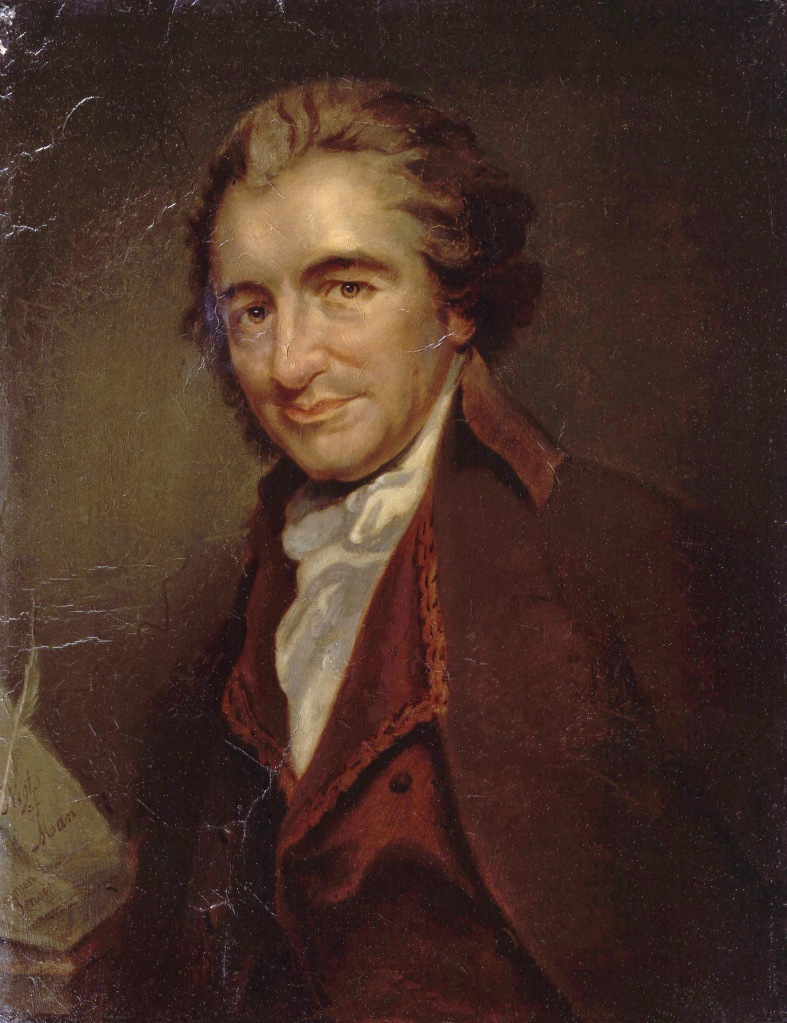
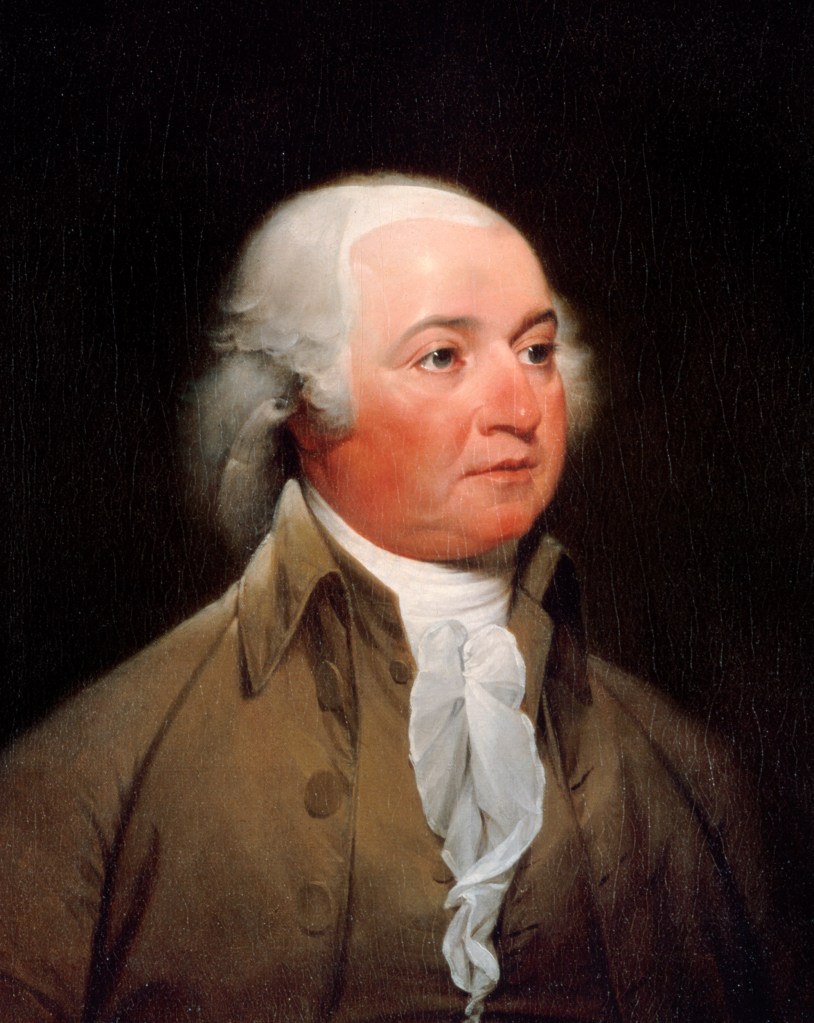
Tag: American Revolution

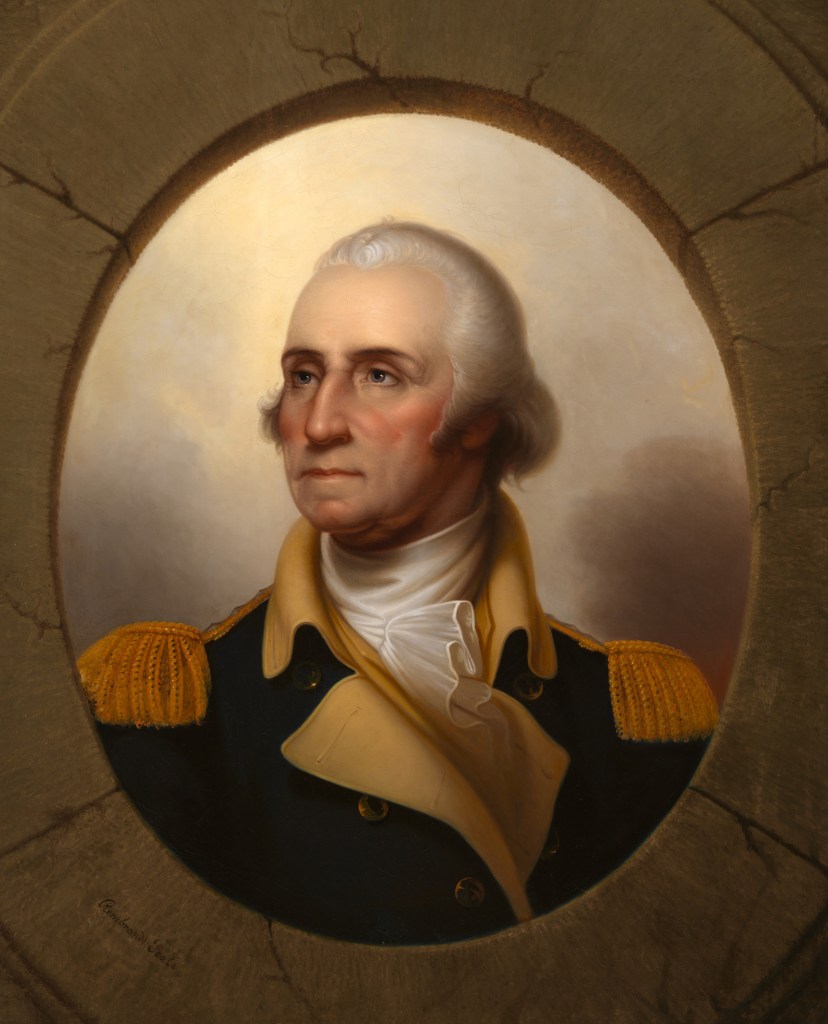
1778: Washington at Valley Forge

ESSENTIAL QUESTION:

How did the experience of Valley Forge broaden the meaning of the American Revolution?

CONTEXT:

By the winter of 1777, the American Revolution was two years old. George Washington (1732-1799) was the new commander of the American forces as his army went into winter camp near Valley Forge, Pennsylvania, and the conditions of the army were grim. Men and officers were leaving the army and food was scarce. For months Washington had lobbied the Continental Congress, the political organization that was responsible for the War, for supplies, often to no avail.

Eventually Congress sent a committee to Valley Forge to inspect the situation, many believing that their observations could be used as an excuse to dismiss Washington as the Army’s commander. When they arrived Washington presented them with a letter from which this text is drawn. The original letter, over 16,000 words, presented Washington’s suggestions for overhauling the Army, offering ideas for officer pensions, reorganizing the chain of command, instituting a draft, offering merit promotions, overhauling the quartermaster (supply) departments, and other issues. By the time the Committee left Valley Forge, they supported Washington. Washington continued to communicate with Congress, helping them to understand the realities of sustaining an army in the field. Congress continued to debate but did pass several of his suggestions.

TEXT: (spelling has been modernized)

…In regard to clothing…the mode of providing hitherto in practice, is by no means adequate to the end; and that, unless our future efforts are more effectual, it will be next to impossible to keep an army in the field…I am in hopes that valuable consequences will accrue from a resolution of Congress…directing that the several states [the individual states]…”exert their utmost endeavors to procure, in addition to the allowances of clothing heretofore made by Congress, supplies of blankets &c. for the comfortable subsistence of the officers and soldiers of their respective battalions..”

For my own part…I have little conception, that our extensive wants can be completely satisfied, in any other way, than by national, or governmental contracts, between Congress and the Court of France… Besides placing our supplies, in so essential an article, on a sure and unfailing foundation, it would cement the connection between the two countries, and if discovered, prove a new and powerful topic of hostility, between France and Britain…

To make soldiers look well and bestow proper attention and care upon their clothes…gives a taste for decency and uniformity and makes the officers regardful of the appearance of the men, as tending to promote health, and foster a becoming pride of dress, which raises soldiers in their own esteem and makes them respectable to their enemy…

INQUIRY:

  1. How did Washington describe the process of distributing clothes to the soldiers?
  2. What might be the consequences if this problem is not resolved?
  3. What did the Continental Congress do to try and alleviate the problem?
  4. Who would receive the clothes provided by each individual state, for instance, North Carolina or Massachusetts?
  5. In addition to Congress and the individual states, what other resource did Washington suggest to help provide supplies?
  6. What two advantages of a French alliance did Washington suggest?
  7. Why did Washington believe it was important for an army to be well-clothed? List at least two reasons.
  8. Do you believe it is important to be well-clothed, clean and well-kept? Why or why not?
  9. Some historians have characterized Valley Forge as a turning point in that it shifted the American Revolution from solely a discussion of the political ideal of liberty to include the realities of sustaining an army in the field. Do you agree? Why/why not?

ADDITIONAL RESOURCES:

https://www.nps.gov/vafo/index.htm

https://www.nps.gov/vafo/learn/historyculture/valley-forge-history-and-significance.htm

https://founders.archives.gov/documents/Washington/03-13-02-0335

“George Washington to a Continental Congress Camp Committee, 29 January 1778,” Founders Online, National Archives, https://founders.archives.gov/documents/Washington/03-13-02-0335. [Original source: The Papers of George Washington, Revolutionary War Series, vol. 13, 26 December 1777 – 28 February 1778, ed. Edward G. Lengel. Charlottesville: University of Virginia Press, 2003, pp. 376–409.]

https://founders.archives.gov/documents/Washington/03-12-02-0611

“George Washington to Henry Laurens, 22 December 1777,” Founders Online, National Archives, https://founders.archives.gov/documents/Washington/03-12-02-0611. [Original source: The Papers of George Washington, Revolutionary War Series, vol. 12, 26 October 1777 – 25 December 1777, ed. Frank E. Grizzard, Jr. and David R. Hoth. Charlottesville: University Press of Virginia, 2002, pp. 667–671.]

1783: Washington resigns

ESSENTIAL QUESTION:

Assess the short and long term significance of General George Washington’s resignation of his military commission.

CONTEXT:

George Washington (1732-1799) served as the Commander in Chief of the American Forces in the American Revolution and in 1789 became the first president of the United States. While fighting in the American Revolution ended mainly with the Battle of Yorktown (1781), the war itself only ended with the Treaty of Paris (1783). In that two year period, the American Army stayed organized, with Washington as its leader, as the threat of new fighting remained. As Commander in Chief Washington constantly petitioned Congress for pay and better conditions for the soldiers who had fought in the Revolution, but there was little money; money had to be requested by Congress of the individual states. Several mutinies occurred over unpaid wages, supplies, and expiring enlistments, including the Pennsylvania Line Mutiny (1781) and the Newburgh Conspiracy (1783). Washington was able to quell these uprisings and retain control of the Army.

Washington had been appointed Commander in Chief of the American Forces in May of 1775, and many thought he would remain in power throughout his life. But the Treaty of Paris (1783) had been signed three months earlier and Washington saw his job as a military commander completed. During the War he had been granted broad powers and many thought he would continue to use them. But he did not. Having bid farewell to his soldiers the month before, in December 1783 he bid farewell to his officers and two days before Christmas in 1783 he addressed the Continental Congress in Annapolis, Maryland, to resign his commission. He then traveled to his home at Mount Vernon, hoping to live out his days as a farmer. His quiet life did not last long; he was elected President of the United States six years later, serving from 1789 until 1797. Washington died at Mount Vernon in 1799.

TEXT:

The great events on which my resignation depended having at length taken place; I have now the honor of offering my sincere Congratulations to Congress and of presenting myself before them to surrender into their hands the trust committed to me, and to claim the indulgence of retiring from the Service of my Country...

I resign with satisfaction the Appointment I accepted with diffidence. A diffidence in my abilities to accomplish so arduous a task, which however was superseded by a confidence in the rectitude of our Cause, the support of the Supreme Power of the Union, and the patronage of Heaven…

While I repeat my obligations to the Army in general, I should do injustice to my own feelings not to acknowledge in this place the peculiar Services and distinguished merits of the Gentlemen who have been attached to my person during the War. It was impossible the choice of confidential Officers to compose my family should have been more fortunate. Permit me Sir, to recommend in particular those, who have continued in Service to the present moment, as worth of the favorable notice and patronage of Congress.

I consider it an indispensable duty to close this last solemn act of my Official life, by commending the Interests of our dearest Country to the protection of Almighty God, and those who have the superintendence of them, to his holy keeping.

Having now finished the work assigned me, I retire from the great theatre of Action; and bidding an Affectionate farewell to this August body under whose order I have so long acted, I here offer my Commission, and take my leave of all the employments of public life.

INQUIRY:

  1. Washington believed this would be his last act of public life, and he handed his commission and a copy of his remarks to Thomas Mifflin, the President of the Congress. He bowed to Congress and then left for Mount Vernon to be home for Christmas. What was the short term effect of Washington’s resignation?
  2. Many wanted Washington to remain in power as head of the Army and nation. Why would they want that?
  3. Washington said he accepted his commission with diffidence. What does that mean? What powers allowed him to overcome that diffidence? What does that say about Washington as a leader?
  4. How did Washington view his officers? What language did he use?
  5. What did Washington ask the Congress to provide for his officers?
  6. Investigate the Newburgh Conspiracy (1783). How might that have influenced Washington’s comments?
  7. Washington made several religious references. What does this say about his attitude regarding the success of the American Revolution?
  8. After Washington’s resignation the Continental Army essentially disbanded, leaving the colonies with no unified military force; eventually Congress took over the responsibilities of the Army. What dangers might the new United States have faced with no organized military force?
  9. When news of Washington voluntarily giving up political power to return to his farm spread across the nation and the world, people were astonished. How did this act represent what the American Revolution had been fought for?
  10. Today the US Constitution marks the President of the United States as the Commander in Chief of the Military. What fundamental principle of American democracy doe the placing of military power into the hands of a civilian (president) represent? How did Washington’s resignation establish this principle?

ADDITIONAL RESOURCES:

https://www.mountvernon.org/library/digitalhistory/digital-encyclopedia/article/resignation-of-military-commission

https://www.aoc.gov/explore-capitol-campus/art/general-george-washington-resigning-his-commission

https://founders.archives.gov/documents/Jefferson/01-06-02-0319-0004

Washington: A Life by Ron Chernow (Penguin Books, 2011)

1776: John Adams & July 4

ESSENTIAL QUESTION

How did John Adams convey the complex emotions he felt at the adoption of American Independence in 1776?

CONTEXT

John Adams (1735-1826) was an American statesman, diplomat, writer, and second president of the United States. A founding father, he helped guide the idea of American Independence through the Second Continental Congress. Later, during the American Revolution, he was a senior diplomat in Europe and served as George Washington’s Vice President. He died of a heart attack on July 4, 1826, the 50th Anniversary of the Declaration of Independence (which was also the death date of Thomas Jefferson).

John and his wife Abigail spent many years apart due to his political responsibilities, and they wrote each other letters often. This text is from a letter John wrote to Abigail in July of 1776 while he attended the Second Continental Congress in Philadelphia. Congress signed the Lee Resolution (Richard Henry Lee was a delegate from Virginia) on July 2; the Resolution contained three elements–separation from the British Crown, a plan for a confederation of the colonies, and a call to pursue foreign alliances. After much discussion, on July 4 Congress voted on and approved with amendments the report from a Committee of Five delegates (Adams was a member of the Committee) tasked with writing a declaration to explain the Colonies’ bid for freedom. By the next day, the Declaration of Independence was printed and began to be distributed (only print technology was available). On August 2, 1776, most delegates signed the Declaration and it became official.

TEXT

But the Day is past. The Second Day of July 1776, will be the most memorable Epocha, in the History of America.—I am apt to believe that it will be celebrated, by succeeding Generations, as the great anniversary Festival. It ought to be commemorated, as the Day of Deliverance by solemn Acts of Devotion to God Almighty. It ought to be solemnized with Pomp and Parade, with Shews, Games, Sports, Guns, Bells, Bonfires and Illuminations from one End of this Continent to the other from this Time forward forever more.

You will think me transported with Enthusiasm but I am not.—I am well aware of the Toil and Blood and Treasure, that it will cost Us to maintain this Declaration, and support and defend these States.—Yet through all the Gloom I can see the Rays of ravishing Light and Glory. I can see that the End is more than worth all the Means. And that Posterity will tryumph in that Days Transaction, even altho We should rue it, which I trust in God We shall not.

INQUIRY

  1. What is an epocha? What implication did Adams make by using that term?
  2. Why did Adams recognize July 2?
  3. Why did Adams use the term, “day of deliverance”? Deliverance from what?
  4. Identify Adams’s appeals to ethos and authority.
  5. How did Adams describe what he sees as future “anniversary” festivals? Do you believe his prediction has come true? Give examples.
  6. Why did Adams insert the statement, “I am well aware of the Toil and Blood and Treasure…”?
  7. Adams shifted the tone of this letter twice in this excerpt. Identify those shifts and how they were accomplished.
  8. What emotions did Adams convey in this letter?
  9. This excerpt is from many letters that John Adams wrote his wife Abigail–actually he wrote her two letters on July 3, 1776, the date of this letter. The earlier letter from July 3 stated, in part, …Yesterday the greatest Question was decided, which ever was de­bated in America, and a greater perhaps, never was or will be decided among Men. A Resolution was passed without one dissenting Colony “that these united Colonies, are, and of right ought to be free and independent States, and as such, they have, and of Right ought to have full Power to make War, conclude Peace, establish Commerce, and to do all the other Acts and Things, which other States may rightfully do.” You will see in a few days a Declaration setting forth the Causes, which have impell’d Us to this mighty Revolution, and the Reasons which will justify it, in the Sight of God and Man. A Plan of Confederation will be taken up in a few days... How might this correspondence have led to confusion about the date of American Independence?
  10. Why was the actual date of American Independence important? Is it important today? Why or why not?

ADDITIONAL RESOURCES

“John Adams to Abigail Adams, 3 July 1776,” Founders Online, National Archives, https://founders.archives.gov/documents/Adams/04-02-02-0016. [Original source: The Adams Papers, Adams Family Correspondence, vol. 2, June 1776 – March 1778, ed. L. H. Butterfield. Cambridge, MA: Harvard University Press, 1963, pp. 29–33.]

https://founders.archives.gov/documents/Adams/04-02-02-0016

1775: Henry-Liberty or Death!

ESSENTIAL QUESTION

How did Patrick Henry use rhetoric to challenge the Virginia House of Burgesses to embrace the American Revolution?

CONTEXT

Patrick Henry (1736-1799) was born in Hanover County, in the British Colony of Virginia. After an unsuccessful attempt as a merchant, he became a lawyer through self-instruction (at that time lawyers were not required to attend law school). A successful attorney, he was elected to the Virginia House of Burgesses (the colonial legislature) where he spoke vehemently against the Stamp Act of 1765. He was elected to the First Continental Congress (1774), strongly urged independence, and helped draft the Virginia Declaration of Rights and the original Virginia Constitution. He served multiple terms as Virginia’s governor and later opposed the US Constitution as written because it implied a strong central government and did not include a Bill of Rights. He was a slaveholder his entire adult life, and although he hoped to see slavery end he had no thoughts about how to bring that about.

As a child Henry heard many preachers as part of The Great Awakening Movement, and he incorporated their rhetorical styles into his addresses, including emotion as well as reason. By 1775 Henry believed that war and American independence were inevitable and he was in contact with many of the Founding Fathers. The House of Burgesses could not officially meet (the governor of Virginia had dissolved it) so the members decided to reconvene on their own. Henry was elected as Hanover County’s delegate to the Second Virginia Convention held in Richmond in March, 1775, where he made this speech. Henry died of stomach cancer at home in 1799.

Henry was known as a speaker but not as a writer; he spoke without notes. This text is taken from Henry’s speech, even though there was no verbatim transcript. It appeared in the first biography of Henry, published in 1817 by William Wirt. Wirt wrote to those who were there and heard Henry’s speech as well as others who knew people who where there, asking for words, tone, and mood. Wirt then compiled his research and published the speech in his biography.

TEXT

No man thinks more highly than I do of the patriotism, as well as abilities, of the very worthy gentlemen who have just addressed the House. But different men often see the same subject in different lights; and, therefore, I hope it will not be thought disrespectful to those gentlemen if, entertaining as I do opinions of a character very opposite to theirs, I shall speak forth my sentiments freely and without reserve. This is no time for ceremony. The question before the House is one of awful moment to this country. For my own part, I consider it as nothing less than a question of freedom or slavery; and in proportion to the magnitude of the subject ought to be the freedom of the debate...

Mr. President, it is natural to man to indulge in the illusions of hope. We are apt to shut our eyes against a painful truth, and listen to the song of that siren till she transforms us into beasts. Is this the part of wise men, engaged in a great and arduous struggle for liberty? Are we disposed to be of the number of those who, having eyes, see not, and, having ears, hear not, the things which so nearly concern their temporal salvation? For my part, whatever anguish of spirit it may cost, I am willing to know the whole truth; to know the worst, and to provide for it.

I have but one lamp by which my feet are guided, and that is the lamp of experience. I know of no way of judging of the future but by the past. And judging by the past, I wish to know what there has been in the conduct of the British ministry for the last ten years to justify those hopes with which gentlemen have been pleased to solace themselves and the House. Is it that insidious smile with which our petition has been lately received? Trust it not, sir; it will prove a snare to your feet. Suffer not yourselves to be betrayed with a kiss. Ask yourselves how this gracious reception of our petition comports with those warlike preparations which cover our waters and darken our land. Are fleets and armies necessary to a work of love and reconciliation? Have we shown ourselves so unwilling to be reconciled that force must be called in to win back our love? Let us not deceive ourselves, sir. These are the implements of war and subjugation; the last arguments to which kings resort. I ask gentlemen, sir, what means this martial array, if its purpose be not to force us to submission? Can gentlemen assign any other possible motive for it? Has Great Britain any enemy, in this quarter of the world, to call for all this accumulation of navies and armies? No, sir, she has none. They are meant for us: they can be meant for no other. They are sent over to bind and rivet upon us those chains which the British ministry have been so long forging. And what have we to oppose to them? Shall we try argument? Sir, we have been trying that for the last ten years. Have we anything new to offer upon the subject? Nothing. We have held the subject up in every light of which it is capable; but it has been all in vain. Shall we resort to entreaty and humble supplication? What terms shall we find which have not been already exhausted? Let us not, I beseech you, sir, deceive ourselves. Sir, we have done everything that could be done to avert the storm which is now coming on. We have petitioned; we have remonstrated; we have supplicated; we have prostrated ourselves before the throne, and have implored its interposition to arrest the tyrannical hands of the ministry and Parliament. Our petitions have been slighted; our remonstrances have produced additional violence and insult; our supplications have been disregarded; and we have been spurned, with contempt, from the foot of the throne! In vain, after these things, may we indulge the fond hope of peace and reconciliation. There is no longer any room for hope. If we wish to be free– if we mean to preserve inviolate those inestimable privileges for which we have been so long contending–if we mean not basely to abandon the noble struggle in which we have been so long engaged, and which we have pledged ourselves never to abandon until the glorious object of our contest shall be obtained–we must fight! I repeat it, sir, we must fight! An appeal to arms and to the God of hosts is all that is left us!

They tell us, sir, that we are weak; unable to cope with so formidable an adversary. But when shall we be stronger? Will it be the next week, or the next year? Will it be when we are totally disarmed, and when a British guard shall be stationed in every house? Shall we gather strength by irresolution and inaction? Shall we acquire the means of effectual resistance by lying supinely on our backs and hugging the delusive phantom of hope, until our enemies shall have bound us hand and foot? Sir, we are not weak if we make a proper use of those means which the God of nature hath placed in our power. The millions of people, armed in the holy cause of liberty, and in such a country as that which we possess, are invincible by any force which our enemy can send against us. Besides, sir, we shall not fight our battles alone. There is a just God who presides over the destinies of nations, and who will raise up friends to fight our battles for us. The battle, sir, is not to the strong alone; it is to the vigilant, the active, the brave. Besides, sir, we have no election. If we were base enough to desire it, it is now too late to retire from the contest. There is no retreat but in submission and slavery! Our chains are forged! Their clanking may be heard on the plains of Boston! The war is inevitable–and let it come! I repeat it, sir, let it come.

It is in vain, sir, to extenuate the matter. Gentlemen may cry, Peace, Peace– but there is no peace. The war is actually begun! The next gale that sweeps from the north will bring to our ears the clash of resounding arms! Our brethren are already in the field! Why stand we here idle? What is it that gentlemen wish? What would they have? Is life so dear, or peace so sweet, as to be purchased at the price of chains and slavery? Forbid it, Almighty God! I know not what course others may take; but as for me, give me liberty or give me death!

INQUIRY

  1. Henry began his speech by acknowledging his colleagues that did not agree with him. What was the effect of this acknowledgement?
  2. Why did Henry draw the juxtaposition of “freedom or slavery”? How might that have resonated with his audience (most of whom we wealthy landowners and politicians, including slave holders)?
  3. How did Henry characterize the “illusion of hope”? What is a “siren song”?
  4. What guided Henry’s feet? How did he justify his thoughts about the British? Give examples from the text.
  5. What was the effect of Henry’s parallel structure when he said “We have petitioned; we have remonstrated; we have supplicated; we have prostrated“?
  6. Why did Henry argue that the Americans must fight?
  7. Describe Henry’s appeals to authority and ethos, including his multiple biblical allusions.
  8. How did Henry argue against those who said that America was not ready to fight the British? What arguments and appeals did he use?
  9. How and why did Henry use the metaphor of chains?
  10. Henry ended the speech with a series of questions. What was the effect?
  11. Henry used antithesis in a famous quote from this speech, “I know not what course others may take; but as for me, give me liberty or give me death“. What was the effect of putting these two opposites next to each other?
  12. Identify examples of Henry’s uses of both emotion and logic. How did he tie them together in one argument?

ADDITIONAL RESOURCES

https://avalon.law.yale.edu/18th_century/patrick.asp

https://www.colonialwilliamsburg.org/learn/deep-dives/give-me-liberty-or-give-me-death
1776: A Feminine Rebellion

ESSENTIAL QUESTION

What political advice does Abigail Adams give her husband John in 1776?

CONTEXT

Abigail Smith Adams (1744-1818) was born in Weymouth, Massachusetts, to a liberal Congregationalist minister and his wife. Although the family held up to four slaves, Abigail later developed anti-slavery views. Even though she had no formal education, she learned to read, write, and cipher and enjoyed access to her father’s large library. In 1764 she married John Adams, a young lawyer from Braintree, Massachusetts. As the political atmosphere of Boston became more unsettled in the 1770s, Abigail remained at the farm in Braintree while husband John tended to his law practice and political duties in Boston. John became the second President of the United States and Abigail’s son John Quincy became the sixth President of the United States. She died in her home in 1818 of typhoid fever.

Due to John’s active political career Abigail and John spent months apart, but wrote over 300 letters to each other. This text is taken from a letter Abigail wrote to John on March 31, 1776, just prior to the announcement of the Declaration of Independence.

TEXT* (original spellings are maintained)

Do not put such unlimited power into the hands of the Husbands. Remember all Men would be tyrants if they could. If perticuliar care and attention is not paid to the Laidies we are determined to foment a Rebelion, and will not hold ourselves bound by any Laws in which we have no voice, or Representation.

That your Sex are Naturally Tyrannical is a Truth so thoroughly established as to admit of no dispute, but such of you as wish to be happy willingly give up the harsh title of Master for the more tender and endearing one of Friend. Why then, not put it out of the power of the vicious and the Lawless to use us with cruelty and indignity with impunity. Men of Sense in all Ages abhor those customs which treat us only as the vassals of your Sex. Regard us then as Beings placed by providence under your protection and in immitation of the Supreem Being make use of that power only for our happiness.

INQUIRY (Cite from the text where you found your responses)

  1. Abigail Adams uses strong language to describe men. When she says “Remember all Men would be tyrants if they could”, what does she mean? What keeps all men from being tyrants?
  2. While John Adams did not take the advice in this letter seriously, what does the fact that his wife describes her thoughts so plainly imply about their relationship?
  3. What does she mean by “use us with cruelty and indignity with impunity”?
  4. What does Abigail says that women will do if “perticuliar care and attention is not paid to the Laidies”?
  5. According to Abigail, how can men prevent a revolution by women?
  6. How does Abigail contrast “Men of Sense” and tyrants? What is the effect of this contrast?
  7. Would Abigail’s speech be relevant in our lives today? Why or why not?

ADDITIONAL RESOURCES

*Text from “Abigail Adams to John Adams, 31 March 1776,” Founders Online, National Archives, https://founders.archives.gov/documents/Adams/04-01-02-0241. [Original source: The Adams Papers, Adams Family Correspondence, vol. 1, December 1761 – May 1776, ed. Lyman H. Butterfield. Cambridge, MA: Harvard University Press, 1963, pp. 369–371.]

https://www.womenshistory.org/education-resources/biographies/abigail-adams

https://www.masshist.org/digitaladams/archive/letter