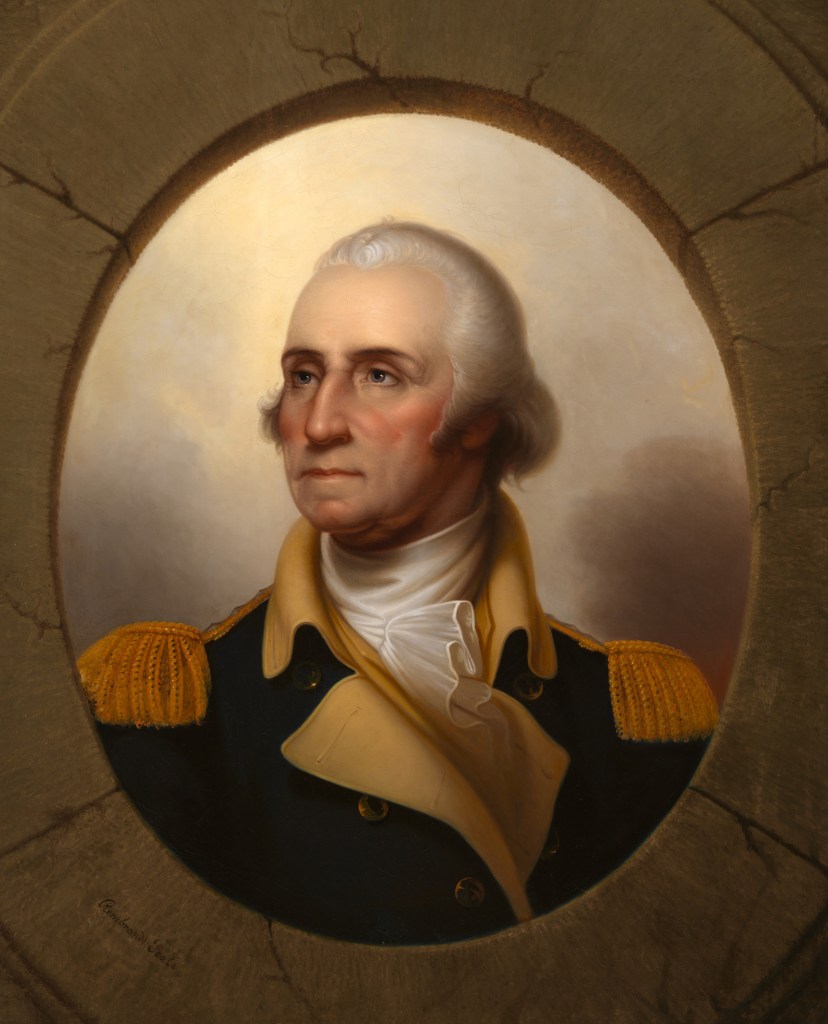
ESSENTIAL QUESTION:
How did George Washington use language to convince his Continentals to remain in arms even after the difficult year of 1776?
CONTEXT:
As the year 1776 drew to a close, the American war effort was in crisis. The British occupied New York. Congress had abandoned Philadelphia in the face of the British advance and moved to Baltimore. General George Washington (1732-1799) worried, as his army was scheduled to dissolve; many one-year enlistments would elapse at year’s end. On December 23, Thomas Paine’s published The Crisis, and Washington had the series of essays read to his troops camped up and down the Delaware River in an attempt to improve morale.
On Christmas Eve his army crossed the Delaware River and defeated the British at the Battle of Trenton the next morning in less than one hour . The Americans then crossed back into Pennsylvania; on December 28 they crossed back to Trenton, planning to launch another attack on the British. But a more immediate problem existed; in three days, the Army’s enlistments would expire.
On December 30, Washington gathered his men and addressed his troops as a comrade in arms, asking them to stay six more weeks and offering a ten-dollar bounty (on December 27 Congress had authorized Washington to offer bounties for enlistment). When volunteers were asked for, no one stepped out. One soldier spoke up and reminded the General of all they had sacrificed; exhausted and lacking proper equipment, they were looking forward to going home. Seated on his horse, Washington rode along the line of men and spoke the words below.
TEXT:
My brave fellows, you have done all I asked you to do, and more than can be reasonably expected; but your country is at stake, your wives, your houses and all that you hold dear. You have worn yourselves out with fatigues and hardships, but we know not how to spare you. If you will consent to stay one month longer, you will render that service to the cause of liberty, and to your country, which you probably can never do under any other circumstances.
INQUIRY:
- How did Washington acknowledge the soldiers’ sacrifices? Why was that important?
- After Washington’s words, soldiers grouped and discussed. One man said “I’ll go if you will.” What feeling did this comment convey? Would you have agreed to stay?
- Another soldier whispered, “We can’t go home under such circumstances.” What feeling did this comment convey? Would you have agreed with this soldier?
- The men responded in small groups at first until finally 200 of the regiment had agreed to stay. Washington then spoke to each additional regiment personally, and eventually he had 3000 soldiers remain. What was the effect of Washington addressing each regiment in person?
- The men who stayed in the Army were not required to reenlist on paper–Washington said he would trust each man upon his word. What did this say about Washington’s attitude toward his Continental Troops?
- What appeals to emotion did Washington use in this speech? Why do you believe they worked?
- What was the tone of Washington’s speech? Cite examples.
- Do you believe this speech displays leadership on Washington’s part? Why or why not?
ADDITIONAL RESOURCES:
Chernow, Ron. Washington: A Life. New York: Penguin Books, 2010.
“George Washington to Robert Morris, 31 December 1776,” Founders Online, National Archives, https://founders.archives.gov/documents/Washington/03-07-02-0389. [Original source: The Papers of George Washington, Revolutionary War Series, vol. 7, 21 October 1776–5 January 1777, ed. Philander D. Chase. Charlottesville: University Press of Virginia, 1997, p. 497.]
 Read Closely