Tag: revolutionary-war

1778: Washington at Valley Forge

ESSENTIAL QUESTION:

How did the experience of Valley Forge broaden the meaning of the American Revolution?

CONTEXT:

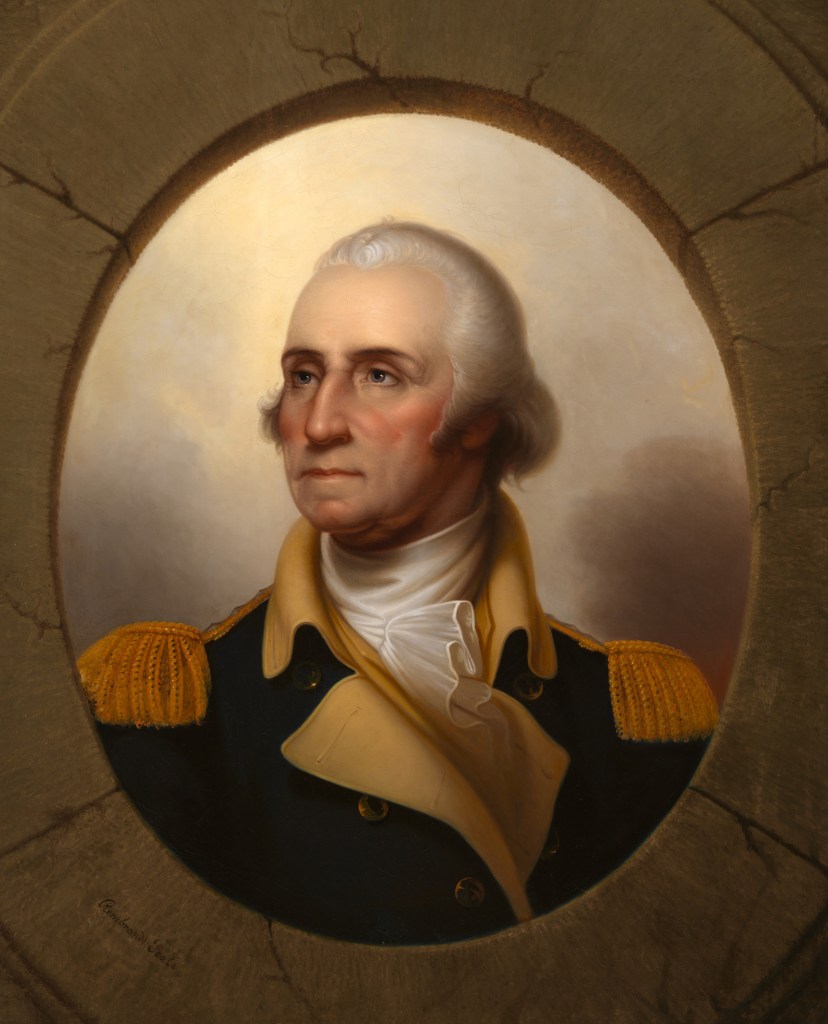
By the winter of 1777, the American Revolution was two years old. George Washington (1732-1799) was the new commander of the American forces as his army went into winter camp near Valley Forge, Pennsylvania, and the conditions of the army were grim. Men and officers were leaving the army and food was scarce. For months Washington had lobbied the Continental Congress, the political organization that was responsible for the War, for supplies, often to no avail.

Eventually Congress sent a committee to Valley Forge to inspect the situation, many believing that their observations could be used as an excuse to dismiss Washington as the Army’s commander. When they arrived Washington presented them with a letter from which this text is drawn. The original letter, over 16,000 words, presented Washington’s suggestions for overhauling the Army, offering ideas for officer pensions, reorganizing the chain of command, instituting a draft, offering merit promotions, overhauling the quartermaster (supply) departments, and other issues. By the time the Committee left Valley Forge, they supported Washington. Washington continued to communicate with Congress, helping them to understand the realities of sustaining an army in the field. Congress continued to debate but did pass several of his suggestions.

TEXT: (spelling has been modernized)

…In regard to clothing…the mode of providing hitherto in practice, is by no means adequate to the end; and that, unless our future efforts are more effectual, it will be next to impossible to keep an army in the field…I am in hopes that valuable consequences will accrue from a resolution of Congress…directing that the several states [the individual states]…”exert their utmost endeavors to procure, in addition to the allowances of clothing heretofore made by Congress, supplies of blankets &c. for the comfortable subsistence of the officers and soldiers of their respective battalions..”

For my own part…I have little conception, that our extensive wants can be completely satisfied, in any other way, than by national, or governmental contracts, between Congress and the Court of France… Besides placing our supplies, in so essential an article, on a sure and unfailing foundation, it would cement the connection between the two countries, and if discovered, prove a new and powerful topic of hostility, between France and Britain…

To make soldiers look well and bestow proper attention and care upon their clothes…gives a taste for decency and uniformity and makes the officers regardful of the appearance of the men, as tending to promote health, and foster a becoming pride of dress, which raises soldiers in their own esteem and makes them respectable to their enemy…

INQUIRY:

  1. How did Washington describe the process of distributing clothes to the soldiers?
  2. What might be the consequences if this problem is not resolved?
  3. What did the Continental Congress do to try and alleviate the problem?
  4. Who would receive the clothes provided by each individual state, for instance, North Carolina or Massachusetts?
  5. In addition to Congress and the individual states, what other resource did Washington suggest to help provide supplies?
  6. What two advantages of a French alliance did Washington suggest?
  7. Why did Washington believe it was important for an army to be well-clothed? List at least two reasons.
  8. Do you believe it is important to be well-clothed, clean and well-kept? Why or why not?
  9. Some historians have characterized Valley Forge as a turning point in that it shifted the American Revolution from solely a discussion of the political ideal of liberty to include the realities of sustaining an army in the field. Do you agree? Why/why not?

ADDITIONAL RESOURCES:

https://www.nps.gov/vafo/index.htm

https://www.nps.gov/vafo/learn/historyculture/valley-forge-history-and-significance.htm

https://founders.archives.gov/documents/Washington/03-13-02-0335

“George Washington to a Continental Congress Camp Committee, 29 January 1778,” Founders Online, National Archives, https://founders.archives.gov/documents/Washington/03-13-02-0335. [Original source: The Papers of George Washington, Revolutionary War Series, vol. 13, 26 December 1777 – 28 February 1778, ed. Edward G. Lengel. Charlottesville: University of Virginia Press, 2003, pp. 376–409.]

https://founders.archives.gov/documents/Washington/03-12-02-0611

“George Washington to Henry Laurens, 22 December 1777,” Founders Online, National Archives, https://founders.archives.gov/documents/Washington/03-12-02-0611. [Original source: The Papers of George Washington, Revolutionary War Series, vol. 12, 26 October 1777 – 25 December 1777, ed. Frank E. Grizzard, Jr. and David R. Hoth. Charlottesville: University Press of Virginia, 2002, pp. 667–671.]

1783: Washington resigns

ESSENTIAL QUESTION:

Assess the short and long term significance of General George Washington’s resignation of his military commission.

CONTEXT:

George Washington (1732-1799) served as the Commander in Chief of the American Forces in the American Revolution and in 1789 became the first president of the United States. While fighting in the American Revolution ended mainly with the Battle of Yorktown (1781), the war itself only ended with the Treaty of Paris (1783). In that two year period, the American Army stayed organized, with Washington as its leader, as the threat of new fighting remained. As Commander in Chief Washington constantly petitioned Congress for pay and better conditions for the soldiers who had fought in the Revolution, but there was little money; money had to be requested by Congress of the individual states. Several mutinies occurred over unpaid wages, supplies, and expiring enlistments, including the Pennsylvania Line Mutiny (1781) and the Newburgh Conspiracy (1783). Washington was able to quell these uprisings and retain control of the Army.

Washington had been appointed Commander in Chief of the American Forces in May of 1775, and many thought he would remain in power throughout his life. But the Treaty of Paris (1783) had been signed three months earlier and Washington saw his job as a military commander completed. During the War he had been granted broad powers and many thought he would continue to use them. But he did not. Having bid farewell to his soldiers the month before, in December 1783 he bid farewell to his officers and two days before Christmas in 1783 he addressed the Continental Congress in Annapolis, Maryland, to resign his commission. He then traveled to his home at Mount Vernon, hoping to live out his days as a farmer. His quiet life did not last long; he was elected President of the United States six years later, serving from 1789 until 1797. Washington died at Mount Vernon in 1799.

TEXT:

The great events on which my resignation depended having at length taken place; I have now the honor of offering my sincere Congratulations to Congress and of presenting myself before them to surrender into their hands the trust committed to me, and to claim the indulgence of retiring from the Service of my Country...

I resign with satisfaction the Appointment I accepted with diffidence. A diffidence in my abilities to accomplish so arduous a task, which however was superseded by a confidence in the rectitude of our Cause, the support of the Supreme Power of the Union, and the patronage of Heaven…

While I repeat my obligations to the Army in general, I should do injustice to my own feelings not to acknowledge in this place the peculiar Services and distinguished merits of the Gentlemen who have been attached to my person during the War. It was impossible the choice of confidential Officers to compose my family should have been more fortunate. Permit me Sir, to recommend in particular those, who have continued in Service to the present moment, as worth of the favorable notice and patronage of Congress.

I consider it an indispensable duty to close this last solemn act of my Official life, by commending the Interests of our dearest Country to the protection of Almighty God, and those who have the superintendence of them, to his holy keeping.

Having now finished the work assigned me, I retire from the great theatre of Action; and bidding an Affectionate farewell to this August body under whose order I have so long acted, I here offer my Commission, and take my leave of all the employments of public life.

INQUIRY:

  1. Washington believed this would be his last act of public life, and he handed his commission and a copy of his remarks to Thomas Mifflin, the President of the Congress. He bowed to Congress and then left for Mount Vernon to be home for Christmas. What was the short term effect of Washington’s resignation?
  2. Many wanted Washington to remain in power as head of the Army and nation. Why would they want that?
  3. Washington said he accepted his commission with diffidence. What does that mean? What powers allowed him to overcome that diffidence? What does that say about Washington as a leader?
  4. How did Washington view his officers? What language did he use?
  5. What did Washington ask the Congress to provide for his officers?
  6. Investigate the Newburgh Conspiracy (1783). How might that have influenced Washington’s comments?
  7. Washington made several religious references. What does this say about his attitude regarding the success of the American Revolution?
  8. After Washington’s resignation the Continental Army essentially disbanded, leaving the colonies with no unified military force; eventually Congress took over the responsibilities of the Army. What dangers might the new United States have faced with no organized military force?
  9. When news of Washington voluntarily giving up political power to return to his farm spread across the nation and the world, people were astonished. How did this act represent what the American Revolution had been fought for?
  10. Today the US Constitution marks the President of the United States as the Commander in Chief of the Military. What fundamental principle of American democracy doe the placing of military power into the hands of a civilian (president) represent? How did Washington’s resignation establish this principle?

ADDITIONAL RESOURCES:

https://www.mountvernon.org/library/digitalhistory/digital-encyclopedia/article/resignation-of-military-commission

https://www.aoc.gov/explore-capitol-campus/art/general-george-washington-resigning-his-commission

https://founders.archives.gov/documents/Jefferson/01-06-02-0319-0004

Washington: A Life by Ron Chernow (Penguin Books, 2011)

1776: Paine’s Crisis

1776: Paine’s Crisis

ESSENTIAL QUESTION

Which rhetorical devices does Thomas Paine use to rouse American morale in the face of military defeat?

CONTEXT

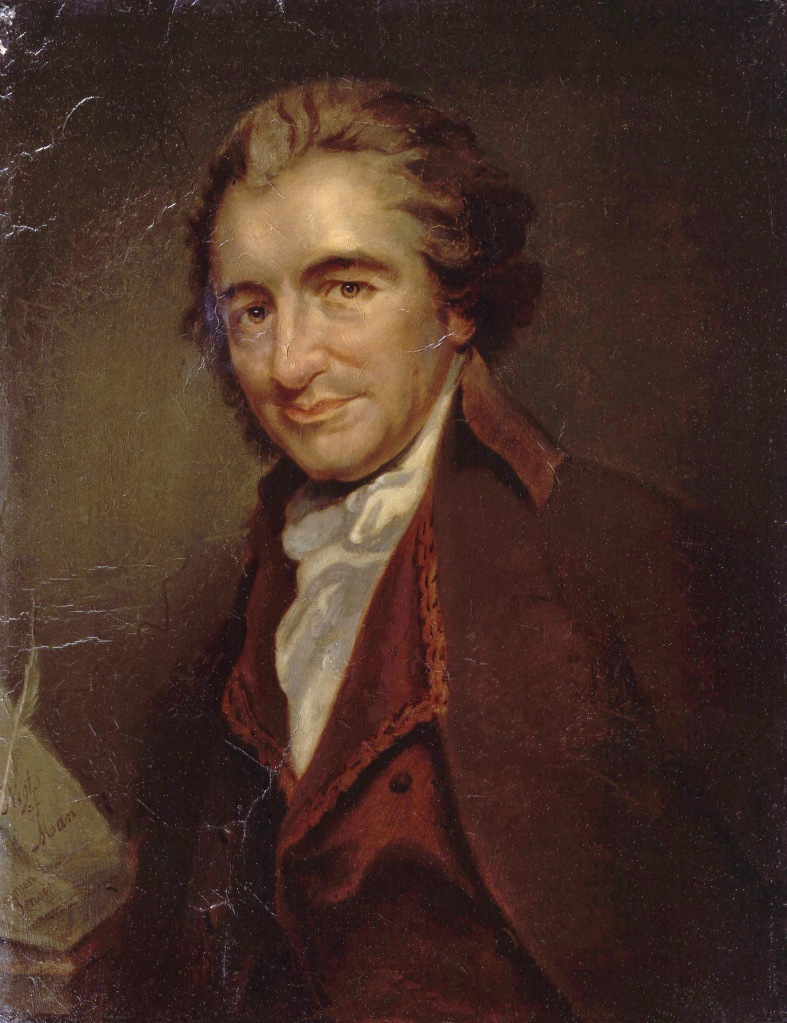
On December 19, 1776, Thomas Paine (1739-1809) published The American Crisis, a pamphlet sold on the street of Boston opposite the Court House. This was the first of a 13-part pamphlet series he published between 1776 and 1783.

1776 had been a difficult year for the American Army. After the announcement of the Declaration of Independence in July, August brought military defeats and the British captured New York City. Over 60% of Washington’s troops had left the Army, been killed or captured, and enlistments for many of those who remained were due to expire in just 13 days, on December 31. Morale was low and it appeared the Army might evaporate.

Thomas Paine was well-known for his literary support of the American Revolution. He had written another pamphlet, Common Sense, in January, 1776; it sold over 100,000 copies in the first three months, and it helped explain the necessity of the American Revolution. Now, as the American troops retreated from New York City, Paine, who was with the Army, again began to write. He penned The American Crisis to stir American patriotism and improve morale, and General Washington ordered this new pamphlet to be read to all his men. Drawing courage from Paine’s words, the Continental Troops crossed the Delaware River and defeated Hessian troops at Trenton on Christmas night. This victory helped breathe new life into the American cause.

This excerpt is from the introduction to The American Crisis.

TEXT

THESE are the times that try men’s souls: The summer soldier and the sunshine patriot will, in this crisis, shrink from the service of his country but he that stands it NOW, deserves the love and thanks of man and woman. Tyranny, like hell, is not easily conquered; yet we have this consolation with us, that the harder the conflict, the more glorious the triumph. What we obtain too cheap, we esteem too lightly;-‘Tis dearness only that gives everything its value. Heaven knows how to set a proper price upon its goods; and it would be strange indeed, if so celestial an article as Freedom should not be highly rated...

INQUIRY

  1. How does Paine construct his opening sentence as an appeal to ethos?
  2. Identify three examples of consonance (repetition of consonant sounds) in the first sentence. What is the effect of using this device, both when reading the pamphlet and when hearing it read in public?
  3. Identify the antithesis in the second sentence. What is the effect of this comparison?
  4. According to Paine, what gives things value? Do you agree? Why or why not?
  5. What does Paine consider to be a highly rated article? How do you know?
  6. Paine speaks of both heaven and hell in this section. What type of appeal is this? What is the effect?
  7. What imagery does Paine use in this excerpt? Cite at least three examples and give the effect of each.
  8. Which do you think is the most important sentence in this excerpt? Why?
  9. Do you agree with Paine’s reasoning? Why or why not?
  10. With this pamphlet and the American victory that followed, momentum in the American Revolution shifted toward the Americans. What is the importance of momentum in any type of contest, for instance a sports game? Give examples.

ADDITIONAL RESOURCES

https://www.loc.gov/resource/rbpe.03902300/?st=text

https://constitutioncenter.org/blog/how-thomas-paines-other-pamphlet-saved-the-revolution