Month: July 2026

1787: A More Perfect Union

ESSENTIAL QUESTION:

Analyze the preamble to the US Constitution.

CONTEXT:

As the American Revolution progressed, the Second Continental Congress ran the government; but they needed a plan. In November, 1777, after 16 months of debate, they adopted the Articles of Confederation. It was not ratified until 1781 (all states had to approve it before it became official), but it served as the constitution of the states until 1787. At that time a convention was called to revise the Articles; but there were so many problems with the document that it was decided to discard the Articles and redesign the government. The result was the current US Constitution, signed in September, 1787.

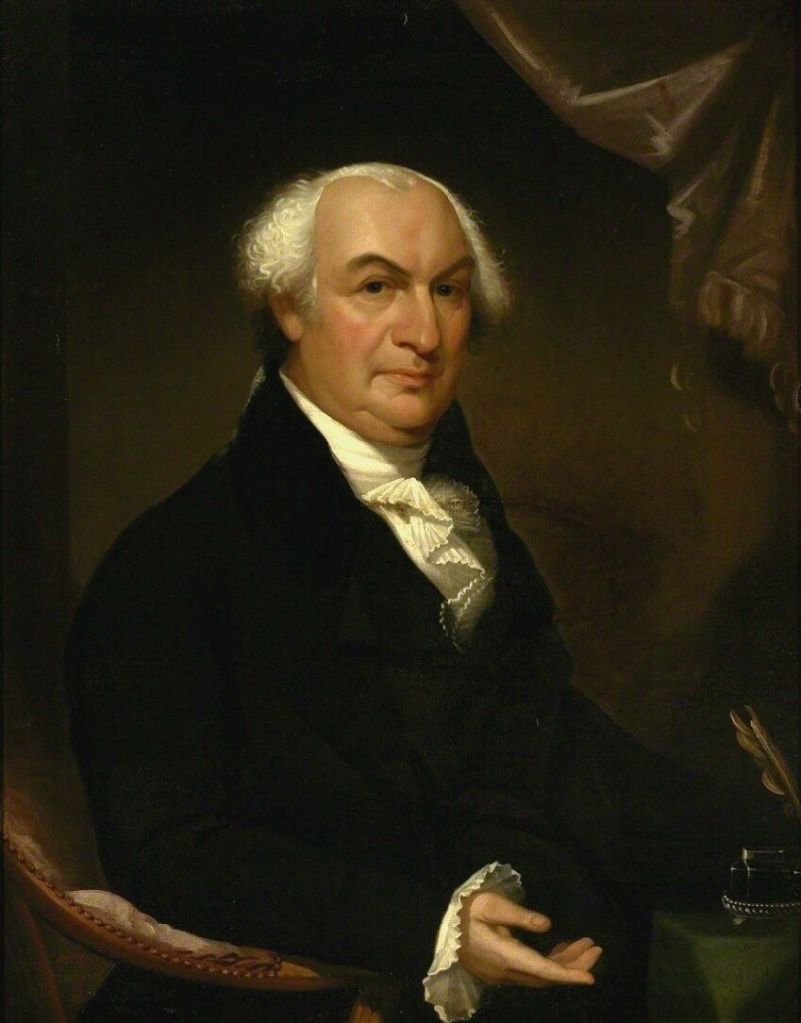
The opening words of the US Constitution are called the Preamble. Attaching a preamble to a document was fairly common in the time of the Founders, but this preamble was not written first; for at least two months in the Constitutional Convention no one mentioned including a preamble. Edmund Randolph of Virginia suggested a preamble, one that would explain why the Articles of Confederation were inadequate for America and why establishing a new government was necessary. The Preamble was mainly written by Gouverneur Morris (1752-1816), a delegate from Pennsylvania to the Constitutional Convention.

TEXT:

We the People of the United States, in Order to form a more perfect Union, establish Justice, insure domestic Tranquility, provide for the common defense, promote the general Welfare, and secure the Blessings of Liberty to ourselves and our Posterity, do ordain and establish this Constitution for the United States of America.

INQUIRY:

  1. The Preamble lists the purposes of the Constitution, but it does not give any part of the government power to enforce these purposes. What is the purpose of the Preamble?
  2. In the discussion of the Constitution, some said that “We the People” should instead read, “We the States.” What would have been the difference if that word had been changed?
  3. An original draft of the Preamble listed each individual state rather than “the United States.” Morris made this change; how did that change alter the meaning of the document?
  4. List the six purposes of the US Constitution.
  5. For each of the six purposes, describe an experience under the Articles of Confederation that necessitated that purpose.
  6. Are the purposes of the Constitution philosophical or pragmatic? Justify your response.
  7. Compare the purposes of the US Constitution to the purposes of the Declaration of Independence.
  8. What is the source of the federal government’s power?
  9. What evidence is in the preamble that the Founders expected this document to be permanent?
  10. In what ways is the Constitution continuing to fulfill its purpose? Give specific examples.

ADDITIONAL RESOURCES:

https://constitutioncenter.org/blog/gouverneur-morris-unforgettable-yet-forgotten

https://youtu.be/0EfnNUt_nwY?t=4

1776: Jefferson’s Declaring Truths

ESSENTIONAL QUESTION:

Analyze the opening of the US Declaration of Independence.

CONTEXT:

After the French and Indian War (1754-1763) in America, relationships between Great Britain and her American Colonies began to sour. Britain saw the relationship in economic terms–the Colonies’ purpose was to support Britain, providing raw materials and a market for goods. The Colonies saw the relationship in increasingly political terms–Britain owed colonists the same rights and privileges of Englishmen in Britain. In April, 1775, British troops and American militia exchanged fire over an ammunitions cache at a local farm near Lexington and Concord, Massachusetts. Blood had been spilt. Through political actions and documents such as Thomas Paine’s “Common Sense”, more and more people became convinced that America could not remain as British colonies. On June 7, 1776, Richard Henry Lee of Virginia presented a resolution in the Second Continental Congress that the United States should be free and independent.

But not everyone was totally convinced. Some delegates to the Congress wanted to pursue diplomatic negotiations. After all, Britain was one of the most powerful nations in the world at that time; many Americans had economic ties with Britain; and the Colonies had no army or navy to speak of. If independence happened, it was going to require the help of foreign nations, especially France. So Congress decided to draft a statement to explain their actions.

For that purpose Congress established a Committee of Five, including Thomas Jefferson (of Virginia), John Adams (of Massachusetts), Roger Sherman (of Connecticut), Benjamin Franklin (of Pennsylvania), and Robert Livingston (of New York). The Committee asked Jefferson to do most of the writing (he was a talented writer), and Jefferson asked Franklin and Adams to look over his drafts. When the document went back to the Congress, other changes were incorporated. The Declaration was eventually adopted on July 4 and signed over the next several weeks. It was printed (it is unknown how many copies were printed) and distributed. This text is from the beginning of the Declaration of Independence. There are currently 26 copies of the original printing known to exist.

Jefferson would go on to be a governor of Virginia and the third President of the United States. Of the other 56 men who signed the Declaration, some served in Continental Militia, five were captured and tortured by the British, nine died from war wounds or hardships, and twelve saw their homes and farms burned by the British.

TEXT:

In Congress, July 4, 1776

The unanimous Declaration of the thirteen united States of America, When in the Course of human events, it becomes necessary for one people to dissolve the political bands which have connected them with another, and to assume among the powers of the earth, the separate and equal station to which the Laws of Nature and of Nature’s God entitle them, a decent respect to the opinions of mankind requires that they should declare the causes which impel them to the separation.

We hold these truths to be self-evident, that all men are created equal, that they are endowed by their Creator with certain unalienable Rights, that among these are Life, Liberty and the pursuit of Happiness.–That to secure these rights, Governments are instituted among Men, deriving their just powers from the consent of the governed, ….

INQUIRY:

  1. What was the purpose of this document, as stated in the first paragraph?
  2. What made this document necessary? Quote from the document.
  3. What two states did this document cause to happen? Quote from the document.
  4. What was the effect of using the phrase, “to which the Laws of Nature and of Nature’s God”?
  5. Why was it necessary to “declare the causes which impel them to the separation”?
  6. What does it mean to be “self-evident”?
  7. One phrase of this document that has been controversial over the years is “all men are created equal”. When the Declaration was written, society still held women, enslaved people, non-property owners, and others in subservient roles, without political voice. Thus in this case “men” meant all humanity. How has the meaning of “men” changed over the centuries?
  8. What two references to God are found in this document? Why do these strengthen the argument?
  9. What are “unalienable rights”? What three unalienable rights are listed?
  10. At this time the “pursuit of happiness” meant the pursuit of a good character, virtue, and becoming a good citizen. Do we still pursue this kind of happiness? Give examples.
  11. Before editing, the phrase “pursuit of happiness” read “pursuit of property”, meaning owning things, mainly property. How did the changing of this one word change the meaning of the phrase? (Life, liberty and property were natural rights as put forth by philosopher John Locke).
  12. What is the purpose of government?
  13. From where does government get its power?
  14. The Declaration of Independence is not a law. But why is it so important in America?
  15. The purpose of these paragraphs is to declare, not to persuade. What is the document declaring?
  16. The Declaration closes with the statement, “And for the support of this Declaration, with a firm reliance on the protection of divine Providence, we mutually pledge to each other our Lives, our Fortunes and our sacred Honor..” What did this statement suggest?
  17. Investigate John Locke and the other influences on Jefferson’s writing.

ADDITIONAL RESOURCES:

https://www.archives.gov/founding-docs/declaration-transcript

https://jeffersonpapers.princeton.edu/declaration-of-independence/

https://www.si.edu/spotlight/american-revolutionary-war/signers-declaration-independence

https://www.archives.gov/founding-docs/signers-factsheet

1796: Washington and Parties

ESSENTIAL QUESTION:

Analyze the dangers of parties that George Washington foresaw for the young American Republic as he left public life.

CONTEXT:

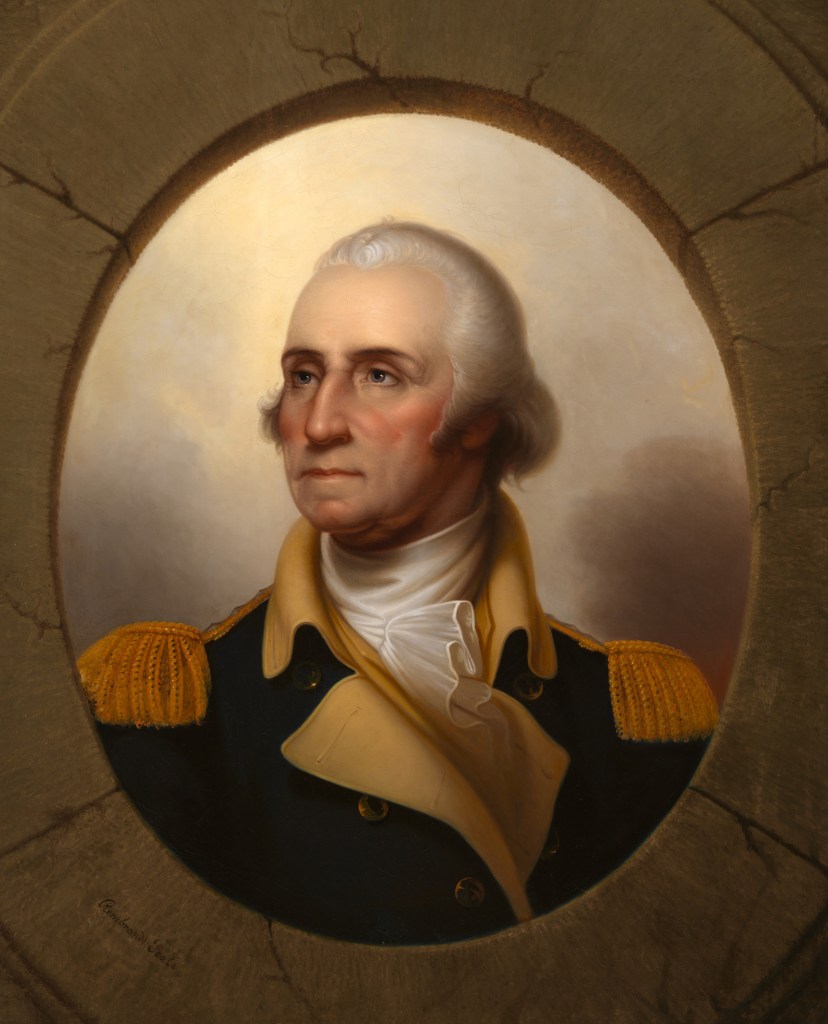
George Washington (1732-1799) was born in Virginia to a prosperous planter family. He learned the culture of a colonial gentleman, and early on had two special interests: the military and westward expansion. At age 16 he helped survey the Shenandoah Valley; in 1754 he was commissioned a lieutenant colonel in the British Army and he served during the French and Indian War. He later managed his lands around Mount Vernon, Virginia, (his home), served in the Virginia House of Burgesses, and married Martha Custis, a wealthy widow. In 1775 the Second Continental Congress appointed him Commander in Chief of the Continental Army.

After the American Revolution Washington wished to retire to Mount Vernon, but realizing that the new nation needed stronger form of government, he encouraged a Constitutional Convention in Philadelphia in 1787. After the new Constitution was adopted, Washington was unanimously elected by the electoral college to be the first president of the United States. He set many precedents. By the end of his second term political parties had developed and there was much contention even within his cabinet; Washington was pressured to continue as president but he refused, setting another precedent of a maximum of two presidential terms which would last until Franklin Roosevelt began his third term in 1941. Another precedent he established was delivering a farewell address, from which this text is taken. He wrote it with the help of Alexander Hamilton and James Madison. Washington did not deliver his address in person to the Congress but instead published it in a Philadelphia newspaper, the American Daily Advertiser, on September 19, 1796. After leaving office Washington returned to Mount Vernon to continue farming. He died there in 1799 from quinsy, a serious throat infection.

TEXT:

…I have already intimated to you the danger of parties in the State, with particular reference to the founding of them on geographical discriminations. Let me now take a more comprehensive view, and warn you in the most solemn manner against the baneful effects of the spirit of party generally.

This spirit, unfortunately, is inseparable from our nature, having its root in the strongest passions of the human mind. It exists under different shapes in all governments, more or less stifled, controlled, or repressed; but, in those of the popular form, it is seen in its greatest rankness, and is truly their worst enemy….

Without looking forward to an extremity of this kind (which nevertheless ought not to be entirely out of sight), the common and continual mischiefs of the spirit of party are sufficient to make it the interest and duty of a wise people to discourage and restrain it.

It serves always to distract the public councils and enfeeble the public administration. It agitates the community with ill-founded jealousies and false alarms, kindles the animosity of one part against another, foments occasionally riot and insurrection. It opens the door to foreign influence and corruption, which finds a facilitated access to the government itself through the channels of party passions. Thus the policy and the will of one country are subjected to the policy and will of another.

There is an opinion that parties in free countries are useful checks upon the administration of the government and serve to keep alive the spirit of liberty. This within certain limits is probably true; and in governments of a monarchical cast, patriotism may look with indulgence, if not with favor, upon the spirit of party. But in those of the popular character, in governments purely elective, it is a spirit not to be encouraged. From their natural tendency, it is certain there will always be enough of that spirit for every salutary purpose. And there being constant danger of excess, the effort ought to be by force of public opinion, to mitigate and assuage it. A fire not to be quenched, it demands a uniform vigilance to prevent its bursting into a flame, lest, instead of warming, it should consume.

INQUIRY:

  1. Did Washington encourage or discourage the development of political parties? Quote from the text to support your response.
  2. List five dangers from the development of parties.
  3. How might parties affect US foreign policy?
  4. Why did Washington discourage parties in governments “purely elective”?
  5. What force should “mitigate and assuage” the dangers of parties?
  6. In Washington’s time many Americans chiefly identified with their state. Rather than saying “I am an American” they might say “I am a Virginian” and then say “I am an American.” Washington warned against this earlier in his speech. What dangers might exist with this frame of mind?
  7. During Washington’s administration the first political parties developed–the Federalists, chiefly from New England, and the Democratic-Republicans, chiefly from the South. People were encouraged to vote based on party loyalty rather than choosing the best qualified candidate. Investigate the toxic relationship between Alexander Hamilton (leader of the Federalists) and Thomas Jefferson (leader of the Democratic-Republicans) that developed while the two men served in Washington’s Cabinet.
  8. In 1796 when this address was delivered the US Constitution was only eight years old. How might that fact have influenced Washington’s words?
  9. To commemorate Washington’s birthday his Farewell Address is still read aloud in the US Senate. How well do you believe we are listening to his advice? Give evidence to support your answer.

ADDITIONAL RESOURCES:

https://millercenter.org/president/washington/life-in-brief

https://www.senate.gov/artandhistory/history/resources/pdf/Washingtons_Farewell_Address.pdf?utm_source=substack&utm_medium=email

Chernow, Ron. Washington: A Life. Penguin Press, 2010.